Traveling from El Salvador to Nicaragua and wondering about the best way to get there? There are several options for making this journey, including a particularly interesting boat trip across the Gulf of Fonseca.
While El Salvador and Nicaragua are relatively close together, they don’t share a land border. If you’re traveling overland, you’ll need to pass through a small section of southern Honduras, crossing two international borders along the way.
Alternatively, you can travel directly between El Salvador and Nicaragua by boat, avoiding Honduras altogether.
There are quite a few things to consider when deciding how to make this journey. Some transport options leave in the middle of the night, while others involve numerous changes of buses. Prices also vary considerably, especially once you add in border crossing fees.
In this guide, I concentrate on how to get from San Salvador to León, Nicaragua, although much of this information is also useful if you’re starting elsewhere in El Salvador or heading to another destination in Nicaragua.
I cover all four main transport options, including exactly how to make this journey by public bus, where to break up the trip, approximate costs and travel times, and how to make the return journey.
Map: El Salvador To Nicaragua
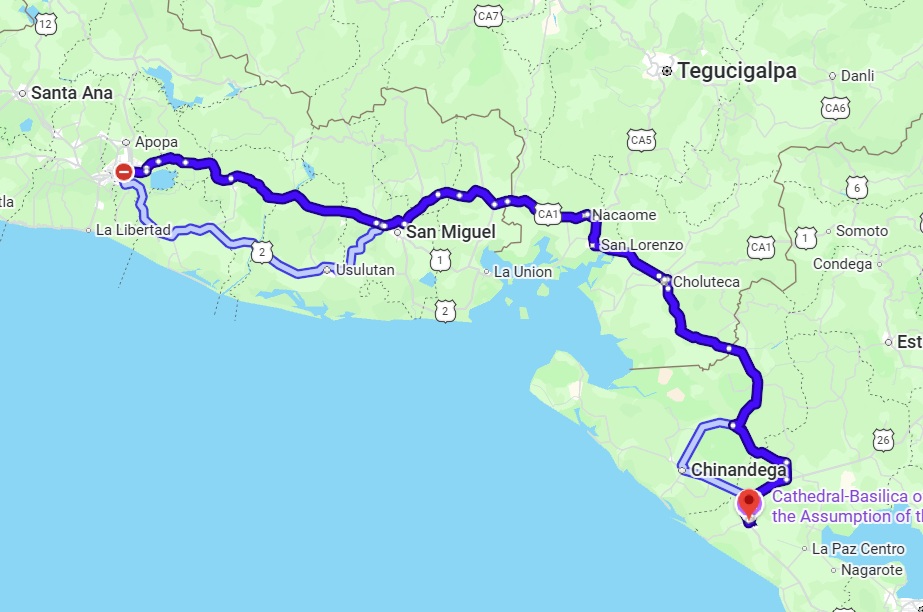
There are two main routes for traveling from El Salvador to Nicaragua.
The overland route takes you east from San Salvador through San Miguel and Santa Rosa de Lima to the El Amatillo border crossing with Honduras.
From here, you travel across southern Honduras, passing through the Choluteca area before crossing into Nicaragua at El Guasaule. The journey continues to Chinandega and León.
The alternative is to travel to the port town of La Unión in eastern El Salvador and take a boat across the Gulf of Fonseca to Potosí in Nicaragua. From Potosí, you can continue to León by road.
The overland journey from San Salvador to León is approximately 400 kilometers, but with two international border crossings and potential transport connections, it can easily take a full day.
BEST OPTION: How To Get From El Salvador To Nicaragua
The best way to get from El Salvador to Nicaragua depends on where you’re starting, your budget and how much time you have.
The boat is arguably the most interesting option, particularly if you want to avoid traveling through Honduras. However, the extremely early departure from San Salvador makes spending the previous night in eastern El Salvador an appealing alternative.
An overland tourist shuttle is probably the easiest option if you’re starting in San Salvador and want to complete the journey in one day without organizing connections yourself.
International coaches offer more comfortable seats at a lower price than many tourist shuttles and can drop you off on the outskirts of León. However, their departure times can be particularly inconvenient.
For budget travelers, I recommend considering local buses, especially if you’re happy to break up the journey with an overnight stop.
| Transport | Approximate Departure Time From San Salvador | Approximate Travel Time | Approximate Cost |
|---|---|---|---|
| Boat and connecting transfers | 2 AM | 12 hours | US$100 |
| Overland tourist shuttle | 7:30 AM | 15 hours | US$85 |
| International bus | 12:30 AM | 10–12 hours to León | From US$47 |
| Public buses | Early morning | 12–14 hours or longer | Budget US$20–30 |
Prices are per person and exclude any additional border crossing fees. Travel times can vary considerably depending on border delays. Confirm that your international bus stops in León before booking.
There are also cheaper shuttle options if you’re starting in El Tunco rather than San Salvador.
Option 1: El Salvador To Nicaragua By Boat
One of the most interesting ways to travel from El Salvador to Nicaragua is by boat across the Gulf of Fonseca.
The Gulf of Fonseca is a large bay on the Pacific coast bordered by El Salvador, Honduras and Nicaragua. It’s home to several islands, with volcanic landscapes providing a spectacular backdrop to the journey.
The boat travels between La Unión in El Salvador and Potosí in Nicaragua. From Potosí, you can continue to León.
The biggest advantage of this option is that you avoid entering Honduras, so there are fewer immigration procedures to deal with.
You can book the boat crossing separately or organize a package that includes transportation from your accommodation in El Salvador all the way to León.
The downside is that the boat does not run every day and border formalities can be time-consuming. If you are coming from elsewhere in El Salvador, it also means a very early start.
Getting To La Unión
La Unión is located in the far east of El Salvador, around 185 kilometers from San Salvador by road.
If you’re booking a complete boat and shuttle package from San Salvador, your operator will organize transportation to La Unión.
For example, Gekko Trails Explorer offers transportation from San Salvador to León, including the boat crossing and ground transportation on both sides, for US$100 per person.
The biggest drawback is that pickup is at 2 AM!
There are also pickups in La Libertad, El Tunco and El Zonte at around 3 AM, and in El Cuco and Las Flores at around 6 AM.
If you’re traveling independently, I recommend considering spending the previous night in La Unión. This is particularly worthwhile if you want to avoid such an early start or are traveling from another part of El Salvador.
To reach La Unión from San Salvador by public transport, look for bus 304 from the eastern bus terminal (Terminal de Oriente, also known as Plaza Amanecer).
This terminal is located on Boulevard del Ejército, between Soyapango and Ilopango, some distance east of central San Salvador.
Alternatively, you can travel to San Miguel first and change to bus 324 to La Unión.
Allow around four to five hours for the journey, depending on the service and connections. Local bus fares are generally only a few dollars.
La Unión is a working port town rather than a major tourist destination. However, there are places to stay and eat, and the waterfront offers views across the Gulf of Fonseca.
It’s also close to the Conchagua Volcano, which is worth considering if you have extra time in this part of El Salvador.
Boat From La Unión To Potosí
Gekko Trails Explorer organizes boats from La Unión to Potosí most days. You can choose to just pay for the boat crossing or for transfers at either end.
From La Unión to Potosí in Nicaragua is just US$50, although prices vary. From La Unión on to León is US$70. Confirm the price and availability in advance.
These prices include the boat and applicable land transportation, but not the additional US$13 border fee currently required for entering Nicaragua.
Boats generally operate on Mondays, Wednesdays, Fridays and Saturdays, with some Tuesday departures.
The boat departs La Unión at 8 AM, but you need to be at the immigration office at 7 AM to complete the formalities to leave El Salvador.
The actual boat journey generally takes around two hours, although sea conditions can affect this considerably. Boats are often delayed by border formalities with many past travelers saying they spent many hours waiting for the boat to depart.
Don’t expect a large passenger ferry with enclosed seating, bathrooms and a cafe. This crossing is generally made in a small motorboat, and there’s a good chance you’ll get wet.
I recommend wearing clothes and shoes that can get wet, protecting your electronics and other valuables in waterproof bags and bringing sunscreen, water and snacks.
You need to book at least 18 hours in advance, either online or through WhatsApp. You can pay easily online.
Make sure you meet the visa and entry requirements for your nationality. You should fill in this Nicaragua entry form at least 7 days before you travel.
The boat crossing can be affected by wind and sea conditions, so it’s worth allowing some flexibility in your itinerary.
Getting From Potosí To León
On arrival in Potosí, you’ll need to complete the immigration formalities to enter Nicaragua.
Potosí is a small coastal settlement in northwestern Nicaragua. It’s quite a distance from León, so you’ll need to organize additional transportation if you haven’t booked it as part of your boat crossing.
The easiest option is to book a combined boat and shuttle ticket as described above.
Allow around eight hours from the time you arrive at immigration in La Unión until you reach León.
Considering the limited transportation available in Potosí, I think the combined ticket is worth considering even if you’re generally traveling by local bus.
If you want to continue independently, the main route is to take a local bus from Potosí to Chinandega and then change to another bus or minivan to León.
Local bus departures from Potosí are limited.
Option 2: El Salvador To Nicaragua Shuttle
Another relatively straightforward way to travel between El Salvador and Nicaragua is by shared tourist shuttle.
These shuttles travel overland through Honduras, generally using air-conditioned minibuses. They organize the necessary transport connections and get you directly to León.
Several companies offer this service, including Bigfoot Hostel in León.
Its service from San Salvador costs US$85 per person, departing at 7:30 AM and arriving in León at around 10 PM. Your actual pickup time may be earlier, and border fees of US$20 in cash are additional.
It also advertises shuttle services from El Tunco, Santa Ana and El Cuco.
If you’re already staying in El Tunco, you can save quite a bit of money by starting your journey there. Bigfoot advertises this route for US$59.90, excluding applicable border fees.
You don’t need to be staying at Bigfoot Hostel to book its transportation.
The biggest advantage of traveling by shuttle is that you don’t need to find buses on either side of the borders or worry about catching the last connection of the day.
However, it’s still a very long journey in a minivan. If you’re tall or uncomfortable sitting in a relatively confined space for hours, you may find an international coach more comfortable.
Border delays can add considerably to the journey, so I wouldn’t make any firm plans for your arrival evening in León.
I recommend booking your shuttle well in advance. Operators may request a copy of your passport after booking to help organize the cross-border journey.
Check the luggage allowance, pickup location and departure day with your chosen operator before booking. You’ll also need to meet the immigration requirements for both Honduras and Nicaragua, which I explain below.
Option 3: El Salvador To Nicaragua International Bus
There are also international coach services traveling from El Salvador to Nicaragua, including Tica Bus and Transporte del Sol.
These are generally larger, more comfortable buses than the tourist shuttles, with reclining seats, air conditioning and dedicated luggage storage.
Although the published timetables generally list Managua as the destination, some international buses stop in León along the way. You don’t necessarily need to travel all the way to Managua and backtrack.
Tica Bus advertises a daily service from San Salvador to Nicaragua costing US$47 per person and traveling via the El Guasaule border crossing.
The advertised departure time is 12:30 AM.
Allow approximately 10–12 hours to reach León, depending on traffic and border crossing times.
Transporte del Sol offers services from San Salvador to Managua costing US$65 per adult.
Its daily service departs at 1 AM and travels via the El Espino border crossing. It also offers a midnight departure via El Guasaule on Mondays, Tuesdays, Thursdays, Fridays and Saturdays.
Transporte del Sol departs from Colonia San Benito in San Salvador.
If you’re heading to León, the route via El Guasaule is the one to look for. Confirm that your chosen service stops in León when booking.
One of the biggest drawbacks for me when researching this journey was the international bus departure times. While traveling in a comfortable coach sounded appealing, having to get to a bus terminal in San Salvador in the middle of the night was a big turn-off.
International buses generally don’t enter the center of León. Instead, they drop passengers off at designated stops along the bypass road. Tica Bus has a passenger stop near the Petronic gas station in the Posada del Sol area.
From here, you can take a short taxi ride to your accommodation.
Make sure you specify León as your destination when booking. If the online booking system only lists Managua, contact the bus company directly to arrange your drop-off and confirm the fare.
Despite the inconvenient departure times, the international bus can be a good alternative to a tourist shuttle. It’s considerably cheaper and potentially more comfortable, without the numerous connections involved in traveling by public bus.
Option 4: El Salvador To Nicaragua By Public Bus
The cheapest way to travel from El Salvador to Nicaragua is to use local buses and minibuses.
This involves several changes of transportation and two international border crossings, but it’s possible to complete the journey without spending much money on transport.
The main route takes you from San Salvador to Santa Rosa de Lima and El Amatillo, before crossing southern Honduras via Choluteca and entering Nicaragua at El Guasaule.
From here, you continue via Chinandega to León.
I recommend allowing a full day for this journey, and potentially longer depending on your starting point and how well the connections work out.
We decided to take this route because the boat crossing was very expensive for a family of four and we didn’t want to start the journey in the middle of the night.
Step 1: San Salvador To Santa Rosa De Lima
Start by heading to Terminal de Oriente (Plaza Amanecer), the eastern bus terminal in San Salvador.
Look for bus 346 heading directly to the El Amatillo border crossing or bus 306 heading to Santa Rosa de Lima. There are also direct and upgraded variants of these bus routes.
If you find a suitable bus going all the way to El Amatillo and you’re planning to complete the journey in one day, this can save you from making another connection.
Otherwise, travel to Santa Rosa de Lima. You can also change buses in San Miguel if a suitable direct service isn’t available when you arrive.
San Miguel is the largest city in eastern El Salvador and a major transportation hub for buses heading toward the Honduran border.
Allow approximately four to five hours to reach Santa Rosa de Lima from San Salvador and budget around US$4–6.
If you’re planning to travel all the way to León in one day, take the earliest practical departure. Otherwise, consider spending the night in Santa Rosa de Lima.
Step 2: Santa Rosa De Lima To El Amatillo Border Crossing
Santa Rosa de Lima is conveniently located around 20 kilometers from the El Amatillo border crossing.
Local bus route 330 runs between San Miguel and the border via Santa Rosa de Lima. You may also be able to catch route 346 continuing from San Salvador to El Amatillo.
Ask locally where to board the next bus heading to la frontera El Amatillo.
Allow around 30–45 minutes for this journey and budget approximately US$1.
On arrival at the border, follow the signs to Salvadoran immigration to complete any required departure formalities.
You’ll then need to cross into Honduras and visit Honduran immigration.
Although you’re only passing through a small part of Honduras, you still need to meet the country’s entry requirements.
Honduras requires travelers to complete an electronic customs declaration when entering and leaving the country. You can find the current requirements and access the relevant forms through the Honduran immigration website and Honduran customs website.
Save a copy of any required confirmation or QR code so you can access it offline at the border.
Foreign tourists may also be charged a US$3 land border entry fee when entering Honduras. Have small US dollar notes available and keep your receipt until you leave the country.
Step 3: El Amatillo To El Guasaule
Once you’ve completed the immigration procedures to enter Honduras, look for transportation toward Choluteca or El Guasaule.
It’s worth asking whether there is a shared minivan traveling all the way across southern Honduras to the Nicaraguan border. If there is, you’ll be able to avoid changing vehicles in Choluteca.
Otherwise, take local transportation to Choluteca, the main city in southern Honduras. Depending on the vehicles operating when you arrive, an additional connection may be necessary.
Expect the journey to Choluteca to take around 1.5–2 hours, depending on stops and connections.
From Choluteca, continue to the El Guasaule border crossing.
Allow another one to two hours for this section, plus time to find your connecting bus.
Budget around US$5–10 for local transportation across Honduras, although exact fares depend on the vehicles you take.
The Honduran currency is the lempira, so it’s useful to have a small amount of local currency for these journeys. Some drivers may accept US dollars, particularly around the borders, but don’t rely on this.
If you’re running behind schedule, Choluteca is a possible overnight stopping point before continuing into Nicaragua the next morning.
Step 4: Crossing The Honduras To Nicaragua Border
On arrival at El Guasaule, complete your exit formalities for Honduras before continuing to Nicaraguan immigration.
The Nicaragua border crossing can be one of the more time-consuming parts of this journey, so don’t assume you’ll be able to continue immediately.
El Salvador, Honduras, Nicaragua and Guatemala are all part of the Central America-4 (CA-4) agreement.
For most visa-exempt tourists, this means your permitted stay of up to 90 days is shared between the four countries. Traveling between them doesn’t automatically reset your permitted stay.
However, you still need to complete the required immigration procedures and pay applicable border fees.
Nicaragua’s official tourism authority lists completion of an electronic immigration form before arrival as mandatory.
You can complete the online immigration pre-check form here. I recommend doing this at least seven days in advance. However, many travelers online report having problems submitting this form online and it seems you can do it on arrival at the border if necessary.
Have the following available:
- Your passport, valid for at least six months, and several printed copies of the identification page.
- Any visas required for your nationality.
- The name and address of your accommodation in Nicaragua.
- Details of your planned departure from Nicaragua.
- Confirmation of your immigration pre-check submission.
- US dollars in cash for border fees.
- A yellow fever vaccination certificate if required due to your previous travel.
The official Nicaraguan tourist card costs US$10 for travelers of nationalities outside the CA-4 countries. However, additional charges may apply at land borders, so I recommend having at least US$15 in small notes available. The notes should be pristine.
Nicaragua also has restrictions on bringing certain items into the country, including drones, binoculars and professional camera equipment. Check the latest customs requirements if you’re traveling with more than standard personal belongings.
These requirements can change, so it’s important to verify them before your journey. You can find more information on the official Nicaragua tourism website.
Step 5: El Guasaule To Chinandega
After entering Nicaragua, look for local buses or minibuses heading to León or Chinandega. You may be lucky and be able to take a bus directly to León, but probably, you’ll need to go to Chinandega first.
Chinandega is the main transportation hub in this part of northwestern Nicaragua and is a convenient place to change buses for León.
The journey is approximately 75 kilometers. Allow around two hours, depending on the vehicle and stops.
Local buses on this route generally cost around C$60–70 (approximately US$2), although fares can change.
Services operate during the day, so it’s important not to arrive at the border too late in the afternoon.
Nicaragua uses the Nicaraguan córdoba, and small local currency notes are useful for paying bus fares. You can exchange a small amount of money near the border or withdraw local currency in a larger town.
Step 6: Chinandega To León
The final stage of your journey is relatively straightforward.
There are regular local buses and shared minivans traveling between Chinandega and León.
Ask your driver where to catch the connecting transportation to León, as you may need to move between different departure areas in Chinandega.
The journey is around 40 kilometers and takes approximately 45–75 minutes, depending on the service.
Budget around US$1–2 for the fare.
On arrival in León, you can take a local taxi or walk to your accommodation, depending on where your bus terminates and where you’re staying.
Breaking Up The Journey In Santa Rosa De Lima
If you’re traveling from western El Salvador, particularly the Ruta de las Flores like we did, I think it’s worth considering breaking up the journey in Santa Rosa de Lima.
Trying to travel all the way from Ataco or Juayúa to León using local buses in one day would make for an extraordinarily long day and could leave you struggling to find onward transportation after crossing into Nicaragua.
Instead, you can spend the first day traveling across El Salvador and the second day making the border crossings and continuing to León.
From the Ruta de las Flores, make your way to Sonsonate or Ahuachapán, depending on where you’re staying, and catch transportation to San Salvador.
Bus 249 travels along the Ruta de las Flores between Ahuachapán and Sonsonate. From Sonsonate, you can catch bus 205 to San Salvador, while bus 202 connects Ahuachapán with San Salvador.
From San Salvador, make your way to Terminal de Oriente and continue east to Santa Rosa de Lima as described above.
Allow most of the day for this journey, especially since you’ll need to travel between bus terminals in San Salvador.
Santa Rosa de Lima is a busy regional commercial town in the department of La Unión. It’s an important trading center for eastern El Salvador and the nearby Honduran border area, with a central market, shops, restaurants and relatively inexpensive places to stay.
It’s also historically associated with gold mining in this part of El Salvador.
It’s not somewhere most international tourists visit, which is part of its appeal. You can explore the central area, visit the local market, have something to eat and experience a different side of El Salvador.
You don’t need to spend much time here, but its location makes it a particularly practical overnight stop.
The following morning, you’re only a short bus ride from the Honduran border, giving you a much better chance of reaching León before dark without having to start in the middle of the night.
We stayed overnight at the Hotel Mediterraneo Inn. It was a nice hotel with a pool and helped make this very long journey less painful.

San Miguel is another possible overnight stop, with more accommodation choices, although it’s farther from the border.
Is Taking The Public Bus Worth It?
If you’re traveling on a tight budget, taking public buses can save you a considerable amount of money.
Budget approximately US$20–30 for transportation from San Salvador to León, plus border fees. Depending on the connections you find, you may spend less than this.
The savings are particularly significant compared with tourist shuttles if you’re traveling as a family or group.
However, there are quite a few connections to organize, and you need to carry your luggage between vehicles and across the borders.
Local buses can be crowded, and departure times aren’t always easy to establish in advance. The fares I’ve listed are approximate budgets rather than guaranteed ticket prices.
I recommend traveling during daylight wherever possible, keeping your valuables with you, carrying water and snacks and having small amounts of cash in the appropriate currencies.
Download offline maps of the route before setting off, check current travel advisories for all three countries and don’t be afraid to ask drivers or conductors where to catch your next bus.
If you have plenty of time and enjoy traveling independently, this is certainly an interesting way to make the journey. If you’re short on time or simply want someone else to organize the logistics, a tourist shuttle, international coach or combined boat and transfer package is a better choice.
How To Get From Nicaragua To El Salvador
You can generally use the same transportation options to travel from Nicaragua to El Salvador, although departure times and border requirements differ.
By boat: Gekko Trails Explorer offers transportation from León to La Unión for US$70, or all the way to San Salvador for US$100.
Pickup in León is at 7:30 AM. The boat departs for La Unión at 10:30 AM.
This is a much more appealing departure time than traveling in the opposite direction!
The service operates on Mondays, Wednesdays, Fridays and Saturdays. Allow around six hours to reach La Unión or 12 hours to reach San Salvador.
Note that the San Salvador service has just one drop-off point, Shell Café El Pedregal in Ciudad Merliot, so you’ll need to arrange onward transportation to your accommodation.
There is an additional US$3 departure fee when leaving Nicaragua on this service. You can book it online.
By shuttle: Several companies operate overland shuttles from León to El Tunco and San Salvador. Bigfoot advertises very early morning departures (3 AM), with prices starting at around US$60 to El Tunco and US$85 to San Salvador via El Tunco, excluding applicable border fees.
Depending on the service and onward connections, the journey to San Salvador can take 14–17 hours.
By international bus: You can catch international coaches heading from Managua to San Salvador at designated stops on the outskirts of León.
Tica Bus is one option, with its passenger stop near the Petronic gas station in the Posada del Sol area. They currently have services departing at 3:30 AM and 2 PM with prices starting at US$47. They take 12-13.5 hours.
Transporte del Sol also operates services between Nicaragua and El Salvador. Look for services traveling via El Guasaule and confirm whether boarding in León is possible.
By public bus: Take a local bus or minivan from León to Chinandega and change to a bus heading to El Guasaule.
Buses to El Guasaule depart from El Mercadito in Chinandega. Published local transport information suggests departures approximately every 45 minutes between 5 AM and 5 PM, although you should confirm these times locally.
Complete your Nicaragua departure and Honduras entry procedures, then look for transportation toward El Amatillo, changing in Choluteca or elsewhere if necessary.
After crossing into El Salvador, you can take bus 346 directly to San Salvador or bus 330 toward Santa Rosa de Lima and San Miguel, depending on available departures.
Again, Santa Rosa de Lima is a convenient overnight stop if you don’t want to complete the entire journey in one day or are continuing farther west in El Salvador.
Final Words
There are some surprisingly interesting ways to travel from El Salvador to Nicaragua, although none of them is particularly quick.
The boat across the Gulf of Fonseca is a great option if you want to avoid traveling through Honduras, and spending the previous night in La Unión makes it even more appealing.
If you’re starting in San Salvador and want the easiest journey possible, I recommend an overland tourist shuttle. An international coach is another good option, offering a potentially more comfortable journey at a lower price, provided you don’t mind the departure time in the middle of the night.
For budget travelers, local buses offer substantial savings. I particularly like the option of breaking up the journey in Santa Rosa de Lima if you’re traveling from western El Salvador.
Read more in our full guide to the Ruta de las Flores and our guide to the best things to do in León, Nicaragua. You can also find all our Central America travel guides here.