
Planning a trip to Puerto Viejo de Talamanca? You’re in for a treat!
Located on Costa Rica’s southern Caribbean coast, Puerto Viejo is a colorful beach town with beautiful tropical beaches, lush rainforest and a wonderfully relaxed atmosphere.
It’s quite different from destinations like La Fortuna and Monteverde. There’s a strong Afro-Caribbean influence here, reflected in the food, music and culture, and life seems to revolve around the beach.
There are plenty of fantastic things to do in Puerto Viejo de Talamanca, from exploring national parks and spotting sloths to surfing, snorkeling and cycling between beaches.
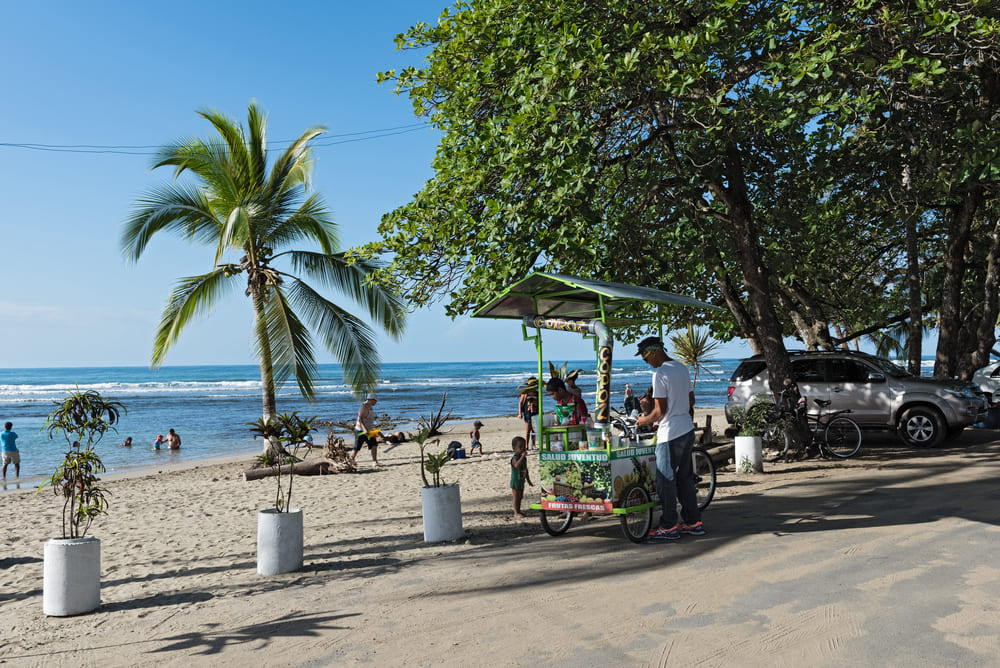
I recommend resisting the temptation to pack your itinerary with activities. Puerto Viejo is somewhere you can enjoy simply cycling between beaches, trying Caribbean food and soaking up the relaxed atmosphere.
In this guide, I’ll share the best things to do in Puerto Viejo de Talamanca, including practical information, my recommendations and tips to help you plan your visit.
Best Things To Do In Puerto Viejo de Talamanca
1. Explore Puerto Viejo Town
The first thing I recommend doing is exploring Puerto Viejo itself.
This small Caribbean town has a relaxed atmosphere, with colorful buildings, palm trees, reggae music and plenty of restaurants and cafes.
Most of the town center is easy to explore on foot, and I recommend wandering through the streets without a particular destination in mind. Browse the souvenir shops, stop for a smoothie and enjoy the atmosphere.
Puerto Viejo also has its own beach, Playa Puerto Viejo, right beside the town center. It’s a convenient place to take a break from exploring, watch the fishing boats and enjoy the Caribbean views.
The shoreline is a mix of sandy and rocky sections, and the water isn’t always ideal for swimming, particularly around the reef and the famous Salsa Brava surf break. I recommend coming here for the atmosphere and views rather than a dedicated beach day. For swimming, I prefer the more inviting beaches farther along the coast, such as Playa Cocles and Playa Punta Uva (both described below).
Food is one of the highlights. Puerto Viejo is a great place to try Caribbean-style rice and beans, cooked with coconut milk and often served with chicken, fish or plantains. It’s quite different from the gallo pinto you’ll find elsewhere in Costa Rica.
I particularly recommend trying some traditional Caribbean food rather than sticking to international restaurants. The local flavors are part of what makes this area different from the rest of the country.
Puerto Viejo also has a lively nightlife scene, with beach bars and reggae music. The waterfront around Salsa Brava is a popular area for drinks and socializing, although individual venues and opening hours change.
I recommend exploring the town during the day and returning for dinner in the evening, when the restaurants and bars become livelier.
Practical information: Allow at least one or two hours to explore the center. It’s also a convenient place to rent bicycles, book tours and organize transportation.
2. Relax At Playa Cocles
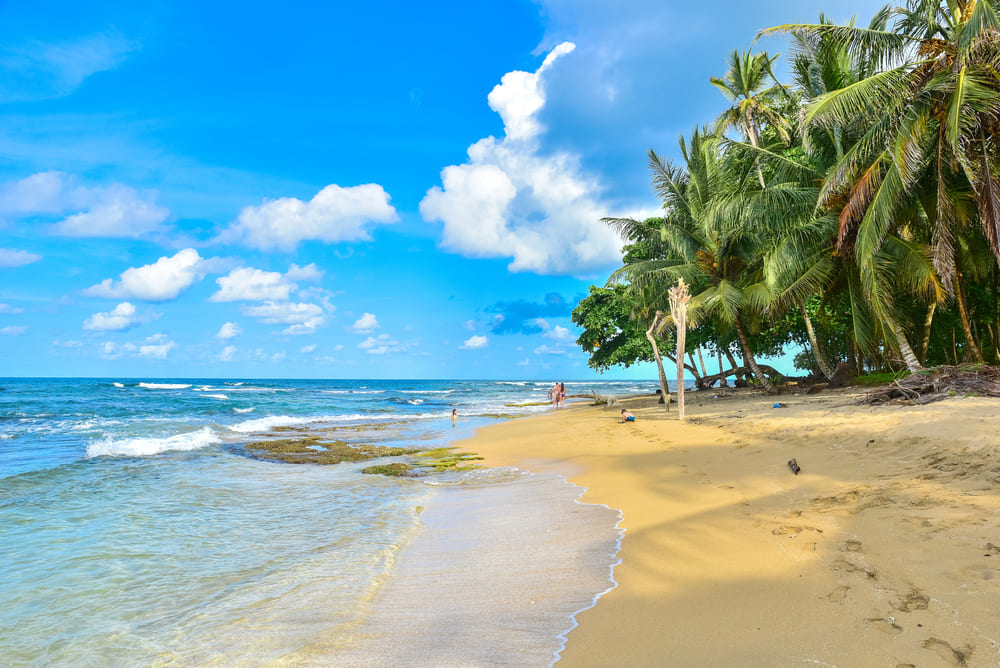
Playa Cocles is one of the most popular beaches near Puerto Viejo and a great place to spend a few hours.
Located approximately three kilometers south of town, this long stretch of golden sand is backed by palm trees and tropical vegetation.
It’s particularly popular with surfers, and you’ll often see people carrying boards along the beach or waiting for waves.
Even if you’re not interested in surfing, Playa Cocles is worth visiting. The beach is beautiful for walking, and there’s plenty of room to spread out and relax.
I recommend spending some time here rather than simply stopping for photographs. It’s an excellent place to enjoy the Caribbean scenery.
However, be careful if you want to swim. Playa Cocles can have powerful waves and dangerous rip currents. Lifeguard coverage varies, so always check local conditions and any warning flags before entering the water.
For families with younger children, I generally recommend Punta Uva for swimming when the sea is calm.
Practical information: Playa Cocles is approximately a 10-minute drive or a short bicycle ride from Puerto Viejo. There are restaurants and accommodations nearby, making it easy to combine your visit with lunch.
3. Visit Playa Chiquita
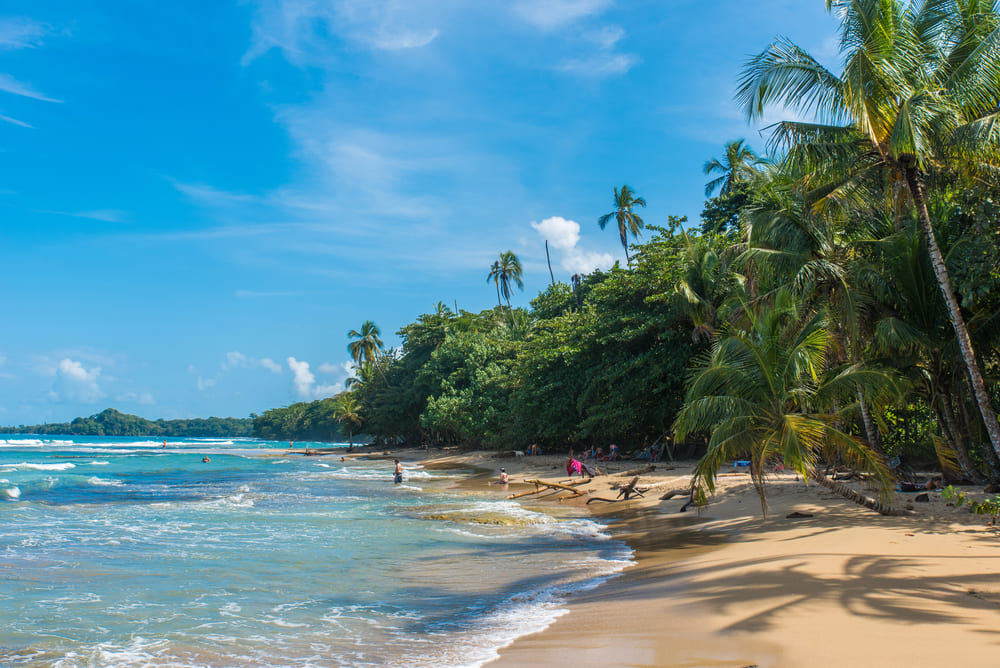
If you’re looking for somewhere quieter than Playa Cocles, I recommend visiting Playa Chiquita.
Located approximately five to six kilometers south of Puerto Viejo, this beautiful beach is surrounded by tropical rainforest and feels much more secluded.
Rather than one long stretch of sand, Playa Chiquita has several smaller coves separated by rocks and vegetation.
The setting is particularly beautiful, with rainforest reaching almost to the water’s edge.
I recommend exploring the different coves rather than stopping at the first one you reach. Some are more sheltered than others, and it’s worth taking a little time to find a spot you like.
Swimming is possible when conditions are calm, but there are reefs, rocks and potentially strong currents. Don’t assume a sheltered-looking cove is necessarily safe.
There aren’t many facilities directly on the beach, which helps preserve its peaceful atmosphere.
Practical information: Access is via paths from the coastal road, and some entrances are easier to find than others. Bring water, sunscreen and anything else you need. Playa Chiquita is an excellent stop when cycling between Puerto Viejo and Punta Uva.
4. Swim At Punta Uva Beach
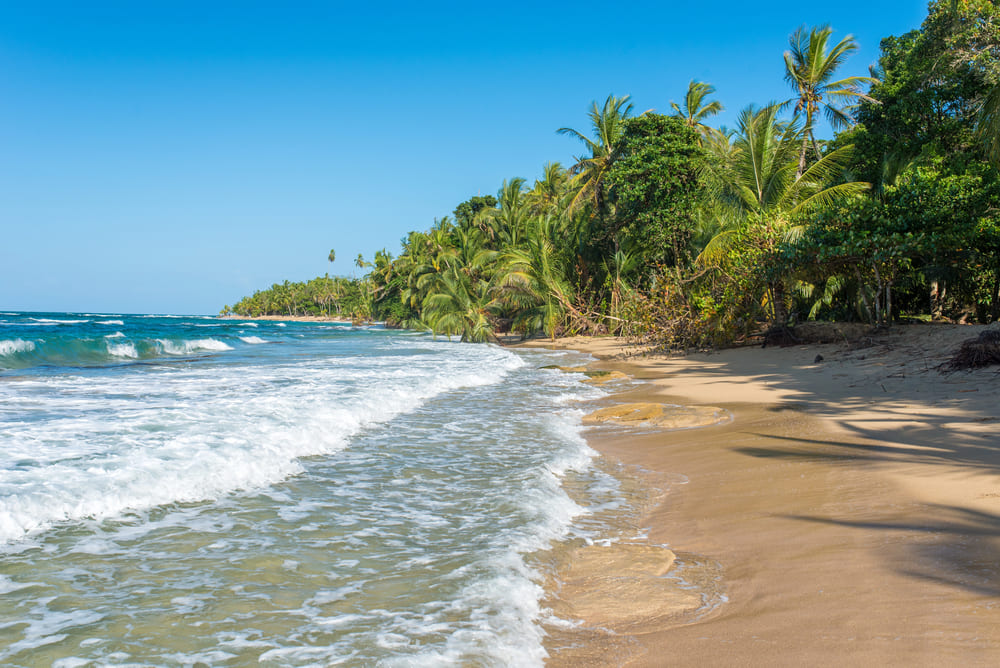
Punta Uva is one of the most beautiful beaches on Costa Rica’s Caribbean coast, and I recommend making it a priority.
Located approximately eight to nine kilometers south of Puerto Viejo, Punta Uva has golden sand, turquoise water and lush rainforest stretching down to the shoreline.
What makes it particularly appealing is the variety of scenery. There are different beach sections around the headland, including more sheltered areas where the water can be beautifully calm.
On a clear, calm day, it’s the sort of beach where I’d happily spend an entire afternoon.
I recommend exploring both sides of the headland rather than settling at the first beach you reach. The scenery and swimming conditions can be quite different.
Kayaking and paddleboarding are also popular here, with rentals sometimes available near the beach.
If you’re traveling with children, Punta Uva is one of the first beaches I’d consider for swimming, but only when conditions are suitable. Waves and currents can still be dangerous, particularly around the headland and exposed sections.
Practical information: Punta Uva is approximately 15–20 minutes from Puerto Viejo by car. Allow at least two hours, although you could easily spend much longer. Bring cash for small businesses and rentals, and keep valuables secure.
5. Explore Cahuita National Park And Go Snorkeling
Cahuita National Park is one of the absolute highlights of Puerto Viejo, and I recommend making it a priority even if you only have a couple of days in the area.
Located approximately 20 kilometers north of Puerto Viejo, this beautiful national park protects coastal rainforest, white-sand beaches and one of Costa Rica’s most important Caribbean coral reef systems.
What makes Cahuita particularly special is that the rainforest grows right beside the sea. You can walk along a trail surrounded by tropical vegetation, looking for wildlife, with beautiful Caribbean beaches only a few steps away.
There are two main activities here: walking through the rainforest and snorkeling over the coral reef.
Walking The Coastal Trail
The park has a coastal trail of approximately 8.3 kilometers connecting the Cahuita and Puerto Vargas sectors.
You don’t need to walk the entire trail to enjoy the park.
For most visitors, the easiest option is to enter at Playa Blanca, beside Cahuita town, and follow the coastal trail toward Punta Cahuita.
From Playa Blanca, you can walk toward Punta Cahuita, approximately 3.5 kilometers away, before returning the same way. This is a good option if you want to enjoy the rainforest and look for wildlife without committing to the entire coastal trail.
The first section takes you through beautiful rainforest alongside the beach. You’ll pass stretches of white sand, enormous trees and areas where the forest comes right down to the shoreline.
The trail is relatively flat, although roots, mud and wet sections can make it uneven.
One of the biggest attractions is the wildlife. Cahuita is home to howler monkeys, white-faced capuchin monkeys, sloths, coatis, iguanas, snakes and numerous tropical birds.
I recommend walking slowly and looking carefully into the trees rather than concentrating on covering as much distance as possible.
Listen for howler monkeys, which can make an incredible amount of noise, and watch for movement in the branches above the trail.
A guided walk is worthwhile if wildlife is your main priority. Experienced guides know where animals tend to hide and often carry spotting scopes, which can make a huge difference when trying to find sloths.
However, you can also explore independently, and I think that’s a good option if you prefer walking at your own pace.
Snorkeling At Cahuita National Park
Cahuita is also one of the best-known snorkeling destinations on Costa Rica’s Caribbean coast.
The protected reef contains brain coral, elkhorn coral, sea fans and numerous tropical fish. Depending on conditions and luck, you might also encounter rays, lobsters or sea turtles.
However, snorkeling here works differently from simply taking your own mask to the beach.
You need to join an authorized guided snorkeling excursion to visit the protected reef areas.
Tours generally use boats to reach designated snorkeling sites, and equipment is usually included.
I recommend organizing a snorkeling trip through an established local operator in Cahuita rather than arriving and assuming you can swim out to the reef.
Click here to book a tour now.
The most important consideration is the weather. Snorkeling depends on sea conditions and visibility, and tours may not operate when the water is rough or cloudy.
If snorkeling is a priority, I recommend keeping your plans flexible and booking for a day when conditions look promising.
You can also combine a snorkeling excursion with a guided wildlife walk, although I recommend checking exactly what’s included before booking.
Which Entrance Should You Use?
Cahuita National Park has two main entrances, and it’s worth choosing the right one.
The Playa Blanca entrance is beside Cahuita town. This is my recommendation for most first-time visitors, particularly if you want to explore the coastal trail and spend some time in Cahuita afterward.
Admission here is by voluntary cash contribution, which supports the local community and the national park.
The Puerto Vargas entrance is farther south, along the main coastal road. This entrance has a fixed admission fee of US$5.65 for nonresident foreign visitors, including tax.
Puerto Vargas is useful if you want to explore the southern section of the park or arrange a longer walk.
If you plan to walk the full trail between entrances, remember that you’ll need transportation back to your starting point. You can’t assume it’s a circular route.
Practical Information For Visiting Cahuita National Park
The park should be open 8 am to 4 pm.
I recommend arriving in the morning, particularly if you want to see wildlife before the busiest part of the day.
Allow approximately two to three hours for a shorter rainforest walk, or at least half a day if you’re combining hiking with snorkeling.
Bring comfortable walking shoes, insect repellent, drinking water and swimwear if you want to enjoy the beach. There are restrooms and other visitor facilities at designated areas.
Swimming is permitted in designated areas when conditions are safe. Never enter the water where warning signs indicate dangerous conditions, and don’t touch or stand on coral.
One final tip: Cahuita town itself is worth a look. I recommend allowing time for lunch after your visit, especially if you’ve spent the morning walking.
Click here for official Cahuita National Park information, including admission and opening hours.
Click here to book your tour including snorkeling.
6. Visit The Jaguar Rescue Center
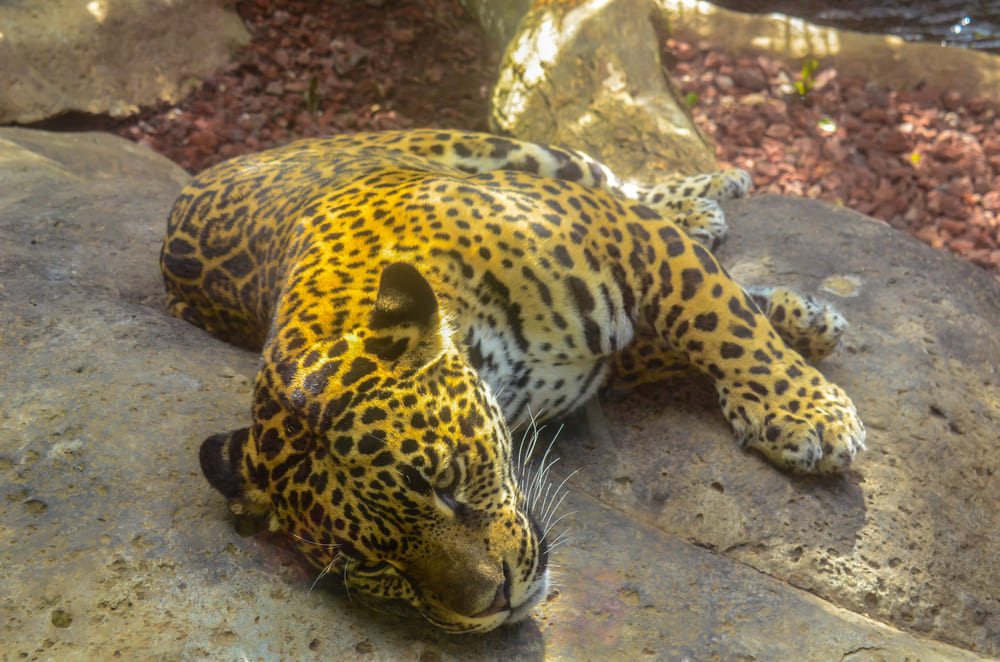
The Jaguar Rescue Center is one of the most interesting wildlife attractions near Puerto Viejo.
Located near Playa Chiquita, approximately five kilometers from town, this rescue center cares for injured, orphaned and confiscated wild animals.
Despite its name, it’s not primarily a jaguar attraction. The center works with animals such as sloths, monkeys, birds, reptiles and other native wildlife.
What makes this attraction worthwhile is the opportunity to learn about wildlife rehabilitation rather than simply looking at animals.
During a guided tour, you’ll hear about the animals’ backgrounds, the challenges they face and the work involved in caring for them.
Some animals can eventually be returned to the wild, while others require permanent care because they cannot survive independently.
I particularly recommend visiting if you’re interested in conservation or traveling with children. It’s a great opportunity to learn about Costa Rican wildlife and the problems caused by habitat loss, injuries and illegal wildlife keeping.
Importantly, this isn’t a petting zoo. Visitors cannot touch, hold or feed the animals.
Practical information: Public tours cost US$29 per person, with children under ten admitted free. Tours run at 9:30 am and 11:30 am and last approximately 90 minutes. Reservations aren’t essential, but I recommend booking ahead during busy periods.
Arrive 15–20 minutes early, and bring a rain jacket as the tour is mostly outdoors.
Click here for the official Jaguar Rescue Center website, including tour information and bookings.
7. Explore Gandoca-Manzanillo Wildlife Refuge
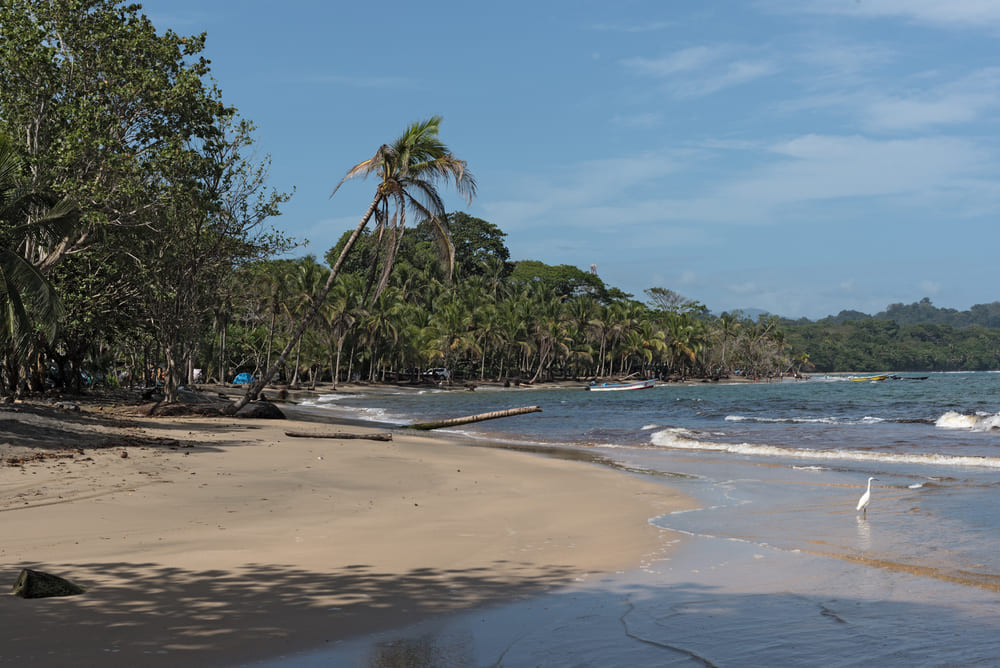
For another beautiful combination of rainforest and beaches, I recommend visiting Gandoca-Manzanillo Wildlife Refuge.
Located at the southern end of the coastal road, approximately 13 kilometers from Puerto Viejo, this protected area contains tropical rainforest, wetlands, coral reefs and beautiful Caribbean beaches.
The easiest place to begin exploring is Manzanillo village, where the main road ends and trails lead into the refuge.
The scenery is spectacular, with dense rainforest, rocky coastal viewpoints and stretches of golden sand.
I recommend walking some of the trails near Manzanillo rather than attempting a long hike through unfamiliar rainforest.
There are opportunities to spot monkeys, sloths, birds and other wildlife, although sightings aren’t guaranteed.
The trails can become muddy and slippery after rain, and some routes are less clearly marked than those in Cahuita National Park. A local guide is worthwhile if you want to explore farther into the forest.
Manzanillo Beach is also worth visiting while you’re here. It has a quieter atmosphere than Puerto Viejo’s more popular beaches and is a lovely place to relax.
Practical information: The refuge is officially open daily from 8 am to 4 pm, and admission is free. Allow approximately two to three hours for a short walk and time at the beach.
Wear proper shoes, bring insect repellent and stay on established trails.
Click here for official Gandoca-Manzanillo Wildlife Refuge information.
8. Go Surfing At Playa Cocles
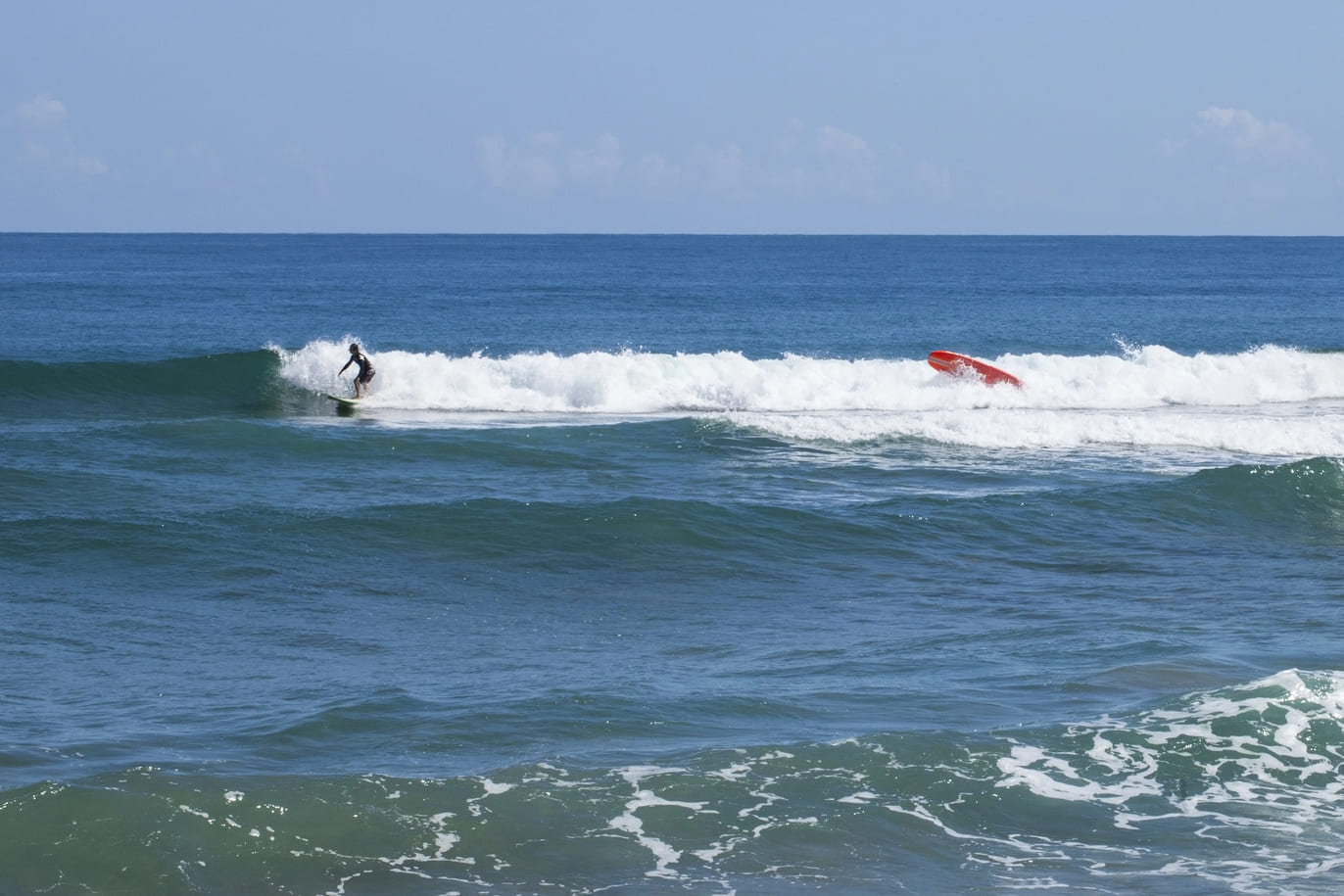
Playa Cocles is the main place I recommend looking for surfing lessons in Puerto Viejo.
Several local surf schools offer instruction and board rentals, and the beach has consistent waves.
For beginners, lessons typically cover paddling, standing up and catching waves, with an instructor choosing an appropriate section of the beach for the conditions.
However, the waves can be powerful, so I recommend booking a lesson rather than trying to teach yourself.
Puerto Viejo is also famous for Salsa Brava, a powerful reef break near the town center.
This is one of Costa Rica’s best-known surf spots, but it’s strictly for experienced surfers. The shallow reef and powerful waves make it dangerous for beginners.
Even if you’re not a surfer, watching experienced surfers at Salsa Brava can be entertaining when the waves are good.
Practical information: Beginner lessons generally last around 1.5–2 hours. Ask whether equipment is included and check the conditions before booking. Surfing is highly dependent on the weather and swell, so be prepared to change your plans.
9. Cycle Along The Coast
One of the best ways to explore Puerto Viejo is by bicycle.
The coastal road south of town connects Playa Cocles, Playa Chiquita, Punta Uva and Manzanillo, making it possible to visit several beautiful beaches in one day.
Much of the route is relatively flat, and cycling gives you the freedom to stop whenever something catches your attention.
I recommend renting a bicycle in Puerto Viejo and heading south, stopping at the beaches along the way.
It’s a particularly enjoyable way to explore because you don’t need to organize taxis or worry about parking at every beach.
The ride from Puerto Viejo to Punta Uva is approximately eight to nine kilometers, which is manageable for reasonably confident cyclists.
If you’re feeling energetic, you can continue to Manzanillo, approximately 13 kilometers from town.
However, remember that you’ll need to cycle back as well!
I recommend allowing at least several hours rather than treating it as a quick ride. The best part is stopping at the beaches and cafes along the way.
Practical information: Bicycle rentals are widely available in Puerto Viejo, with prices varying by shop and bicycle type. Expect to pay roughly US$8–15 for a standard bicycle for the day, but confirm the current rate locally.
The route follows a public road, and there aren’t dedicated bicycle lanes everywhere. Wear a helmet, take care around traffic and avoid cycling after dark, particularly with children.
10. Visit Playa Negra
Playa Negra is another beach worth visiting, particularly because it looks completely different from the golden-sand beaches south of Puerto Viejo.
Located just north of the town center, this long beach is known for its distinctive dark sand.
The black color comes from mineral-rich sediments, creating a striking contrast with the surrounding green vegetation and blue Caribbean Sea.
Playa Negra is generally quieter than Playa Cocles, especially as you walk farther from town.
I recommend visiting for a leisurely beach walk rather than making it your main swimming destination.
It’s a lovely place to enjoy the scenery, and the dark sand gives it a completely different character from Punta Uva or Playa Chiquita.
Swimming is possible when conditions are suitable, but currents and waves can be dangerous.
One advantage is its convenient location. You can easily walk here from central Puerto Viejo without needing transportation.
Practical information: The dark sand can become extremely hot in direct sunlight, so bring sandals. Playa Negra is a good choice if you want a quieter beach without traveling far from town.
Where To Stay In Puerto Viejo de Talamanca
Puerto Viejo has accommodation ranging from luxurious boutique hotels to affordable hostels.
I recommend staying in central Puerto Viejo if you want to walk to restaurants, shops and nightlife. However, staying around Playa Cocles or Playa Chiquita is a good choice if you prefer a quieter setting surrounded by tropical vegetation.
Here are my recommendations for different budgets.
BEST – Le Cameleon Boutique Hotel Review

For a luxurious stay, I recommend Le Cameleon Boutique Hotel.
Located near Playa Cocles, this stylish boutique hotel combines contemporary design with lush tropical surroundings.
The rooms have bright, modern interiors, and the property has swimming pools, a restaurant and beach facilities across the road.
One of the biggest advantages is the location. You’re close to Playa Cocles while still being a short drive or bicycle ride from downtown Puerto Viejo.
I particularly recommend Le Cameleon if you want somewhere comfortable and peaceful to return to after exploring the beaches.
Pros: Stylish accommodation, swimming pools, beach facilities and attractive tropical surroundings.
Cons: More expensive than most local accommodation and outside the town center.
Best For: Couples and travelers wanting a luxurious boutique hotel near the beach.
Click here for the latest prices.
MIDRANGE – La Tica y La Gata Review

La Tica y La Gata is a great option if you’re looking for comfortable accommodation with a relaxed atmosphere.
This small property has tropical gardens, a saltwater swimming pool and air-conditioned rooms.
Some accommodations also include kitchenettes and private terraces, which are particularly useful if you’re staying for several days.
I like having the option to prepare breakfast or a simple meal rather than eating out every time, especially when traveling as a family.
The location is quieter than central Puerto Viejo, although you’ll need to walk, cycle or drive to reach some beaches and restaurants.
Pros: Saltwater pool, comfortable rooms, kitchenettes in selected room types and peaceful surroundings.
Cons: Not directly on the beach, and some attractions require transportation.
Best For: Couples and families wanting comfortable midrange accommodation with some self-catering facilities.
Click here for the latest prices.
BUDGET – Pagalù Hostel Review

For budget accommodation, I recommend Pagalù Hostel.
Located in central Puerto Viejo, this hostel is within easy walking distance of restaurants, shops, the bus stop and the beach.
It offers dormitories and private double rooms, including some with private bathrooms and air conditioning.
There’s also a shared kitchen, communal seating areas and a garden with hammocks.
I particularly recommend Pagalù if you’re traveling without a car. Its central location makes exploring Puerto Viejo much easier, and you can rent a bicycle or organize tours nearby.
Pros: Excellent central location, affordable accommodation, shared kitchen and comfortable communal areas.
Cons: Limited privacy in dormitories and fewer facilities than larger hotels.
Best For: Solo travelers, backpackers and budget-conscious couples.
Click here for the latest prices.
Best Time To Visit Puerto Viejo de Talamanca
Puerto Viejo has a tropical Caribbean climate, with warm temperatures and rainfall throughout the year.
However, its weather patterns are quite different from Costa Rica’s Pacific coast.
While much of Costa Rica experiences its main dry season from December to April, the Caribbean coast has two relatively drier periods: February to March and September to October.
I recommend visiting during one of these periods if you have flexibility, particularly if you’re hoping to spend plenty of time swimming and relaxing on the beaches.
September and October can be especially good because they’re relatively dry on the Caribbean coast while much of Costa Rica’s Pacific coast experiences heavy rainfall.
However, there’s no completely dry season here, and tropical showers are possible at any time.
The wetter periods generally occur from November to January and May to August, although conditions vary from year to year.
Sea conditions are another consideration. Bigger Caribbean swells can arrive between December and March, making this a popular period for experienced surfers but sometimes less suitable for swimming and snorkeling.
I recommend keeping your itinerary flexible so you can take advantage of calm, sunny days for beach activities.
How To Get To Puerto Viejo de Talamanca
Puerto Viejo is located in Limón Province on Costa Rica’s southern Caribbean coast, approximately 220 kilometers from San José.
Most visitors arrive by road, as Puerto Viejo doesn’t have a commercial airport.
From San José
Driving from San José to Puerto Viejo generally takes approximately four to five hours, depending on traffic, road conditions and your starting point.
The main route follows Route 32 toward Limón before continuing south along the Caribbean coast.
I recommend allowing extra time, particularly during heavy rain or busy travel periods, as Route 32 can experience delays.
Shared shuttles and private transfers are also available from San José and Juan Santamaría International Airport.
Click here to check out shuttle and transfer prices and options.
For budget travelers, MEPE operates direct public buses between San José and Puerto Viejo. These are considerably cheaper than tourist shuttles, although schedules and departure points should be checked before traveling.
Click here for the official MEPE bus schedules.
From La Fortuna
If you’re visiting La Fortuna before Puerto Viejo, you can travel between the two destinations by rental car or shuttle.
The drive generally takes around four to five hours, depending on your route and road conditions.
I recommend traveling during daylight hours, especially if you’re unfamiliar with Costa Rica’s roads.
Shared shuttles are a convenient alternative if you don’t have a car, although services may take longer because of additional pickups and stops.
Click here to check out shuttle and transfer prices and options.
Click here to read our full guide to La Fortuna.
From Bocas del Toro, Panama
Puerto Viejo is also a popular stop for travelers moving between Costa Rica and Bocas del Toro in Panama.
The journey involves traveling to the border at Sixaola, completing immigration formalities, crossing into Panama and continuing to Almirante for a boat to Bocas Town.
You can organize the journey independently using buses and taxis, or book a combined shuttle and boat transfer.
I recommend a combined transfer if you want to simplify the journey, particularly when traveling with luggage.
Click here to check out shuttle prices and options.
Allow plenty of time, as border formalities and boat schedules can affect travel times.
Click here to read our full guide to Bocas del Toro.
Getting Around Puerto Viejo
Getting around Puerto Viejo is relatively straightforward, particularly if you’re staying in town.
The center is small enough to explore on foot, while bicycles are a popular way to reach the beaches farther south.
I recommend renting a bicycle if you’re comfortable riding on roads. It’s an enjoyable and inexpensive way to visit Playa Cocles, Playa Chiquita and Punta Uva.
Local buses also travel along the coastal road toward Manzanillo, although services aren’t particularly frequent.
Taxis are available for shorter journeys, and having a rental car provides the most flexibility if you’re planning to explore the wider region.
However, I don’t think a car is essential for Puerto Viejo, especially if you’re staying centrally and are happy cycling or using taxis.
Puerto Viejo de Talamanca Itinerary: How Many Days Do You Need?
I recommend spending at least three days in Puerto Viejo if possible.
Although you can see some highlights in a day or two, the relaxed atmosphere is part of the appeal, and it’s worth allowing time to enjoy the beaches without rushing.
One Day In Puerto Viejo
If you only have one day, I recommend concentrating on Puerto Viejo and the nearby beaches.
Start by exploring the town before heading to Playa Cocles.
Continue south to Playa Chiquita and Punta Uva, where you can spend the afternoon relaxing or swimming if conditions are suitable.
Return to Puerto Viejo for dinner and enjoy the Caribbean atmosphere in the evening.
Two Days In Puerto Viejo
With two days, you can include Cahuita National Park.
Spend your first day exploring Puerto Viejo and visiting the beaches south of town.
On your second day, head to Cahuita National Park in the morning to look for wildlife and walk along the beautiful coastline. If conditions allow, you could also book a snorkeling excursion.
Return to Puerto Viejo in the afternoon and visit Playa Negra or relax at your hotel.
Three Days In Puerto Viejo
Three days gives you time to enjoy a better mix of beaches, wildlife and activities.
On your first day, explore Puerto Viejo and cycle along the coast, stopping at Playa Cocles, Playa Chiquita and Punta Uva.
Spend your second day visiting Cahuita National Park, including a guided snorkeling tour if the weather permits.
On your third day, take a morning tour at the Jaguar Rescue Center before heading south to Manzanillo for a rainforest walk and time at the beach.
If you’re more interested in surfing than wildlife, you could replace one of these activities with a surfing lesson at Playa Cocles.
I recommend leaving some flexibility in your schedule, as weather and sea conditions can change quickly.
Final Words
Puerto Viejo de Talamanca is a wonderful destination if you enjoy beautiful beaches, tropical rainforest and a relaxed Caribbean atmosphere.
I particularly recommend visiting Cahuita National Park, spending time at Punta Uva and exploring the different beaches along the coast.
However, don’t overlook Puerto Viejo town itself. Its food, music and laid-back atmosphere are a big part of what makes this destination special.
With three days, you can experience a great combination of beaches, wildlife and local culture while still having time to relax.
Read more with our full guide to La Fortuna here and Monteverde here. Traveling on to Bocas del Toro? Find that guide here. You can also find all our guides to visiting Central America here.