Planning a trip to Mexico City? You’re in for an incredible experience!
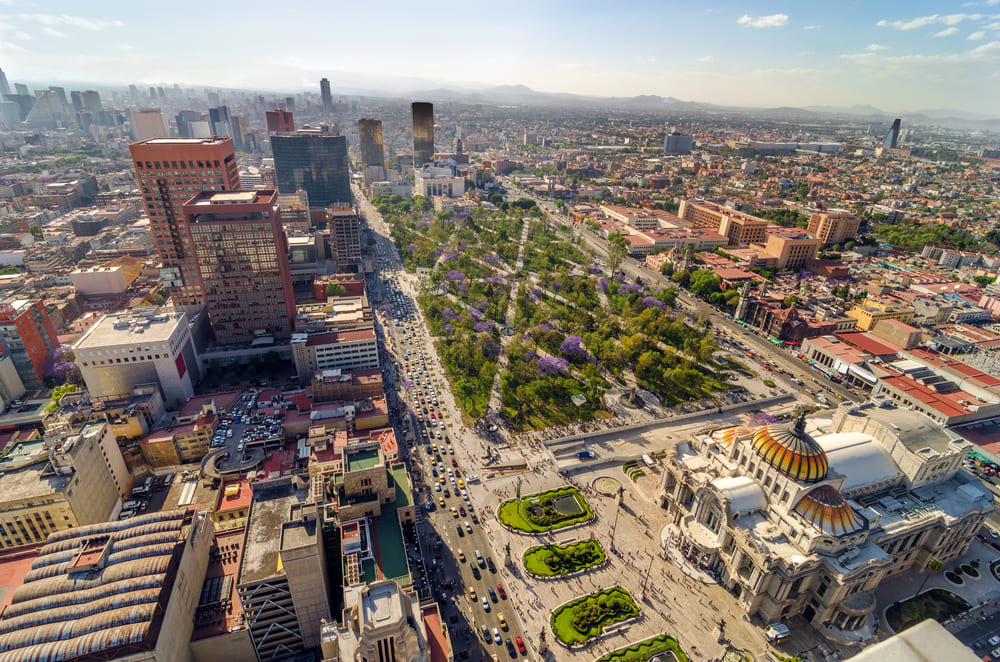
Mexico’s enormous capital is packed with fascinating history, impressive architecture, colorful neighborhoods, fantastic food and world-class museums. There’s so much to see here that deciding what to do can feel overwhelming.
What I particularly love about Mexico City is the combination of ancient and modern attractions. You can explore the remains of an Aztec temple, admire spectacular colonial buildings, visit incredible museums and watch Mexican wrestling, all in the same city.
It’s also a fantastic destination for food lovers, with everything from inexpensive street tacos to excellent restaurants.
I’ve put together this guide to help you discover the best things to do in Mexico City, including the attractions I think are most worth your time, practical visiting tips and suggestions for planning your stay.
Best Things To Do In Mexico City
Mexico City has enough attractions to keep you busy for weeks, but many of its most famous sights are conveniently located close together.
I recommend starting in the historic center before exploring the city’s museums, neighborhoods and attractions farther afield.
1. Take A Walking Tour Of Centro Histórico
One of the best ways to start exploring Mexico City is with a walking tour of Centro Histórico, the city’s historic center.
This UNESCO World Heritage-listed area is packed with beautiful colonial buildings, impressive churches, historic plazas and fascinating reminders of Mexico’s past.
It’s also where the Aztec capital of Tenochtitlan once stood, making it an especially interesting place to learn about the city’s history.
I recommend taking a guided walking tour early in your visit. There’s so much history here that it’s easy to miss important details if you’re simply wandering around independently.
What makes walking around Centro Histórico so fascinating is the contrast between the different periods of history. One moment you’re looking at an enormous colonial cathedral, and the next you’re discovering the remains of an ancient Mexica temple.
Most tours include landmarks such as the Zócalo, Metropolitan Cathedral and Palacio de Bellas Artes, although routes vary.
Click here to book a quality walking tour.
Allow around two to three hours for a walking tour, with extra time to revisit the places that interest you most.
2. Explore The Zócalo And Metropolitan Cathedral
The Zócalo, officially Plaza de la Constitución, is Mexico City’s enormous main square and one of its most important landmarks.
Located in the heart of Centro Histórico, this historic plaza has been a center of political, religious and cultural life for centuries.
It’s surrounded by impressive buildings, including the National Palace and Metropolitan Cathedral.
The first thing that strikes me about the Zócalo is its sheer size. It’s an enormous open space, with the Mexican flag flying in the center and magnificent historic buildings surrounding it.
I recommend spending some time simply exploring the square and appreciating the atmosphere.
The Metropolitan Cathedral is particularly impressive. Built over several centuries, it combines different architectural styles and is one of the largest cathedrals in the Americas.
Inside, you’ll find elaborate altars, chapels and religious artwork.
The Zócalo also hosts public celebrations, demonstrations, concerts and other events throughout the year, so the atmosphere can vary considerably depending on when you visit.
It’s easy to combine this attraction with a walking tour of Centro Histórico and the nearby Templo Mayor Museum.
3. Discover The Ancient Aztec City At Templo Mayor Museum
One of the most fascinating attractions in Mexico City is the Templo Mayor archaeological site and museum.
Located just beside the Metropolitan Cathedral, this was once the main religious complex of Tenochtitlan, the capital of the Mexica, or Aztec, Empire.
The Spanish destroyed much of the ancient city following their conquest in 1521, and colonial buildings were constructed over its remains.
Today, you can walk through the excavated ruins and see the foundations of the enormous temple that once stood here.
What I find particularly remarkable is that these ancient ruins are right in the middle of the modern city, surrounded by buildings and busy streets.
I highly recommend visiting the museum, which contains an impressive collection of artifacts discovered during archaeological excavations.
Highlights include stone sculptures, ceremonial objects and the famous circular relief depicting the goddess Coyolxauhqui.
The exhibits provide fascinating insights into Mexica religion, daily life and the history of Tenochtitlan.
Allow around one to two hours to explore the ruins and museum. It’s generally open Tuesday to Sunday, from 9 AM to 5 PM, and closed on Mondays.
4. Admire The Murals At Museo Vivo Del Muralismo
If you’re interested in Mexican art and history, I highly recommend visiting Museo Vivo del Muralismo.
Located in the historic headquarters of Mexico’s Ministry of Public Education, this museum celebrates the country’s famous muralist movement.
One of its biggest attractions is the extensive collection of murals painted by Diego Rivera.
These artworks depict Mexican history, social struggles, workers, festivals and everyday life, making them fascinating even if you’re not usually interested in art museums.
I particularly love how the murals cover the walls of the building’s courtyards and corridors. Instead of looking at individual paintings hanging in a gallery, you’re surrounded by enormous artworks that were created for the spaces you’re walking through.
The museum also includes murals by other important artists, exhibitions exploring Mexican muralism and beautifully restored historic rooms.
Admission is free, making this one of the best free things to do in Mexico City.
The museum is open Wednesday to Monday, from 10 AM to 6 PM, and closed on Tuesdays and national holidays.
It’s conveniently located near the Zócalo and Templo Mayor, so I recommend combining these attractions.
5. Visit Palacio De Bellas Artes
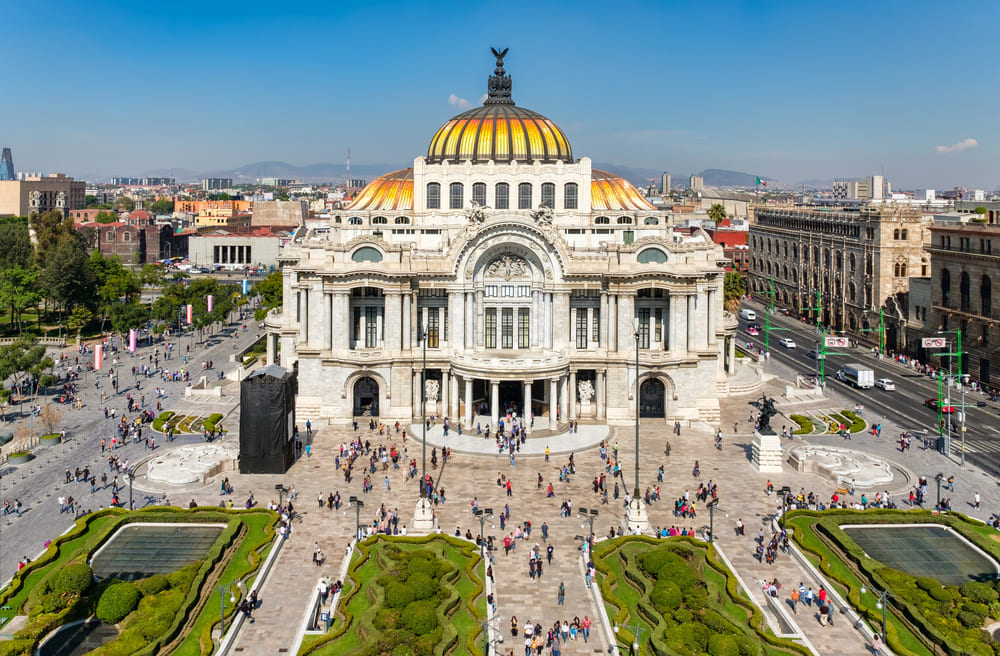
Palacio de Bellas Artes is one of Mexico City’s most beautiful buildings and an attraction I wouldn’t want to miss.
Located at the western edge of Centro Histórico, this magnificent cultural palace is famous for its white marble exterior and distinctive orange-and-yellow tiled dome.
I think it’s one of those buildings that looks spectacular from almost every angle. The combination of its elaborate architecture and the surrounding plaza makes it a fantastic place for photographs.
However, there’s plenty to see inside too.
The building houses important murals by Mexican artists, including Diego Rivera, José Clemente Orozco and David Alfaro Siqueiros.
One of its best-known artworks is Rivera’s Man, Controller of the Universe, which was painted after an earlier version commissioned for Rockefeller Center in New York was destroyed.
The palace is also a major performing arts venue, hosting concerts, opera, dance and other cultural events.
If you’re interested in Mexican dance, I recommend checking whether the Ballet Folklórico de México has a performance during your visit.
Even if you don’t go inside, the building is worth seeing from the surrounding plaza.
For an elevated view, you can also look across toward Palacio de Bellas Artes from the upper floors of the nearby Sears building, where there’s a popular café.
6. Explore The National Museum Of Anthropology
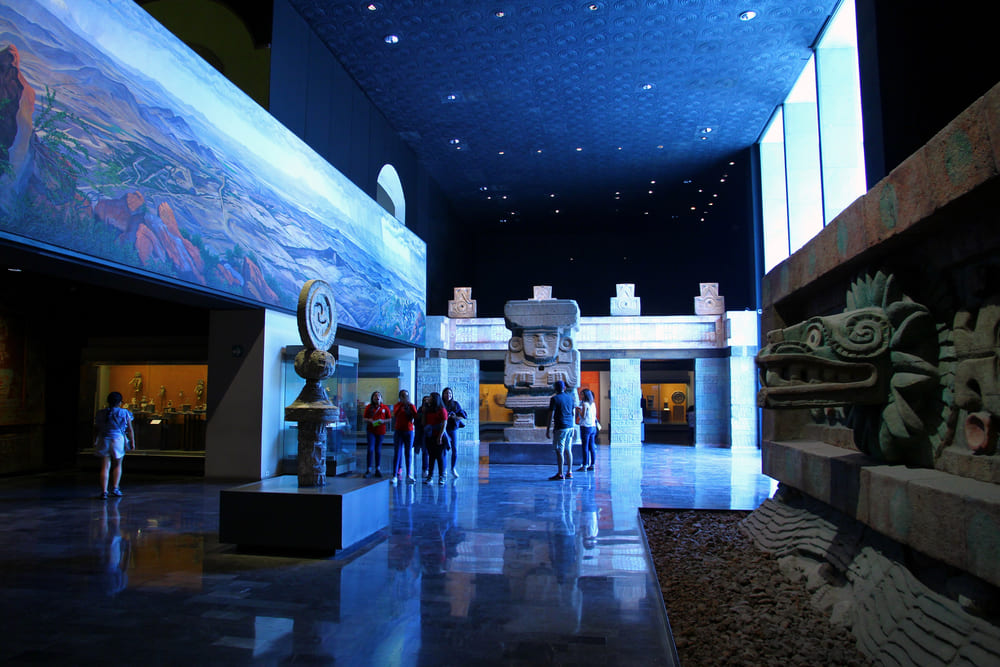
If you only have time to visit one museum in Mexico City, I’d strongly consider the National Museum of Anthropology.
Located beside Chapultepec Park, this enormous museum is one of the most important museums in Mexico.
Its collections explore the country’s pre-Hispanic civilizations and the cultures of Indigenous peoples.
One of the most famous exhibits is the Aztec Sun Stone, an enormous carved stone often referred to as the Aztec calendar.
You’ll also find fascinating artifacts from the Maya, Mexica, Olmec and other civilizations, including sculptures, jewelry, ceremonial objects and reconstructed archaeological features.
I particularly love the scale of the museum. There’s something incredible around every corner, and it’s easy to lose track of time exploring the different galleries.
The building itself is also impressive, especially the enormous concrete canopy supported by a central column in the courtyard.
I recommend visiting before a trip to Teotihuacán or other archaeological sites because the museum provides useful historical context.
Allow at least three hours for a visit, although you could easily spend most of the day here.
The museum is open Tuesday to Sunday, from 9 AM to 6 PM, and closed on Mondays.
7. Visit Chapultepec Castle And Park
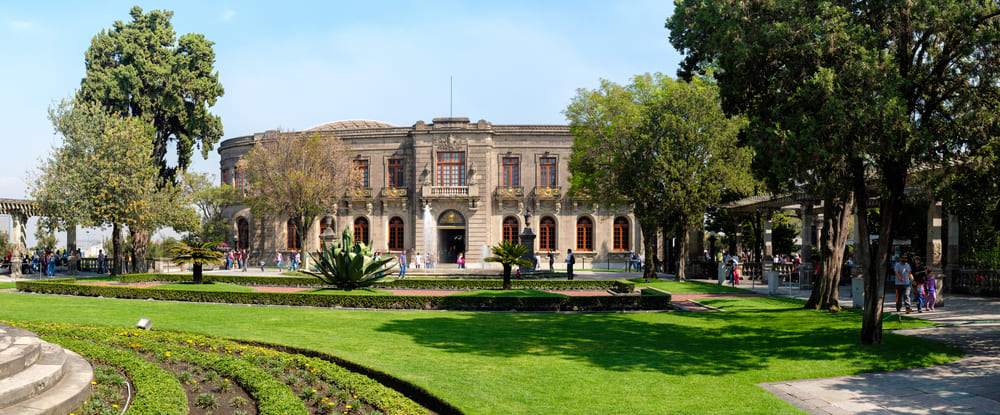
Chapultepec Park, known as Bosque de Chapultepec, is one of Mexico City’s largest and most popular green spaces.
This enormous park contains museums, lakes, gardens, monuments and walking paths, making it a great place to escape the busy city streets.
One of its highlights is Chapultepec Castle, which sits on a hill overlooking the surrounding park.
The castle has a fascinating history, having served as an imperial residence, presidential residence and military academy at different times.
Today, it houses the National Museum of History.
Inside, you can explore beautifully decorated rooms, historical exhibits and terraces with impressive views over Mexico City.
I particularly recommend spending time on the terraces. The views over the park and surrounding city are spectacular, and it’s a lovely contrast to the busy streets below.
You can also walk around the park, visit its lakes or explore other nearby attractions.
The castle and National Museum of Anthropology are close enough to visit on the same day, although both deserve several hours.
Chapultepec Castle is generally open Tuesday to Sunday, from 9 AM to 5 PM.
8. Explore Roma And Condesa Neighborhoods
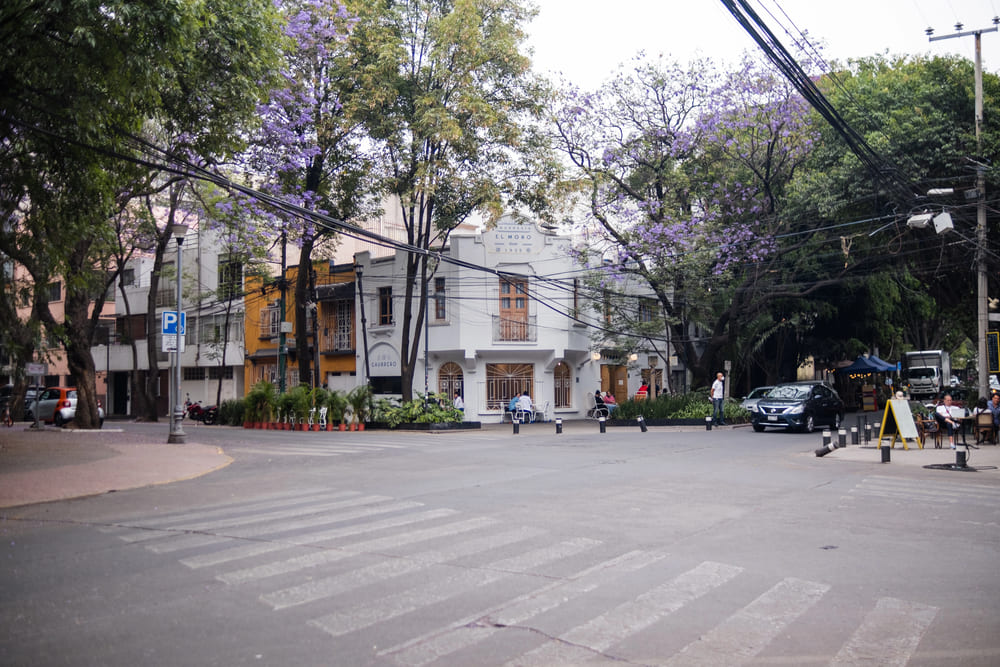
For a different side of Mexico City, I recommend spending some time exploring the neighborhoods of Roma and Condesa.
These neighboring areas are known for their attractive streets, beautiful architecture, leafy parks, cafés and restaurants.
They’re particularly enjoyable if you like wandering around neighborhoods rather than moving from one major tourist attraction to another.
Roma Norte has a mixture of historic mansions, boutiques, art galleries and popular restaurants.
Nearby Condesa is especially famous for its tree-lined streets and green spaces.
I recommend walking through Parque México, a lovely park with winding paths, fountains and plenty of places to sit.
You can also explore Avenida Amsterdam, a distinctive curved street built around the former site of a horse-racing track.
What I particularly enjoy about these neighborhoods is the atmosphere. They’re perfect for slowing down, stopping for coffee and simply enjoying being in Mexico City without a packed sightseeing schedule.
Both neighborhoods have excellent food options, from casual taco restaurants to bakeries and more sophisticated dining.
I think they’re a great choice for an afternoon of relaxed exploring, particularly after a busy morning visiting museums.
9. Visit The Frida Kahlo Museum In Coyoacán
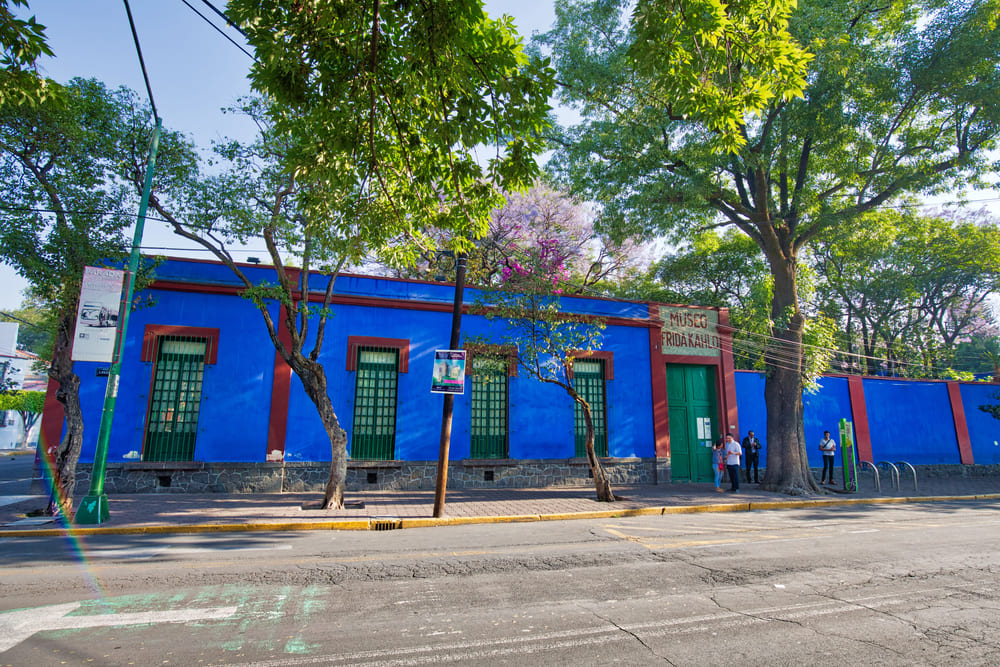
One of Mexico City’s most famous museums is the Frida Kahlo Museum, also known as Casa Azul or the Blue House.
Located in the charming neighborhood of Coyoacán, this was the home where the celebrated Mexican artist Frida Kahlo was born and spent much of her life.
Today, the house is a museum dedicated to her life, artwork and personal history.
You can explore rooms containing her belongings, photographs, clothing and other objects that provide insights into her extraordinary life.
The building itself is beautiful, with its striking blue walls and peaceful courtyard garden.
What I find most interesting is how personal the museum feels. Rather than simply displaying an artist’s work, it gives you an insight into the home, relationships and experiences that shaped her life.
You must purchase tickets in advance. The museum does not sell tickets at the entrance, and popular dates can sell out.
I recommend booking as soon as you know when you’ll be visiting. The museum is closed on Mondays, and Wednesday opening hours differ from other days.
While you’re in Coyoacán, take some time to explore the neighborhood.
Its historic streets, plazas, cafés and markets make it a lovely area for wandering around.
I recommend combining the museum with a visit to Jardín Centenario and the surrounding historic center of Coyoacán.
10. Take A Colorful Boat Ride In Xochimilco
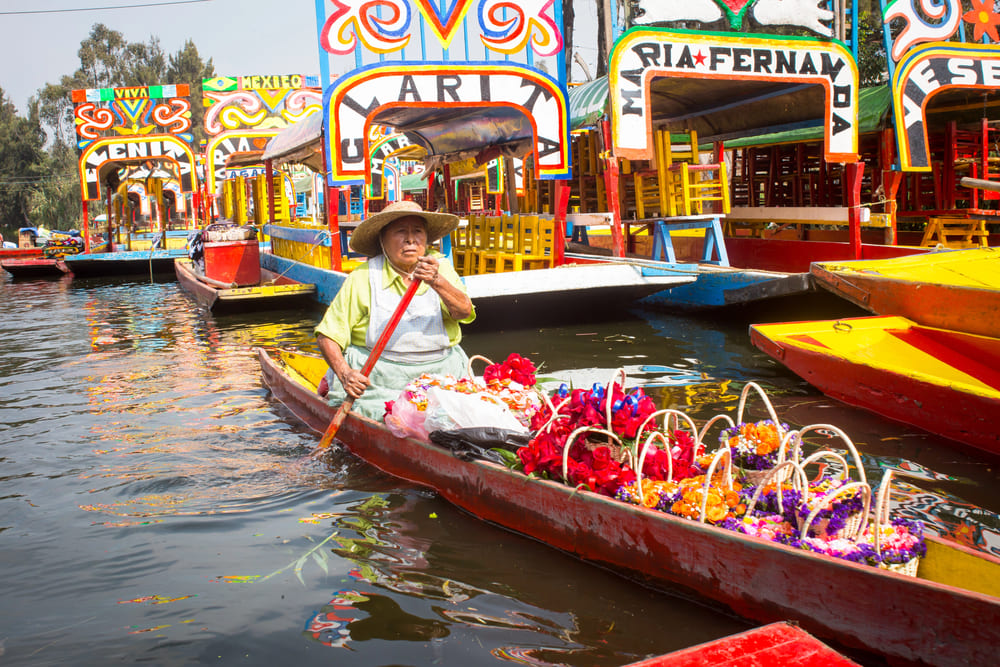
One of the most colorful and unusual experiences in Mexico City is taking a boat ride through the canals of Xochimilco.
Located in the south of the city, Xochimilco is famous for its brightly decorated wooden boats called trajineras.
These flat-bottomed boats travel through a network of canals that are remnants of the ancient lake system surrounding Tenochtitlan.
I love how colorful the boats are, with their elaborate decorations and brightly painted names. It’s an experience that feels completely different from the museums and historical attractions in central Mexico City.
Many boats have tables and chairs, making them ideal for enjoying snacks and drinks while cruising along the waterways.
You may also encounter musicians, food vendors and other boats selling souvenirs.
The canals are part of a UNESCO World Heritage-listed cultural landscape, with traditional agricultural islands called chinampas.
If you’re interested in the area’s history and ecology, I recommend choosing a tour that explores the quieter canals and explains the traditional farming system.
Xochimilco is quite far from central Mexico City, so allow plenty of travel time.
I recommend using an authorized embarkation point and confirming the total price and duration before departure. Private trajinera rates are generally charged per boat rather than per passenger.
11. Experience A Lucha Libre Wrestling Match
For a completely different experience, I highly recommend watching a lucha libre wrestling match in Mexico City.
Lucha libre is Mexican professional wrestling, famous for its colorful masks, theatrical characters, acrobatic moves and enthusiastic crowds.
Even if you’re not normally interested in wrestling, the atmosphere makes this a memorable night out.
One of the most famous venues is Arena México, which hosts major wrestling events.
You’ll see wrestlers performing dramatic moves, jumping from the ropes and playing exaggerated heroes and villains.
What I love about the idea of a lucha libre night is that the crowd is just as much a part of the experience as the wrestlers. Everyone gets involved, cheering, booing and shouting throughout the matches.
I recommend choosing seats with a good view of the ring rather than automatically paying for the most expensive tickets.
Arena México regularly hosts performances on Tuesdays, Fridays and Sundays, although schedules can change.
You can buy tickets through the official CMLL ticketing channels or join an organized tour, which may include transportation and an introduction to lucha libre culture.
12. Explore Mexico City’s Markets
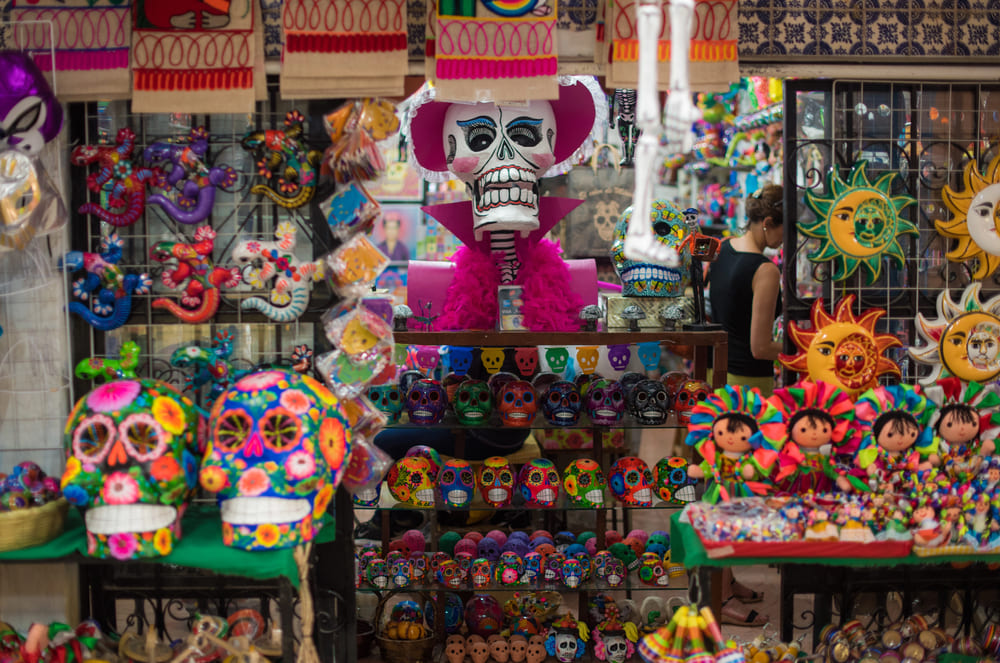
Mexico City has some fantastic markets, and I recommend visiting at least one during your stay.
They’re great places to experience local life, try Mexican food and shop for souvenirs.
Mercado de Artesanías La Ciudadela is one of the best options for traditional handicrafts. You’ll find colorful textiles, ceramics, jewelry, decorative items and souvenirs from different parts of Mexico.
I particularly love browsing markets like this because there’s so much variety. Even if you’re not planning to buy anything, it’s fascinating to see the different crafts and styles from across Mexico.
For food lovers, Mercado de San Juan is another interesting option.
This historic market is known for its specialty ingredients, fresh produce, meats, cheeses and unusual foods.
I recommend visiting with an appetite, although the experience is more about exploring a traditional food market than sitting down for a conventional restaurant meal.
If you’re looking for an everyday neighborhood market, there are plenty of smaller options throughout the city.
Markets can be busy, so keep your valuables secure and carry some cash for smaller purchases.
13. Take A Day Trip To Teotihuacán
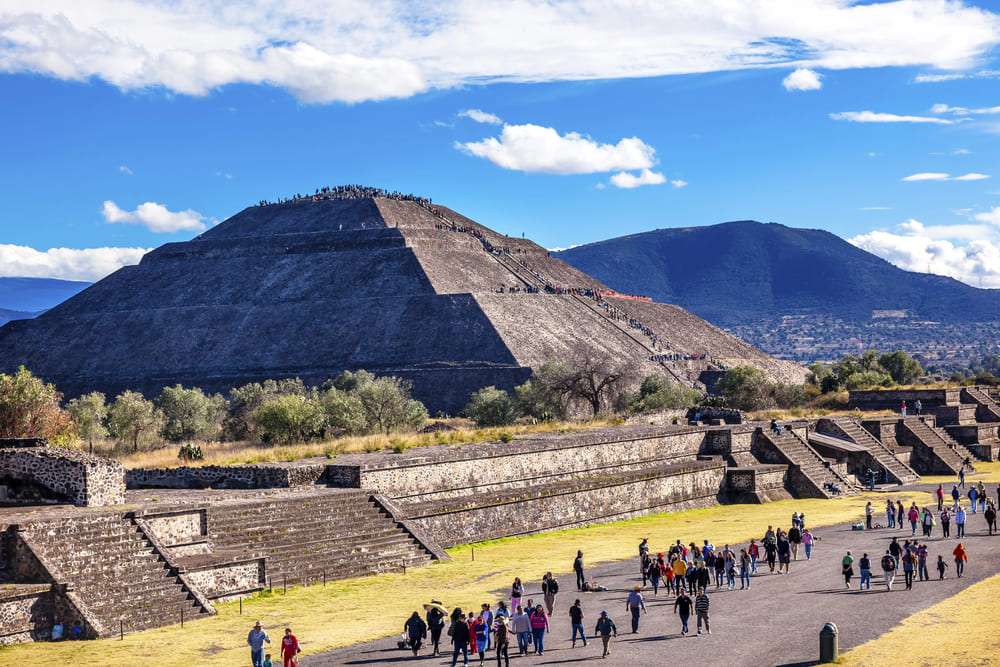
One of the most impressive attractions near Mexico City is the ancient archaeological site of Teotihuacán.
Located approximately 50 kilometers (31 miles) northeast of the city, Teotihuacán was once one of the largest urban centers in the ancient Americas.
Today, its enormous pyramids and ceremonial avenues make it one of Mexico’s most spectacular archaeological sites.
The two most famous structures are the Pyramid of the Sun and the Pyramid of the Moon.
You can also explore the Avenue of the Dead, the Temple of the Feathered Serpent and other fascinating ruins.
I think the most impressive part of Teotihuacán is the scale of the place. Walking along the Avenue of the Dead with enormous pyramids rising around you gives you a real appreciation of how important this ancient city once was.
I recommend allowing at least three to four hours to explore the site properly.
A guide is particularly worthwhile because Teotihuacán has a complex history, and much about the people who built it remains uncertain.
Visitors are no longer permitted to climb the Pyramid of the Sun, and access to other structures is restricted for conservation.
Teotihuacán is accessible by organized tour, rental car or public bus from Mexico City’s Northern Bus Terminal.
I recommend arriving close to opening time, at 8 AM, because the site has limited shade and can become very hot.
Click here to book a tour from Mexico City now.
14. Visit The Basilica Of Our Lady Of Guadalupe
Another important attraction in Mexico City is the Basilica of Our Lady of Guadalupe.
Located in the northern part of the city, this enormous religious complex is one of the most important Catholic pilgrimage destinations in the world.
It’s dedicated to Our Lady of Guadalupe, who, according to Catholic tradition, appeared to the Indigenous man Juan Diego in 1531.
The complex contains several churches, chapels and religious buildings.
The most famous is the modern basilica, a distinctive circular building designed to accommodate large numbers of pilgrims.
Inside, visitors can see the revered image of Our Lady of Guadalupe displayed above the main altar.
What I find particularly interesting is the contrast between the modern basilica and the older religious buildings. The different architectural styles tell the story of how this important pilgrimage site has developed over the centuries.
I recommend exploring both the modern basilica and the older buildings to appreciate the history of the site.
You don’t need to be religious to find the complex interesting, although visitors should dress respectfully and remember that it’s an active place of worship.
Admission to the main basilica is free.
You can visit independently or combine the basilica with a guided excursion to Teotihuacán, as both are located north of central Mexico City.
Where To Stay In Mexico City
Mexico City is enormous, so choosing the right area to stay can make a big difference to your visit.
I recommend staying in or near Centro Histórico if your priority is sightseeing, particularly if you want easy access to the Zócalo, museums and historic landmarks.
Roma and Condesa are also popular choices, especially if you’re interested in restaurants, cafés and nightlife.
Here are three hotels worth considering.
Best: Casa De La Luz Hotel Boutique Review

Casa de la Luz Hotel Boutique is an excellent choice if you’re looking for an upscale hotel in Mexico City’s historic center.
Located near the Zócalo, this boutique hotel occupies a beautifully restored historic building with an elegant courtyard and traditional architectural details.
The rooms combine modern comforts with the building’s historic character, while facilities include a Mexican restaurant, bar, terrace and fitness center.
I particularly recommend Casa de la Luz for couples or travelers who want somewhere atmospheric within walking distance of Centro Histórico’s main attractions.
Its central location is ideal for sightseeing, although you’ll need transportation to reach neighborhoods such as Roma and Condesa.
Click here to check the latest prices for Casa de la Luz Hotel Boutique.
Midrange: ibis Mexico Alameda Review

ibis Mexico Alameda is a practical choice if you’re looking for a comfortable hotel in a convenient location.
Situated near Alameda Central, it’s within walking distance of Palacio de Bellas Artes and several other attractions in Centro Histórico.
The hotel offers modern, straightforward rooms with air conditioning, private bathrooms, TVs and Wi-Fi.
There’s also an on-site restaurant, bar and outdoor terrace.
I recommend ibis Mexico Alameda if you want a reliable hotel with a good location rather than luxury facilities or traditional character.
It’s particularly convenient for exploring the historic center and using public transportation to reach other parts of Mexico City.
Click here to check the latest prices for ibis Mexico Alameda.
Budget: VOS Centro Review

VOS Centro is worth considering if you’re looking for budget-friendly accommodation in central Mexico City.
Located on Fray Servando Teresa de Mier in the historic center, it’s a practical base for exploring the city without spending too much on accommodation.
The hotel offers functional rooms with Wi-Fi and safes, along with facilities including room service and free parking.
I recommend it if you’re planning to spend most of your days sightseeing and mainly need somewhere comfortable to sleep.
Compared with larger hotels, the appeal here is practicality and affordability rather than extensive facilities.
It’s worth checking the available room categories and their amenities before booking.
Click here to check the latest prices for VOS Centro.
Best Time To Visit Mexico City
Mexico City has a relatively mild climate throughout the year, thanks to its high elevation of approximately 2,240 meters (7,350 feet).
Unlike many tropical destinations in Mexico, the city generally has warm days and cooler nights rather than consistently hot weather.
I recommend visiting between March and May or October and November for pleasant sightseeing conditions.
March to May is generally warm and relatively dry, although temperatures can become quite high during the afternoons.
The rainy season usually runs from May or June through October, with frequent afternoon or evening showers.
Rain doesn’t necessarily ruin a visit, but I recommend planning outdoor attractions earlier in the day during these months.
November through February is generally drier and cooler, with chilly mornings and evenings.
Mexico City is also particularly interesting around Día de Muertos, or Day of the Dead, in late October and early November, when the city hosts celebrations and cultural events.
However, accommodation can be more expensive around major festivals and holidays.
How To Get To Mexico City
Mexico City is one of Latin America’s major transportation hubs, with international flights and long-distance buses connecting it to destinations throughout Mexico and beyond.
Flying To Mexico City
Most international travelers arrive at Mexico City International Airport, officially Aeropuerto Internacional Benito Juárez (MEX).
The airport is located east of the city center, making it relatively convenient for reaching central neighborhoods.
Mexico City is also served by Felipe Ángeles International Airport (NLU), which is farther north of the city.
I recommend checking which airport your flight uses before booking accommodation or arranging transfers, as travel times differ considerably.
Getting From Mexico City International Airport To The Center
Mexico City International Airport is approximately 8–10 kilometers (5–6 miles) from Centro Histórico, depending on your destination.
The journey by car can take around 20–45 minutes, although heavy traffic may make it considerably longer.
I recommend using an authorized airport taxi or prearranged transfer if you’re arriving with luggage.
App-based transportation may also be available, but airport pickup rules and designated locations can change.
Public transportation is another option, particularly Metrobús Line 4, which connects both airport terminals with central Mexico City.
The Metro is inexpensive, although it can be inconvenient with large suitcases, particularly during busy periods.
Getting From Felipe Ángeles International Airport
Felipe Ángeles International Airport is located considerably farther from central Mexico City.
Depending on traffic and your destination, the journey can take around one to two hours or longer.
Airport buses and other transportation connections serve parts of Mexico City, although schedules and destinations vary.
I recommend checking the available services before arrival or arranging a transfer if you’re traveling with children or arriving late.
Traveling To Mexico City By Bus
Mexico City is well connected to other Mexican destinations by long-distance buses.
Major bus companies operate comfortable services from cities such as Puebla, Querétaro, Oaxaca and Guadalajara.
The city has several major bus terminals, including Terminal del Norte, Terminal de Autobuses de Pasajeros de Oriente (TAPO) and Terminal del Sur.
I recommend checking which terminal your bus uses because they’re located in different parts of the city.
You can check out bus timetables and prices here.
Getting Around Mexico City
Mexico City is enormous, so you’ll probably use a combination of walking and public transportation during your visit.
I recommend exploring Centro Histórico on foot because many of its main attractions are close together.
For longer journeys, the Metro is one of the cheapest and fastest options, particularly when road traffic is heavy.
The Metrobús network is another useful choice, with dedicated bus lanes along several major routes.
Both systems can become extremely crowded during rush hour, so I recommend avoiding peak commuting times if possible.
Uber and other app-based transportation services are convenient for reaching attractions that aren’t close to a Metro station.
Official taxis are another option, although I prefer arranging transportation through a hotel or reputable service rather than hailing an unfamiliar taxi on the street.
For destinations such as Xochimilco and Teotihuacán, an organized tour or a combination of public transportation and taxis may be more convenient.
Mexico City Itinerary: How Many Days Do You Need?
I recommend spending at least three or four days in Mexico City, although you could easily fill a week with sightseeing.
The city is enormous, and travel between neighborhoods can take longer than expected.
Two Days In Mexico City
With two days, I recommend concentrating on the main attractions rather than trying to see everything.
Spend your first day exploring Centro Histórico, including the Zócalo, Metropolitan Cathedral, Templo Mayor and Palacio de Bellas Artes.
On your second day, visit the National Museum of Anthropology and Chapultepec Castle before enjoying dinner in Roma or Condesa.
Three Days In Mexico City
With three days, follow the two-day itinerary and add a full-day excursion to Teotihuacán.
You could also visit the Basilica of Our Lady of Guadalupe on the way back, depending on your transportation and how much time you want to spend at the archaeological site.
Alternatively, use your third day to explore Coyoacán and the Frida Kahlo Museum before watching a lucha libre match in the evening.
Four Days In Mexico City
Four days gives you more flexibility to enjoy the city’s main attractions without rushing.
Spend your first day exploring Centro Histórico and your second day visiting Chapultepec and the National Museum of Anthropology.
Dedicate your third day to Teotihuacán and the Basilica of Our Lady of Guadalupe.
On your fourth day, visit the Frida Kahlo Museum in Coyoacán or take a colorful boat ride through Xochimilco.
If there’s a lucha libre event during your visit, I recommend fitting it into one of your evenings.
Final Words
Mexico City is an incredible destination, with a fascinating combination of ancient history, beautiful architecture, world-class museums and vibrant local culture.
What I love most is the variety of experiences available, from exploring the ruins of Tenochtitlan and the pyramids of Teotihuacán to watching lucha libre and wandering through colorful neighborhoods.
Whether you’re visiting for a weekend or staying for a week, there’s no shortage of memorable things to do in Mexico City.
Heading to the Mexican Riviera? You can also read our guides to Playa del Carmen here or Bacalar here. Click here to find all our guides to amazing places in Central America.