
Traveling from Guatemala to El Salvador and want to visit the beautiful Ruta de las Flores? While there are plenty of options for traveling between the capitals of these two countries, getting directly to this part of western El Salvador takes a little more planning.
The Ruta de las Flores is one of the most beautiful parts of El Salvador, with colorful mountain towns, coffee plantations, waterfalls and fabulous weekend food festivals. Popular places to stay include Concepción de Ataco, Apaneca and Juayúa.
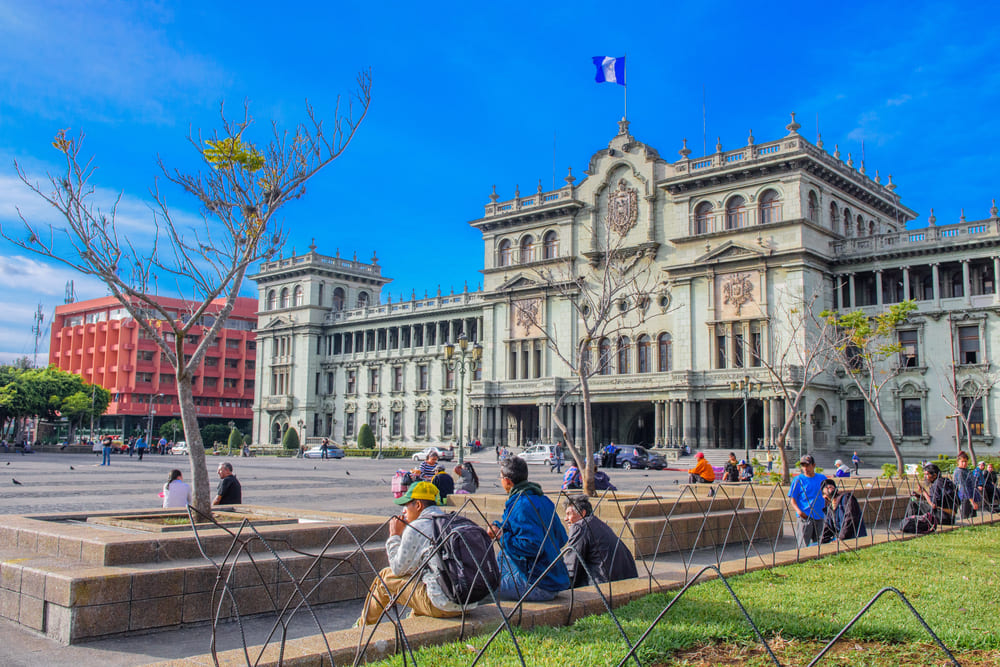
The good news is that you don’t need to travel all the way to San Salvador to get here from Guatemala City. There’s a convenient border crossing close to the northern end of the Ruta de las Flores, making it possible to travel here inexpensively using local buses.
There are also tourist shuttles from Antigua if you’re looking for an easier way to make this journey.
Below, I’ll explain exactly how to get from Guatemala to El Salvador for the Ruta de las Flores, including step-by-step instructions for taking local buses, where to cross the border, approximate costs and how to make the return journey.
Map: Guatemala To El Salvador
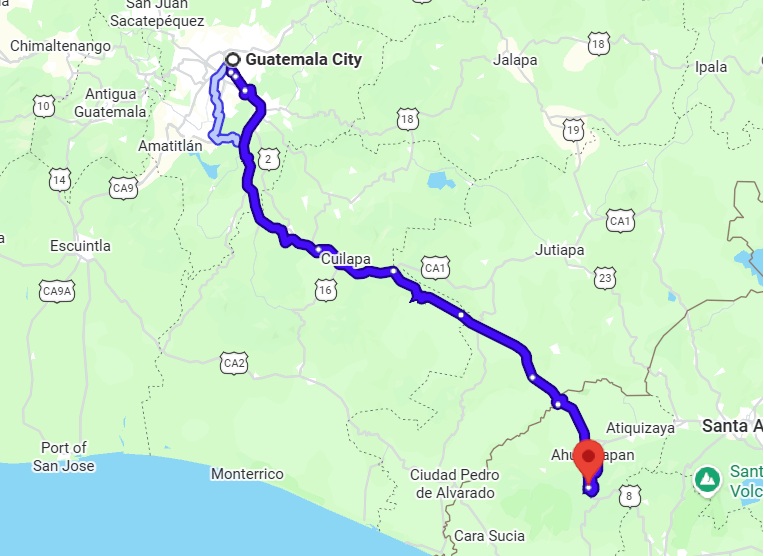
The most direct route from Guatemala City to the Ruta de las Flores takes you southeast through Guatemala to the Valle Nuevo/Las Chinamas border crossing.
Valle Nuevo is on the Guatemalan side of the border, while Las Chinamas is on the Salvadoran side. From here, it’s a relatively short journey to Ahuachapán, the gateway to the northern end of the Ruta de las Flores.
Guatemala City is approximately 133 kilometers by road from Ahuachapán, with the towns of Ataco, Apaneca and Juayúa located farther along the Ruta de las Flores.
By local bus, I recommend allowing most of the day for this journey, including time to change buses and cross the border.
BEST OPTION: How To Get From Guatemala To El Salvador
If you’re starting in Guatemala City and heading to the Ruta de las Flores, I recommend traveling by local bus via the Valle Nuevo/Las Chinamas border crossing.
While this involves several changes of transportation, it’s inexpensive and follows a relatively direct route.
If you’re already staying in Antigua, it’s much easier to take a tourist shuttle directly to the Ruta de las Flores towns.
International coaches and flights are also available between Guatemala City and San Salvador, although neither is particularly convenient for reaching the Ruta de las Flores.
| Transport | Approximate Travel Time | Approximate Cost |
|---|---|---|
| Local buses from Guatemala City | 6–8 hours | US$10–15 |
| Shuttle from Antigua (book here) | 6-7 hours | From US$66 |
| Shuttle via Antigua from Guatemala City | 9–11 hours or longer | From US$66 plus transportation to Antigua |
| International bus via San Salvador (book here) | 8–10 hours or longer | From US$21 plus onward buses |
| Flight via San Salvador (book here) | Around 1 hour flying time plus airport and onward transportation. At least 6.5 hours | Varies |
Prices are approximate, per person and in US dollars.
Option 1: Guatemala To El Salvador By Local Bus
Taking local buses is by far the cheapest way to get from Guatemala City to the Ruta de las Flores.
You’ll need to make several changes along the way, but the advantage is that you can travel directly toward western El Salvador without going anywhere near San Salvador.
I recommend leaving Guatemala City as early as possible in the morning so you have plenty of time to make the connections and reach your accommodation before dark.
Step 1: Guatemala City To Jalpatagua
Start by heading to the local bus departure area near La Terminal market in Zone 9 of Guatemala City.
Buses heading toward Jalpatagua and Valle Nuevo can be found around 5a Avenida, near the Torre del Reformador and Pollo Campero. The nearby Transmetro stations include Terminal and Torre del Reformador.
Ideally, look for a bus going directly to Valle Nuevo. If you find one, you can skip the next step and travel straight to the Guatemalan side of the border.
Otherwise, take a bus to Jalpatagua, a town located relatively close to the border.
Allow around three to four hours to reach Jalpatagua and budget approximately Q50 for the bus fare. A through bus to Valle Nuevo may cost around Q50–70.
Make sure you ask for Valle Nuevo rather than simply asking for the border with El Salvador, as there are several border crossings between the two countries.
Step 2: Jalpatagua To Valle Nuevo Border Crossing
If your bus terminates in Jalpatagua, you’ll need to change to another vehicle to reach the border.
Shared minivans to Valle Nuevo can be found around the Texaco gas station in Jalpatagua. Ask the driver to confirm that they’re going all the way to the border crossing before boarding.
The journey takes approximately 30 minutes and costs around Q10.
You should be dropped off close to the Guatemalan immigration facilities, where you can complete the formalities to leave Guatemala.
Step 3: Crossing The Guatemala To El Salvador Border
Once you arrive at Valle Nuevo, take your luggage with you and head to the Guatemalan immigration office to complete your exit formalities.
You’ll then walk across the bridge to the Salvadoran side of the border at Las Chinamas, where you need to complete any required entry procedures before continuing your journey.
Guatemala and El Salvador are both members of the Central America-4 (CA-4) agreement, along with Honduras and Nicaragua.
For most visa-exempt tourists, this means the permitted stay of up to 90 days is shared between the four countries. Crossing from Guatemala into El Salvador doesn’t automatically give you another 90 days.
You’ll need a valid passport, and visa and entry-fee requirements depend on your nationality. There is no standard Guatemalan exit fee at this border.
Make sure you have some US dollars before crossing. El Salvador uses US dollars, and small notes and coins are particularly useful for paying local bus fares.
The Salvadoran immigration office at Las Chinamas operates 24 hours a day, although this doesn’t mean local buses run throughout the night.
How long the border crossing takes depends on how busy it is. I recommend allowing some extra time rather than planning around a tight connection.
Step 4: Las Chinamas Border Crossing To Ahuachapán
Once you’ve completed the Salvadoran immigration formalities, look for the local buses or minibuses heading to Ahuachapán.
These vehicles leave from the Salvadoran side of the border and run frequently during the day.
The journey takes around 30–40 minutes and costs approximately US$0.50.
Ahuachapán is a busy regional town and the main transportation hub for reaching the northern end of the Ruta de las Flores.
From here, you can catch a bus that travels along the Ruta de las Flores itself.
Step 5: Ahuachapán To Ruta De Las Flores
In Ahuachapán, look for bus number 249 heading toward Sonsonate via the Ruta de las Flores.
You may need to walk between the arrival point of your bus from Las Chinamas and the departure point of bus 249. If you’re unsure where to go, ask for the bus to Ataco or Juayúa.
Bus 249 travels through several of the main towns along the Ruta de las Flores, making it convenient regardless of where you’re staying.
Concepción de Ataco is the first of the main tourist towns you’ll reach, around 20–30 minutes from Ahuachapán. From there, the bus continues through Apaneca and toward Juayúa before eventually reaching Sonsonate.
Allow around 45–60 minutes to reach Juayúa from Ahuachapán, depending on traffic and stops along the way.
Fares vary depending on how far you’re traveling, but budget around US$0.50–1.50 for this final section of the journey.
Tell the bus conductor which town you’re staying in so they can let you know when it’s time to get off.
Is Taking The Local Bus Worth It?
If you’re traveling from Guatemala City, I think taking local buses makes a lot of sense.
The entire journey can cost as little as around US$10, and you avoid the substantial detour involved in traveling via Antigua or San Salvador.
However, this isn’t the most comfortable way to travel. You’ll need to carry your luggage between buses, vehicles can be crowded and you may have to wait for connections.
Keep your valuables with you, have small notes ready for bus fares and bring some water and snacks. I also recommend downloading an offline map before leaving Guatemala City so you can keep track of where you are.
Option 2: Guatemala To El Salvador Shuttle
If you’re looking for an easier way to get from Guatemala to the Ruta de las Flores, there are shared tourist shuttles operating from Antigua.
If you are in Guatemala City, you’ll likely need to travel to Antigua first if you want to take this option.
Unfortunately, Antigua is in the opposite direction from the border, so this involves some backtracking.
If you’re already staying in Antigua, however, the shuttle is an excellent option.
You can book a shuttle here for US$66 per person which currently departs at 10 AM and takes 6-7 hours.
The service includes pickup from accommodations in central Antigua and drop-off in Apaneca.
Unlike traveling by local bus, you don’t need to organize individual connections or find onward transportation after crossing the border. Your driver can also explain where to go to complete the immigration formalities.
If you’re starting in Guatemala City, allow plenty of time to reach Antigua before your shuttle departs. Depending on where you’re staying and traffic conditions, it may be easier to travel to Antigua the previous afternoon and spend the night there.
I recommend booking your international shuttle in advance, particularly if you’re traveling with a group.
Option 3: Guatemala To El Salvador International Bus
Several international coach companies operate between Guatemala City and San Salvador, including Tica Bus and Transporte del Sol.
These buses are generally more comfortable than local buses, with air conditioning, reclining seats and dedicated luggage storage.
Tica Bus offers tickets starting at around US$21, while more comfortable services can cost US$35+ per person. The journey between the two capitals generally takes around six hours, although border delays can add to this.
Click here for the latest schedules and prices.
Some international coaches use the Valle Nuevo/Las Chinamas border crossing, so you could ask whether it’s possible to get off at the border and continue to Ahuachapán by local bus.
Another possibility is arranging a drop-off in Santa Ana, if your chosen service passes through the city and allows passengers to terminate their journey there.
From Santa Ana, you can take a local bus to Ahuachapán and then bus 249 along the Ruta de las Flores.
Click here for schedules and prices to Santa Ana.
Make sure the bus company agrees to your requested drop-off before purchasing your ticket. Intermediate stops aren’t necessarily offered as bookable destinations.
Otherwise, you’ll need to travel all the way to San Salvador and then backtrack toward western El Salvador, either via Sonsonate or Ahuachapán.
For this particular journey, I don’t think international coaches offer particularly good value. You’ll potentially pay the full fare to San Salvador without even reaching your final destination, and you’ll still need to take local buses.
Option 4: Guatemala To El Salvador Flight
It’s also possible to fly directly from Guatemala City’s La Aurora International Airport to El Salvador International Airport with Avianca.
The actual flight takes less than an hour, making this a quick way to travel between the two countries if you’re heading to San Salvador.
Click here to see the latest schedules and prices.
However, El Salvador International Airport is located southeast of San Salvador, a considerable distance from the Ruta de las Flores.
By the time you factor in getting to the airport, checking in, collecting your luggage and traveling across El Salvador to Ataco or Juayúa, you’re unlikely to save much time compared with traveling overland.
Unless you have a particularly compelling reason to fly, I wouldn’t recommend this option for visiting the Ruta de las Flores from Guatemala City.
How To Get From El Salvador To Guatemala
Traveling from the Ruta de las Flores back to Guatemala is relatively straightforward, and you can generally follow the same route in reverse.
If you’re heading to Guatemala City by local bus, start by catching bus 249 in Juayúa, Apaneca or Ataco heading toward Ahuachapán.
Make sure you’re traveling in the right direction, as buses going the opposite way continue to Sonsonate.
In Ahuachapán, change to a local bus or minivan heading to Las Chinamas. From there, complete the Salvadoran departure formalities, walk across the bridge and visit Guatemalan immigration at Valle Nuevo.
Once you’ve entered Guatemala, look for a bus heading directly to Guatemala City.
If there isn’t one departing soon, take a shared minivan to Jalpatagua and change to a Guatemala City-bound bus there.
You can expect similar fares and travel times to the journey in the opposite direction. Again, I recommend starting early in the morning to give yourself plenty of time to make the connections.
If you’re heading to Antigua instead, taking a tourist shuttle makes more sense.
Kahk Bahlam offers a daily shuttle from Apaneca to Antigua departing at around 4:30 AM, with prices starting at US$66.
Click here for the latest prices and schedules.
Depending on the service and border crossing time, expect the shuttle journey to take around six to seven hours.
The biggest drawback is the very early departure time, but it means you can potentially arrive in Antigua before lunchtime.
Taking an international bus is more difficult in reverse and may require you to travel to San Salvador first. You can see timetables here.
Final Words
Getting from Guatemala to El Salvador for the Ruta de las Flores is relatively inexpensive and doesn’t require traveling through San Salvador.
If you’re starting in Guatemala City, I recommend taking local buses via the Valle Nuevo/Las Chinamas border crossing and Ahuachapán. While there are several changes along the way, it’s a direct route and considerably cheaper than the alternatives.
If you’re already in Antigua, I recommend taking a tourist shuttle directly to Ataco, Apaneca or Juayúa. It’s more expensive, but the convenience of being dropped off at your accommodation is worth considering.
However you choose to get here, the Ruta de las Flores is a fabulous introduction to El Salvador and well worth including in your Central American itinerary.
Read more in our full guide to the Ruta de las Flores to help you plan your visit, our guide to Antigua here or find all our Central America travel guides here.