Planning a trip to Panama City? You’re in for a treat! Panama’s capital is a fascinating mixture of historic colonial streets, enormous modern skyscrapers, tropical rainforest and one of the world’s most famous engineering achievements.
I love how much variety Panama City offers. One minute, you can be wandering past colorful colonial buildings in Casco Viejo, and the next, you’re looking at enormous container ships traveling through the Panama Canal. There’s even tropical rainforest within the city limits!
Panama City also has a fascinating history. Founded by the Spanish in 1519, it became an important trading center between the Pacific and Atlantic oceans. Today, it’s one of Central America’s most modern cities, but there’s still plenty of history to discover beneath those shiny skyscrapers.
There are so many fantastic things to do in Panama City that I recommend spending at least two or three days here rather than treating it simply as somewhere to fly into before exploring the rest of Panama.
In this guide, I’ll share the 15 best things to do in Panama City, including the famous Panama Canal, interesting museums, beautiful neighborhoods and some great places to enjoy the views. I’ll also cover where to stay, how to get around and how to make the most of your time.
Best Things To Do In Panama City
One of the things I find most appealing about Panama City is how different its attractions are. You can spend the morning learning about Spanish colonial history, the afternoon watching enormous ships pass through a canal and the evening enjoying cocktails overlooking the skyline.
Here are my 15 favorite things to do in Panama City.
1. Explore The Colorful Streets Of Casco Viejo
Casco Viejo is Panama City’s historic center and one of the absolute best places to explore. Also called Casco Antiguo, this UNESCO World Heritage-listed neighborhood is packed with beautiful old buildings, cobblestone streets, interesting churches and lively plazas.
The neighborhood was established after the original Panama City was destroyed in 1671. Today, it’s an attractive mixture of beautifully restored colonial buildings and older structures that haven’t yet been renovated.
I recommend starting at Plaza de la Independencia, one of the most important squares in the old town. This is where you’ll find the Metropolitan Cathedral and several historic buildings, including the Municipal Palace and the Panama Canal Museum.
From here, wander through the surrounding streets without worrying too much about following a particular route. There are colorful buildings with wooden balconies, small shops, cafes and restaurants tucked into historic properties.
Don’t miss Plaza Simón Bolívar, another attractive square surrounded by historic buildings. It’s named after the South American independence leader and is a lovely place to stop for a drink or simply admire the architecture.
Another interesting landmark is the Church of San José, famous for its elaborate golden altar. According to a popular local legend, the altar was saved from the pirate attack on the original city, although the story’s historical accuracy is debated.
I recommend exploring Casco Viejo in the morning when it’s a little cooler. Panama City is hot and humid throughout the year, and walking around the old streets can become uncomfortable in the middle of the day.
Allow at least two or three hours, although it’s easy to spend much longer here if you enjoy historic neighborhoods and visit attractions along the way.
You can also take a guided walking tour to make the most of your time.
Click here to book a Casco Viejo walking tour.
2. Walk Along Paseo Esteban Huertas
One of the prettiest places in Casco Viejo is Paseo Esteban Huertas, a waterfront promenade that’s particularly famous for its beautiful bougainvillea-covered arches.
The walkway runs along the old city walls near Plaza de Francia, offering wonderful views across Panama Bay toward the modern skyscrapers of Panama City.
I think this contrast between the old colonial city and the enormous modern skyline is one of the most interesting things about Panama City.
As you walk along the promenade, you’ll pass souvenir stalls selling handicrafts, artwork and other items. It’s a nice place to browse for gifts, although I recommend comparing prices before buying.
The bougainvillea arches are particularly attractive when the flowers are blooming. Their bright colors make this one of the most photographed spots in Casco Viejo.
At the end of the promenade, spend some time exploring Plaza de Francia. This historic square contains a monument honoring the French effort to construct the Panama Canal, including those who lost their lives during the unsuccessful project.
There’s also a viewpoint where you can admire the ocean and the modern city.
I recommend visiting Paseo Esteban Huertas while exploring Casco Viejo rather than making a separate trip. It’s only a short walk from the neighborhood’s main plazas and museums.
3. Visit The Panama Canal Museum
If you’re interested in understanding why Panama City is so important, the Panama Canal Museum is a must-visit.
Officially known as the Museo del Canal Interoceánico de Panamá, this museum is located in a beautiful historic building overlooking Plaza de la Independencia in Casco Viejo.
The museum explores the fascinating history of the Panama Canal, from early plans to connect the Atlantic and Pacific oceans through to its construction and eventual transfer to Panamanian control.
One of the most interesting parts of the story is the failed French attempt to build the canal during the late 19th century.
The French began construction in 1881, but the project faced enormous challenges, including difficult terrain, engineering problems, financial difficulties and diseases such as yellow fever and malaria.
The United States subsequently took over the project, and the Panama Canal officially opened in 1914.
However, there’s much more to the story than engineering. The museum also explores the canal’s political significance, the lives of the workers who built it and the relationship between Panama and the United States.
I recommend visiting this museum before going to the Miraflores Locks. Understanding the history makes watching ships travel through the canal considerably more interesting.
Allow around one to two hours to explore the exhibitions.
4. Discover Panama’s History At The Museum Of History Of Panama
Another worthwhile museum in Casco Viejo is the Museum of History of Panama, located on the ground floor of the Municipal Palace.
This is a particularly interesting building because it stands on the site of the former town council, where two enormously important events in Panamanian history were proclaimed.
The first was Panama’s independence from Spain in 1821, and the second was its separation from Colombia in 1903.
The current building dates from 1910, and the museum opened in 1977.
Inside, the exhibitions explore different periods of Panamanian history, including the Spanish colonial era, the country’s national symbols and the events of January 9, 1964.
That date is particularly significant in Panama. Protests over the display of the Panamanian flag in the Canal Zone led to violent clashes and deaths, becoming an important moment in the country’s struggle for sovereignty over the canal.
I think this museum makes an excellent companion to the Panama Canal Museum. While the latter focuses on the canal, the Museum of History helps explain Panama’s broader national identity.
It’s also conveniently located in Plaza de la Independencia, making it easy to visit while exploring Casco Viejo.
Admission is free.
5. Explore The Ruins Of Panamá Viejo
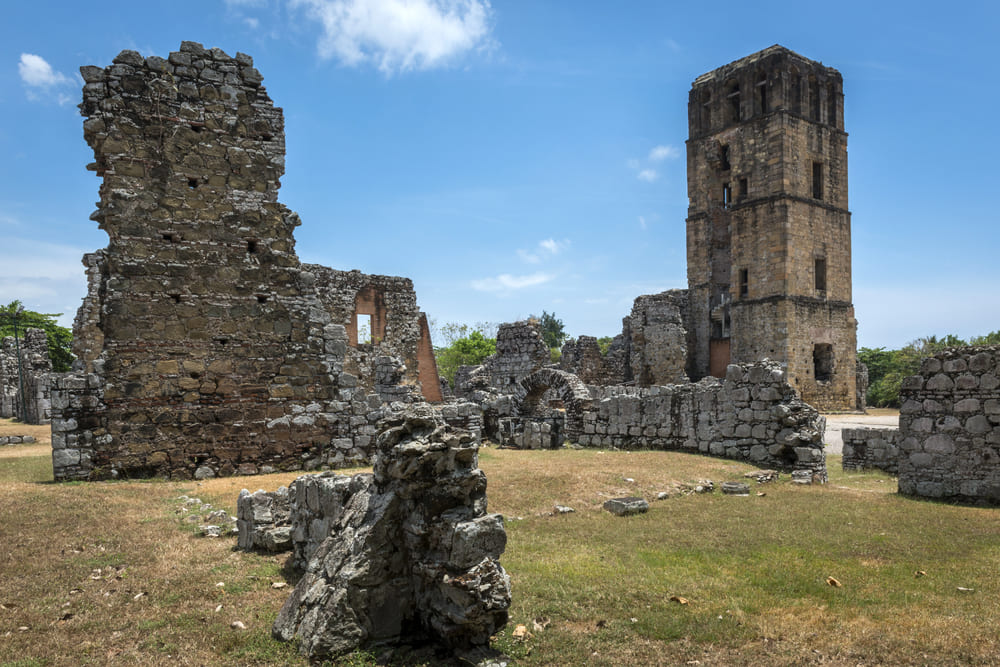
One of the most fascinating historical attractions in Panama City is Panamá Viejo, the ruins of the original Spanish colonial settlement.
Founded in 1519 by Pedro Arias Dávila, it became an important Spanish trading center and a departure point for expeditions along South America’s Pacific coast.
However, the city’s prosperity also made it a target.
In 1671, the settlement was attacked by forces led by the Welsh privateer Henry Morgan. Much of the city was destroyed, and the Spanish subsequently established a new settlement several miles away in what is now Casco Viejo.
Today, Panamá Viejo is an archaeological site containing the remains of churches, convents, houses and other colonial structures.
The most recognizable landmark is the old cathedral tower, which rises above the surrounding ruins. You can also learn more about the settlement at the site’s museum.
I particularly recommend visiting Panamá Viejo if you’re interested in history. Seeing the original settlement helps explain why Casco Viejo was established and how Panama City developed.
The ruins are spread across a relatively open area, so bring water, sunscreen and a hat. I recommend visiting earlier in the day to avoid the worst of the heat.
Allow around two hours, depending on how thoroughly you want to explore.
6. Watch Ships Pass Through The Miraflores Locks
No visit to Panama City would be complete without seeing the Panama Canal, and the Miraflores Locks Visitor Center is one of the best places to experience it.
Located just outside the main urban area, Miraflores offers the opportunity to watch enormous ships travel through the canal’s original locks.
It’s an extraordinary engineering achievement.
The locks work by raising and lowering ships between different water levels using enormous chambers that fill and empty with water.
Watching a huge container ship slowly move into a lock chamber, with relatively little space on either side, is an incredible sight.
The visitor center has outdoor viewing areas where you can watch the process and learn more about how the canal operates.
There’s also an IMAX theater showing a film about the canal’s history and engineering, narrated by Morgan Freeman.
I recommend checking the expected ship transit times before visiting. Ships don’t pass through the locks continuously, and arriving at the wrong time could mean spending a long time waiting.
The Panama Canal Authority provides visitor information and updates on its official website.
Allow approximately two hours for your visit, although you may want longer if you’re particularly interested in the canal.
This is one of the attractions I’d prioritize above almost everything else in Panama City.
7. Take A Boat Tour Through The Panama Canal
Watching ships travel through the Panama Canal from Miraflores is fascinating, but actually traveling through the canal on a boat is a completely different experience.
If you have the time and budget, I recommend considering a partial transit tour.
These excursions allow you to experience the canal from the water, passing through working locks alongside much larger vessels.
Depending on the direction and route, partial transit tours typically include the Miraflores and Pedro Miguel Locks and sections of the famous Culebra Cut.
The Culebra Cut is particularly interesting because it required excavating through the Continental Divide. This was one of the most challenging sections of the entire canal construction project.
Passing through the locks is the highlight.
Your boat enters a chamber, enormous gates close behind it and the water level changes to raise or lower the vessel. It’s fascinating to see the engineering working around you rather than simply watching from a distance.
Partial transit tours often take around five to six hours on the water, although the complete excursion can be longer once transfers and waiting times are included.
Full transit tours are also available, but these generally take most of the day.
I recommend booking ahead, particularly during the busier dry season, because these excursions operate on specific dates rather than continuously throughout the day.
Make sure you understand exactly which locks your tour passes through, where it departs and whether transportation, meals and drinks are included.
If you only have time for one canal experience, Miraflores is the easier and less expensive choice. However, traveling through the locks yourself is an especially memorable way to appreciate the scale of the Panama Canal.
Click here to check the latest dates and prices for a boat tour through the Panama Canal.
8. Visit The Colorful Biomuseo
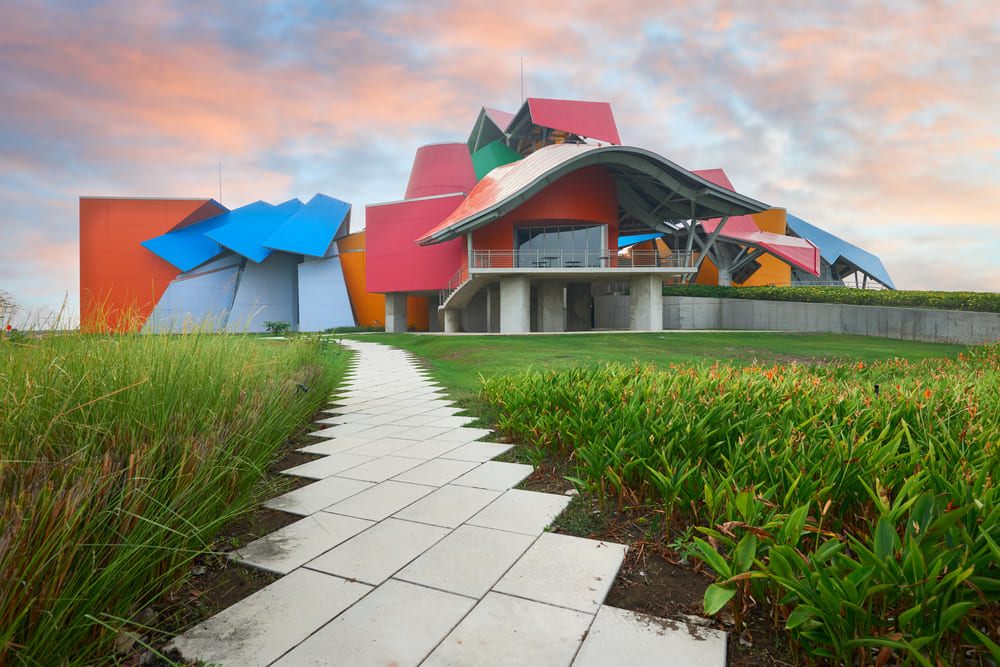
The Biomuseo is one of the most recognizable buildings in Panama City, and you don’t need to be particularly interested in museums to appreciate its architecture.
Designed by internationally famous architect Frank Gehry, the building features an extraordinary collection of brightly colored roofs and unusual geometric shapes.
It’s unlike anything else in the city!
Located near the beginning of the Amador Causeway, the museum explores Panama’s remarkable biodiversity and the important role the country played in shaping the natural world.
One of the most fascinating stories is how the formation of the Isthmus of Panama connected North and South America, allowing animals and plants to move between the continents.
At the same time, the land bridge separated the Atlantic and Pacific oceans, influencing ocean currents and ecosystems.
The museum uses exhibitions, interactive displays and audiovisual experiences to explain these enormous geological and biological changes.
I recommend taking time to admire the building from outside as well as exploring the exhibits. The colorful roof is particularly striking against the blue sky, and the surrounding gardens provide different views of the architecture.
Allow around one to two hours for the museum.
It’s easy to combine a visit with the Amador Causeway, which is right nearby.
9. Walk Or Cycle Along The Amador Causeway
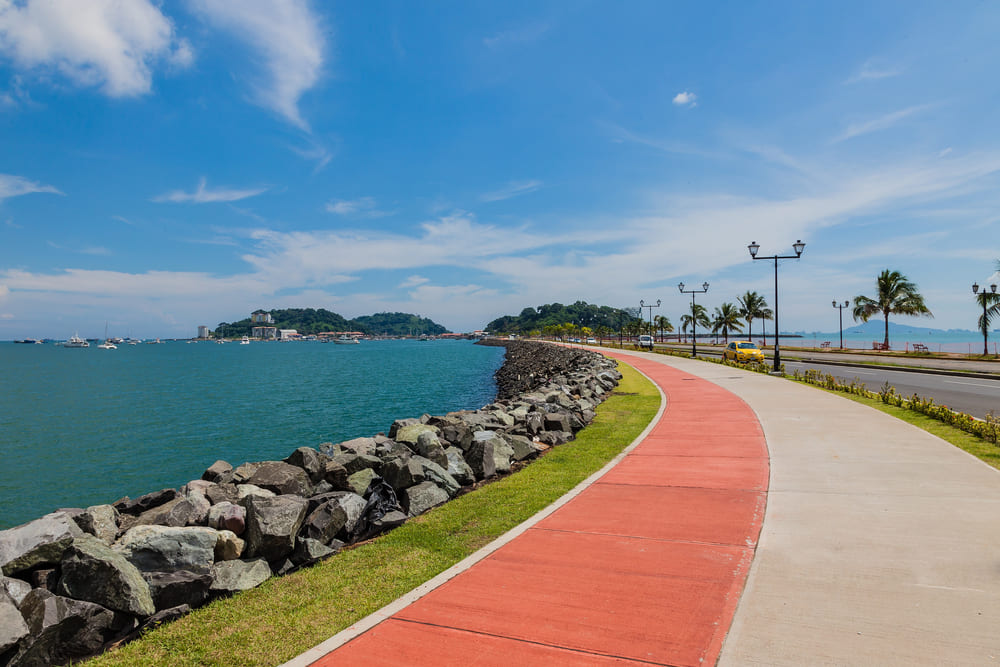
The Amador Causeway is one of Panama City’s most attractive waterfront areas and a fantastic place to enjoy the views.
This long causeway connects the mainland to several small islands at the Pacific entrance to the Panama Canal.
It was constructed using rock excavated during the canal’s construction, giving it an interesting connection to the city’s most famous landmark.
Today, the causeway is a popular recreational area with walking and cycling paths, restaurants, cafes and beautiful views across the water.
On one side, you can admire the modern Panama City skyline. On the other, you can look toward the Pacific entrance to the canal and watch ships moving through the area.
I recommend renting a bike if you want to explore more of the causeway without spending too long walking in the heat.
You can also simply enjoy a leisurely stroll, stop for a drink or have lunch overlooking the water.
The causeway connects the islands of Naos, Perico, Culebra and Flamenco, and you’ll find restaurants and other visitor facilities along the route.
I particularly recommend visiting later in the afternoon when the temperature starts to become more comfortable.
The Amador Causeway is also one of the easiest attractions to combine with the Biomuseo, making them a good pair for a half-day excursion.
10. Climb Ancon Hill For Incredible Views
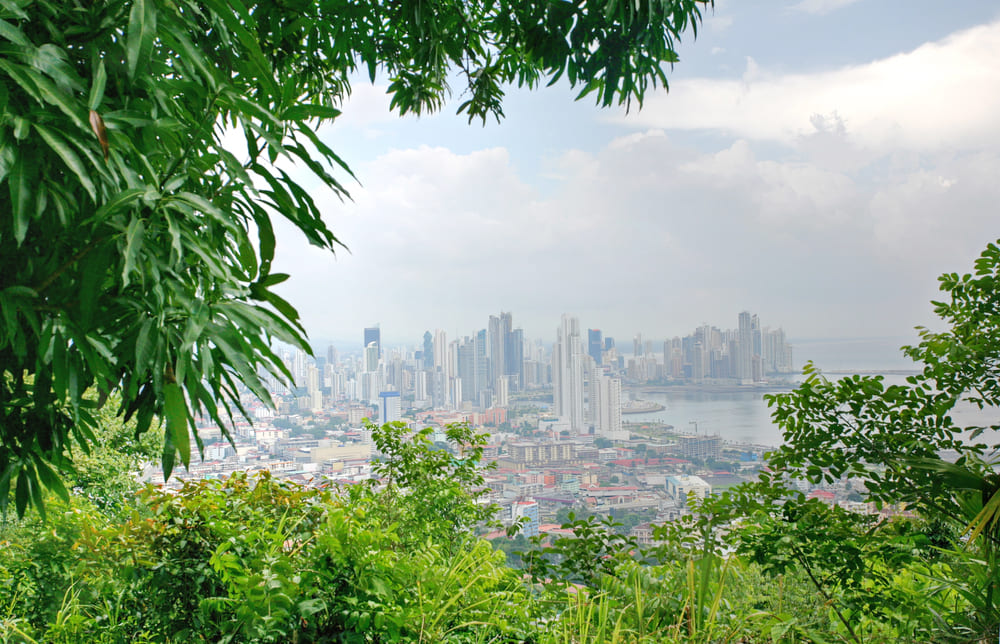
If you enjoy scenic viewpoints, Cerro Ancón, or Ancon Hill, is another excellent place to visit.
This forest-covered hill rises above Panama City and is famous for the enormous Panamanian flag flying from its summit.
It’s an important national symbol because the hill was once part of the American-administered Canal Zone before being returned to Panamanian control.
Today, Ancon Hill is a protected green space with walking routes leading toward the summit.
The views are the main attraction.
From the higher sections, you can see Casco Viejo, the modern skyline, parts of the Panama Canal and the surrounding coastline.
There’s also a chance of spotting wildlife, including birds, monkeys and sloths, although sightings are never guaranteed.
I recommend visiting early in the morning when temperatures are cooler and wildlife may be more active.
The walk is uphill, so wear comfortable shoes and bring water. Although it isn’t a particularly high mountain, Panama City’s heat and humidity can make the climb feel more challenging.
Allow around one to two hours for the walk and time at the viewpoints.
11. Hike In Metropolitan Natural Park
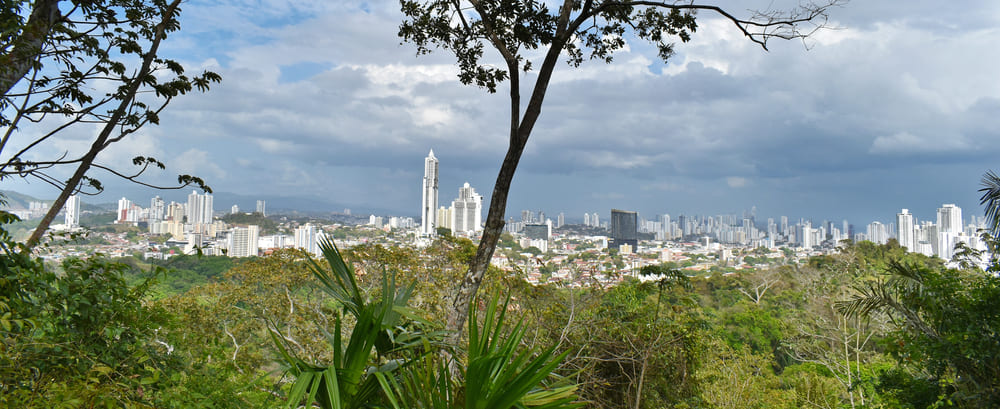
One of the most surprising things about Panama City is that you can explore tropical rainforest without leaving the city.
Metropolitan Natural Park is a protected forest area located only a short distance from the skyscrapers and busy streets of central Panama City.
It’s a fantastic contrast to the urban attractions.
The park has several walking trails through tropical forest, with opportunities to spot birds, insects and other wildlife.
Sloths, monkeys and numerous bird species live in the park, although you shouldn’t expect to see everything during a short visit.
There are also viewpoints where you can look out across the city and appreciate the unusual combination of rainforest and modern skyscrapers.
I recommend wearing proper walking shoes rather than sandals, particularly during the rainy season when trails can become muddy.
Bring plenty of water, insect repellent and sunscreen.
The park is best visited in the morning when temperatures are more comfortable and wildlife may be easier to spot.
Allow around two to three hours if you want to enjoy several trails without rushing.
If you’re traveling with children, this is also a great way to include some nature and outdoor activity between museums and historical attractions.
12. Explore El Cangrejo Neighborhood
While Casco Viejo attracts most of the tourists, I think it’s worth exploring some of Panama City’s more everyday neighborhoods as well.
El Cangrejo is one of the most interesting.
Located in the Bella Vista district, this established neighborhood is known for its restaurants, cafes, residential buildings and lively streets.
It’s particularly popular with people who enjoy food and want to experience a different side of Panama City from the historic center.
One of the main streets is Via Argentina, where you’ll find plenty of restaurants, coffee shops and places to stop for a drink.
There’s also Parque Andrés Bello, a neighborhood park that provides a pleasant green space among the surrounding buildings.
I recommend exploring El Cangrejo around lunchtime or in the late afternoon, when you can combine a walk with a meal.
It’s not a neighborhood filled with major tourist landmarks, and that’s part of its appeal. This is somewhere to enjoy the atmosphere, look at the street art and see a little more of daily life in Panama City.
The area is also relatively convenient to reach using the city’s metro system, with Via Argentina station nearby.
13. Walk Along The Cinta Costera
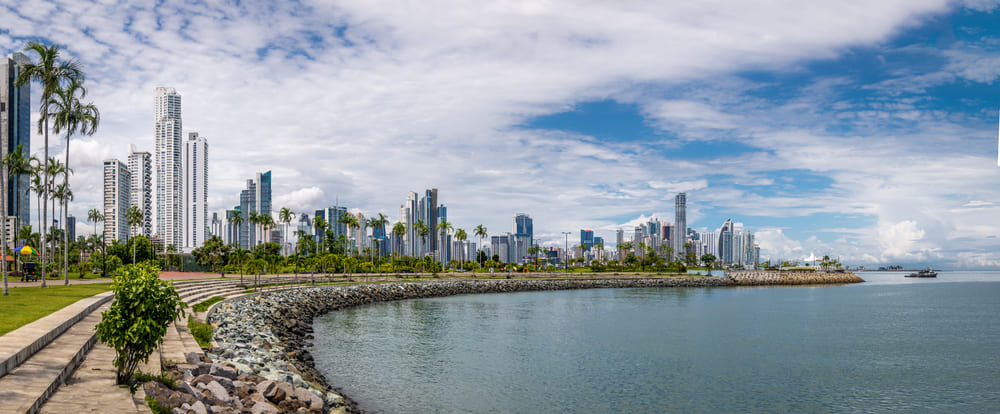
For some of the best views of Panama City’s modern skyline, head to the Cinta Costera.
This long waterfront promenade runs alongside Avenida Balboa, with walking and cycling paths, recreational areas and views across Panama Bay.
It’s particularly popular with local residents who come here to exercise, relax and enjoy the waterfront.
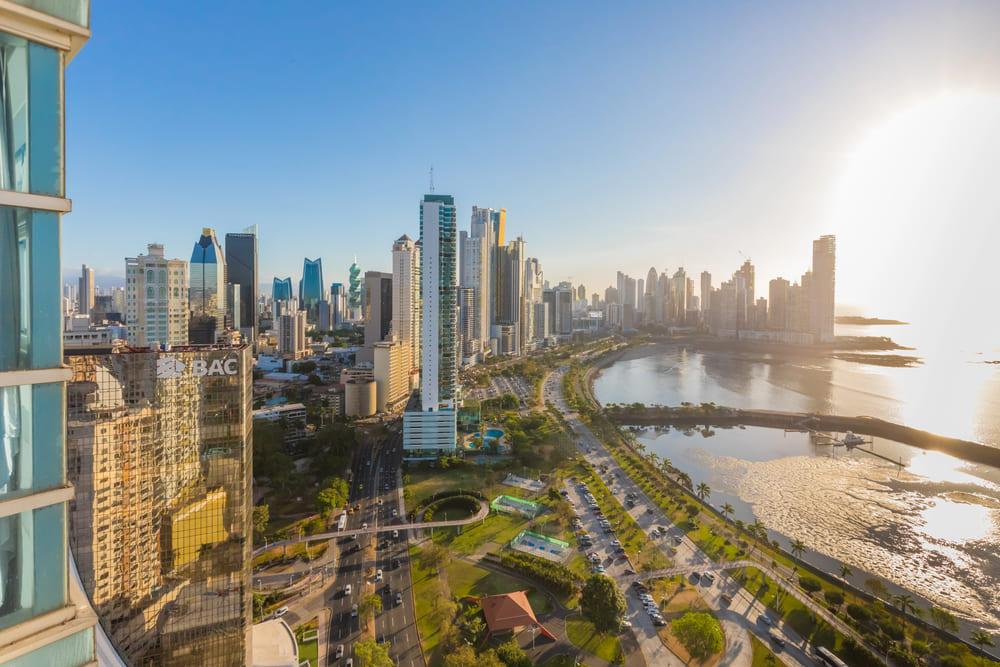
The modern skyline is impressive, with enormous glass skyscrapers rising behind the palm-lined promenade.
I think this is one of the best places to appreciate just how different modern Panama City is from the historic streets of Casco Viejo.
You can walk along the waterfront, stop to take photographs or simply enjoy watching the activity around you.
There are also sections of the promenade with views toward the old town.
I recommend visiting in the late afternoon or early evening when the sun is less intense. The skyline looks particularly attractive as the light changes and the buildings begin to illuminate.
The Cinta Costera is free to visit, making it a great activity if you’re traveling on a budget.
14. Eat Fresh Ceviche At The Seafood Market
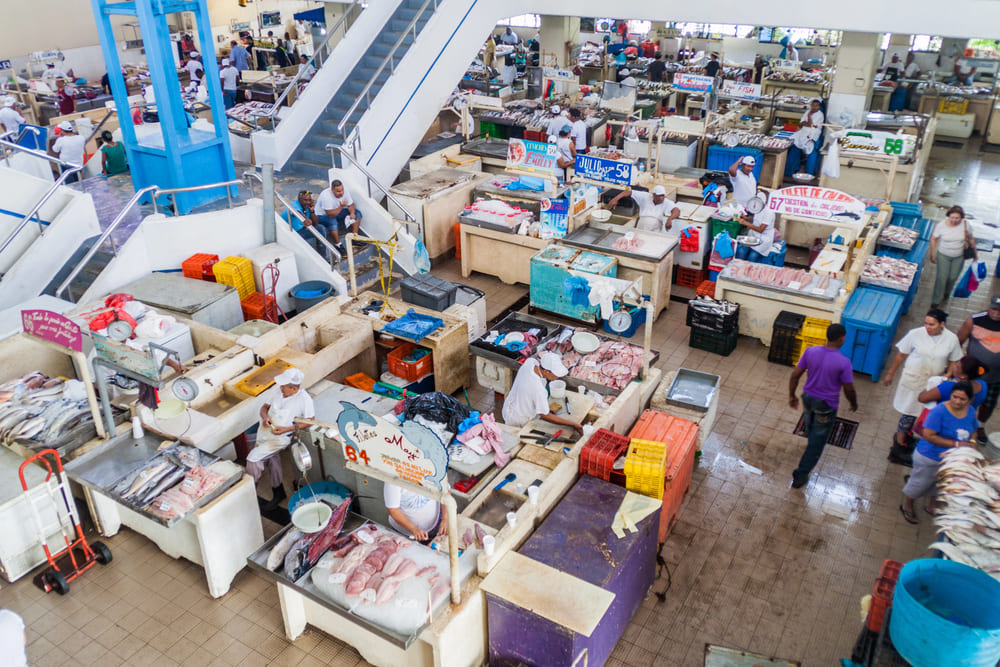
Panama City’s location on the Pacific coast means seafood is an important part of the local food scene.
One of the most interesting places to experience it is the Mercado de Mariscos, or Seafood Market, near the waterfront and Casco Viejo.
This busy market is where seafood is sold and prepared, and it’s a great place to try traditional dishes.
The most famous is ceviche, made with seafood marinated in citrus juice and combined with ingredients such as onion, cilantro and peppers.
You’ll find different versions, including fish, shrimp and mixed seafood ceviche.
I recommend trying a small serving of ceviche as a snack or ordering a larger seafood meal if you’re hungry.
The market is quite different from the polished restaurants in Casco Viejo. Expect a busy, casual atmosphere rather than an elegant dining experience.
It’s also worth remembering that this is a working seafood market, so there can be strong fish smells and plenty of activity.
I think places like this are an important part of experiencing a destination. You can learn a lot about local food culture simply by watching what’s being prepared and what people are ordering.
The market is conveniently located near the Cinta Costera, so you can combine the two attractions.
15. Enjoy Sunset Drinks At Sama Sky Lounge
After a busy day exploring Panama City, one of the best ways to relax is with a drink overlooking the city.
And there are few better places to do that than Sama Sky Lounge.
Located on the rooftop of Oasis Hotel in Casco Viejo, this stylish bar has fantastic views across the historic rooftops, Panama Bay and the modern city skyline.
It’s a particularly appealing place to visit around sunset, when the light changes over the water and the skyscrapers begin to illuminate.
I recommend arriving before sunset so you can enjoy the views in daylight as well as after dark.
The rooftop has a retractable roof, allowing the venue to adapt to Panama City’s sometimes unpredictable tropical weather.
There’s a cocktail menu, food and evening entertainment, with DJs creating a livelier atmosphere as the night progresses.
What I particularly like about this choice is its location. You can spend the afternoon exploring Casco Viejo and then head up to Sama Sky Lounge without needing to travel across the city.
It’s also a convenient option if you’re staying at Oasis Hotel, since the lounge is in the same building.
I recommend reserving a table if you have a particular sunset time in mind, especially on weekends.
For me, this is exactly the sort of experience that makes a city trip memorable: beautiful views, a good drink and a chance to appreciate somewhere from a completely different perspective.
Where To Stay In Panama City

Panama City has a wide range of accommodation, from luxurious hotels in restored colonial buildings to modern hotels in the business district and more affordable options.
Where you stay will make a difference to your experience.
I particularly recommend Casco Viejo if you want to be surrounded by history, restaurants and beautiful architecture. It’s a wonderful area for walking, although accommodation can be relatively expensive and some streets become lively at night.
El Cangrejo and Bella Vista are good alternatives if you prefer modern neighborhoods with restaurants, shopping and public transportation nearby.
Here are three hotels worth considering for different budgets.
Best: Hotel La Compañía Casco Antiguo Review

Hotel La Compañía is a luxurious hotel in the heart of Casco Viejo and one of the most interesting places to stay in Panama City.
Part of The Unbound Collection by Hyatt, the property occupies beautifully restored historic buildings that reflect different periods of Panama’s history.
The hotel is particularly distinctive because of its Spanish, French and American architectural influences.
Inside, you’ll find elegant rooms, attractive courtyards, restaurants and stylish public spaces that combine historic character with modern comforts.
The location is excellent for sightseeing. You’re within walking distance of Plaza de la Independencia, the Panama Canal Museum, Paseo Esteban Huertas and many of Casco Viejo’s best restaurants.
I recommend Hotel La Compañía if you’re looking for a special stay and want your accommodation to feel like part of the destination rather than simply somewhere to sleep.
Click here to check the latest prices for Hotel La Compañía Casco Antiguo.
Midrange: Oasis Hotel Review

Oasis Hotel is another attractive option in Casco Viejo, particularly if you want to stay close to the historic center’s restaurants, bars and attractions.
The hotel occupies a central location on Calle 9A Este, making it convenient for exploring the old town on foot.
One of its biggest attractions is Sama Sky Lounge, the rooftop bar overlooking Panama Bay and the modern skyline.
I think having a rooftop bar like this in your hotel is a real advantage. You can enjoy sunset drinks and the evening atmosphere without worrying about transportation afterward.
The location is also handy for visiting the main plazas, museums and historic buildings in Casco Viejo.
I recommend Oasis Hotel if you want to stay in the historic center and enjoy its lively atmosphere, particularly in the evenings.
However, if you’re a light sleeper, request a quiet room, as rooftop entertainment and nightlife can affect some rooms.
Click here to check the latest prices for Oasis Hotel.
Budget: Hotel Benidorm Panama Review

Hotel Benidorm Panama is a more affordable accommodation option in central Panama City.
Located in the Calidonia area, it provides a practical base for travelers who want to keep their accommodation costs down while remaining relatively close to the city’s main attractions.
The hotel offers straightforward rooms with essential facilities rather than the luxury features you’ll find at the more expensive properties.
Its central location means you can reach areas such as Casco Viejo, the Cinta Costera and the modern business district using taxis or public transportation.
I recommend considering Hotel Benidorm if your priority is saving money and you plan to spend most of your time exploring rather than relaxing at your hotel. The surrounding neighborhood is less polished and tourist-oriented.
Click here to check the latest prices for Hotel Benidorm.
Best Time To Visit Panama City
Panama City has a tropical climate, meaning it’s hot and humid throughout the year.
Daytime temperatures are commonly around 29–32°C (84–90°F), so you won’t need to worry about cold weather.
However, rainfall varies considerably depending on the season.
The dry season generally runs from December to April, with January through March usually offering some of the most consistently sunny weather.
This is the most popular time to visit Panama City, particularly if you’re planning outdoor activities such as exploring Casco Viejo, cycling along the Amador Causeway or hiking in Metropolitan Natural Park.
I recommend visiting during the dry season if you have flexibility with your travel dates.
However, the rainy season, generally from May to November, isn’t necessarily a bad time to visit.
Rain often arrives in heavy afternoon showers rather than continuing throughout the entire day, although prolonged wet weather is possible.
You can still enjoy museums, restaurants and the Panama Canal attractions, but you’ll need to be more flexible with outdoor sightseeing.
If you’re visiting during the rainy season, I recommend organizing outdoor activities for the morning and leaving museums or indoor attractions for later in the day.
Regardless of when you visit, bring lightweight clothing, comfortable shoes, sunscreen and a small umbrella or rain jacket.
Panama City can be extremely humid, so it’s also worth allowing time for breaks rather than planning nonstop sightseeing.
How To Get To Panama City
Panama City is one of Central America’s most important transportation hubs, making it relatively easy to reach from other countries.
Most international visitors arrive by air, although there are also long-distance bus connections from elsewhere in Panama and Costa Rica.
Flying To Panama City
The main international airport is Tocumen International Airport (PTY), located approximately 20 kilometers northeast of central Panama City.
It’s one of the busiest airports in Central America and a major hub for Copa Airlines.
There are flights connecting Panama City with destinations throughout North America, Central America, South America and Europe.
If you’re traveling around Central America, Panama City can also be a convenient place to connect between countries.
However, Panama City also has a second international airport, Panamá Pacífico International Airport (BLB), located approximately 15 kilometers southwest of the city center, on the opposite side of the Panama Canal.
This smaller airport is used by budget airlines, including Wingo, for flights to destinations in Latin America. It’s worth checking flights to BLB as well as Tocumen, as you may find cheaper fares. We flew from this airport to Bogota.
Just keep in mind that reaching the city from Panamá Pacífico involves crossing the Panama Canal, so traffic can make the journey longer than you might expect.
There’s also Marcos A. Gelabert International Airport (PAC) in Albrook, which is mainly used for domestic flights within Panama. We arrived here from Bocas del Toro.
I recommend double-checking your airport code when booking flights, especially if you’re connecting between international and domestic flights. PTY, BLB and PAC are three separate airports, and transferring between them requires traveling across the city.
Click here to check flight prices to Panama.
Getting From Tocumen Airport To Panama City
There are several ways to travel from Tocumen International Airport into the city.
The easiest option is usually a taxi, ride-hailing service or prearranged private transfer.
Journey times depend heavily on traffic and where you’re staying, but allow approximately 30–60 minutes for many central neighborhoods.
I recommend arranging transportation in advance if you’re arriving late at night or traveling with lots of luggage.
For a less expensive option, Panama City’s metro network connects Tocumen Airport with the wider city system.
However, depending on your accommodation, you may need to change trains and then take a taxi or walk the final distance.
If you’re staying in Casco Viejo, a taxi, private transfer or Uber is often more convenient than trying to reach the historic center using public transportation with luggage.
Traveling To Panama City By Bus
Panama City is also connected to other parts of the country by long-distance buses.
The main bus terminal is Gran Terminal Nacional de Transporte at Albrook, which serves routes throughout Panama.
Buses connect the capital with destinations such as David, Santiago and other towns.
International bus services also connect Panama with Costa Rica.
I recommend checking journey times carefully before choosing overland transportation, as some routes are considerably longer than they appear on a map.
For example, traveling between Panama City and the western part of Panama can take much of the day.
Getting Around Panama City
Panama City is spread across a large area, so you’ll need transportation to visit many of the attractions.
However, individual neighborhoods such as Casco Viejo are enjoyable to explore on foot.
I recommend walking around Casco Viejo rather than using taxis between its main attractions. The streets are relatively compact, and wandering through them is part of the experience.
For longer distances, Uber and taxis are convenient options.
Uber is particularly useful because you can see the estimated fare before booking and avoid having to negotiate with a driver.
Panama City also has a modern metro system, which is inexpensive and useful for traveling between certain neighborhoods.
The metro can be particularly convenient for visiting areas such as El Cangrejo, although it doesn’t reach every tourist attraction directly.
Public buses are another option, but they can be less straightforward for first-time visitors.
I recommend using a combination of walking, the metro and ride-hailing services rather than renting a car.
Traffic in Panama City can be heavy, especially during rush hour, and finding parking in Casco Viejo can be difficult.
For attractions such as Miraflores Locks, Metropolitan Natural Park and the Amador Causeway, arranging transportation is usually more convenient than relying entirely on public transit.
Panama City Itinerary: How Many Days Do You Need?
I recommend spending at least two full days in Panama City, although three days is much better if you want to experience the historic center, the Panama Canal and some of the city’s other attractions.
If you want to take a boat tour through the canal, consider adding another day because these excursions can take up most of your sightseeing time.
Here’s how I’d organize your visit.
One Day In Panama City
If you only have one day, I recommend concentrating on the two biggest highlights: Casco Viejo and the Panama Canal.
Start your morning at the Miraflores Locks Visitor Center, where you can watch ships passing through the canal and learn about its history.
Afterward, head to Casco Viejo for lunch and an afternoon exploring the historic streets.
Visit Plaza de la Independencia, walk along Paseo Esteban Huertas and stop at Plaza de Francia for the views.
If you have time, visit the Panama Canal Museum to learn more about the waterway’s history.
Finish your day with sunset drinks at Sama Sky Lounge.
This gives you a fantastic introduction to Panama City without trying to squeeze in too many attractions.
Consider a walking tour in Casco Viejo to maximize your time.
Two Days In Panama City
With two days, you can explore the city at a more comfortable pace.
Spend your first day in Casco Viejo, visiting the Panama Canal Museum, the Museum of History of Panama and Paseo Esteban Huertas.
Enjoy lunch in the historic center and finish with drinks at Sama Sky Lounge.
On your second day, start at Miraflores Locks to see the canal in action.
Then head toward the Amador Causeway and visit the colorful Biomuseo.
Spend the afternoon walking or cycling along the causeway, enjoying the waterfront views and stopping for a meal.
If you still have energy, finish with a walk along the Cinta Costera to admire Panama City’s modern skyline.
Three Days In Panama City
Three days gives you enough time to see many of Panama City’s main attractions without rushing.
Follow the two-day itinerary above, then use your third day to explore some of the city’s less touristy areas.
I recommend starting with a morning hike in Metropolitan Natural Park, where you can experience tropical rainforest surprisingly close to the city center.
Afterward, visit El Cangrejo for lunch and explore Via Argentina and the surrounding streets.
In the afternoon, choose between visiting the ruins of Panamá Viejo or climbing Ancon Hill for beautiful views.
If you’re particularly interested in the Panama Canal, another option is to replace the third day’s sightseeing with a partial canal transit tour.
I think three days is an excellent amount of time for a first visit, but there’s easily enough to keep you busy for longer.
Final Words
Panama City is a fascinating destination with far more to offer than simply being the gateway to the rest of Panama.
I love the combination of historic colonial buildings, modern skyscrapers, tropical rainforest and the extraordinary Panama Canal. It’s unusual to find so many different experiences in one capital city.
The Panama Canal is obviously one of the biggest highlights, but I recommend making time for the neighborhoods too. Casco Viejo is wonderful for exploring on foot, while places such as El Cangrejo give you a different perspective on everyday life in the city.
And don’t forget to leave time for the little experiences, whether that’s enjoying fresh ceviche at the seafood market, admiring the skyline from the Cinta Costera or having a sunset drink at Sama Sky Lounge.
Whether you’re visiting for a couple of days or staying longer, Panama City is well worth exploring.
While you’re in Panama, consider visiting Bocas del Toro. Read our guide here. Find more guides to great places in the Americas here.