Tashkent is the capital of Uzbekistan and a fascinating place to explore. Unlike the magnificent Silk Road cities of Samarkand and Bukhara, Tashkent is a sprawling modern city with wide boulevards, Soviet-era architecture, beautiful metro stations, bustling bazaars and historic Islamic monuments.
When I visited Tashkent, I loved how different it felt from the other places we explored in Uzbekistan. One minute you can be wandering through a traditional market, and the next you’re admiring enormous Soviet buildings or exploring a beautifully decorated metro station.
One of my favorite places was Chorsu Bazaar, where I loved wandering around and taking in the atmosphere. I also enjoyed discovering some of the city’s more unusual attractions, from its impressive Soviet architecture to the surprisingly Disneyland-like Magic City.


While many travelers treat Tashkent as somewhere to fly into before heading to Uzbekistan’s more famous historic cities, I think it’s well worth spending some time here. There’s plenty to see, and exploring the capital gives you a different perspective on the country.
In this guide, I’ll share my 14 favorite things to do in Tashkent, including its most interesting historic attractions, markets, museums, parks and unusual sights. I’ll also explain how to get here from other destinations in Uzbekistan and neighboring Kazakhstan.
A Brief History of Tashkent
Tashkent has a history stretching back more than 2,000 years, making it one of the oldest cities in Central Asia. Located in an oasis near the western Tian Shan mountains, it developed into an important center of trade and settlement, with connections to the ancient Silk Road.
The city was known by different names throughout its history, including Chach and Shash. Its location made it an important meeting point for merchants traveling between Central Asia’s great cities and neighboring regions.
Following the Arab conquests in the eighth century, Islam gradually became an important part of the city’s religious and cultural identity. Over the following centuries, Tashkent developed as a center of trade, craftsmanship and Islamic learning.
The name Tashkent, generally translated as “Stone City”, became established during the medieval period.
Like many Central Asian cities, Tashkent experienced periods of destruction and changing rulers. It was affected by the Mongol invasions in the 13th century and later came under the influence of the Timurid dynasty.
In 1865, Tashkent was captured by the Russian Empire. Two years later, it became the administrative capital of Russian Turkestan, beginning a period of major urban development and growing Russian influence.


Following the Russian Revolution, Tashkent became part of Soviet Central Asia and was made the capital of the Uzbek Soviet Socialist Republic in 1930.
One of the most significant events in the city’s modern history was the devastating earthquake of 1966, which destroyed or damaged large areas of Tashkent. The city was extensively rebuilt during the Soviet period, with wide boulevards, enormous public buildings, apartment blocks and impressive metro stations.
When Uzbekistan gained independence in 1991, Tashkent became the capital of the newly independent country.
Today, Tashkent is Uzbekistan’s largest city, with a population of more than three million people. Its combination of historic Islamic monuments, Soviet architecture and modern developments makes it quite different from the country’s other major tourist destinations.
For me, this contrast is one of the most interesting things about visiting Tashkent. It’s a great place to experience another side of Uzbekistan beyond its famous Silk Road monuments.
Top 14 Incredible Things To Do In Tashkent
Some attractions in Tashkent have different English spellings or names, so you may see them referred to differently on maps and signs. I’ve arranged these 14 things to do roughly by location to make it easier to explore the city without traveling back and forth unnecessarily.
1. Explore Khast Imam Complex

Khast Imam Complex is one of the most impressive historic attractions in Tashkent and a fantastic place to begin exploring the city’s Islamic heritage.
Also known as Hazrati Imam or Hast Imam, this beautiful complex consists of several historic religious buildings surrounding an enormous square. It’s quite a contrast to the modern boulevards and Soviet architecture found elsewhere in Tashkent.
One of the things I particularly enjoy about visiting places like this is being able to wander between the different buildings and appreciate the architecture without rushing. There are beautiful domes, intricate tilework and enormous minarets to admire, and the scale of the square makes the whole complex feel particularly impressive.
The main buildings include the Barak Khan Madrasa, which dates from the 16th century, the Mausoleum of Abu Bakr Kaffal Shashi and the Hazrati Imam Friday Mosque, with its two tall minarets.
One of the complex’s most important treasures is the ancient Quran manuscript traditionally known as the Uthman Quran. Often associated with the seventh-century Caliph Uthman, it’s considered one of the world’s most significant early Quran manuscripts, although its exact age and origins remain debated.
The manuscript was previously displayed at the Muyi Mubarak Library but has since been moved to the new Center of Islamic Civilization in Tashkent.
I recommend allowing time to explore the whole complex rather than just stopping for photographs. It’s a fascinating introduction to Tashkent’s religious history and one of the city’s most beautiful historic sites.
2. Wander Around Chorsu Bazaar
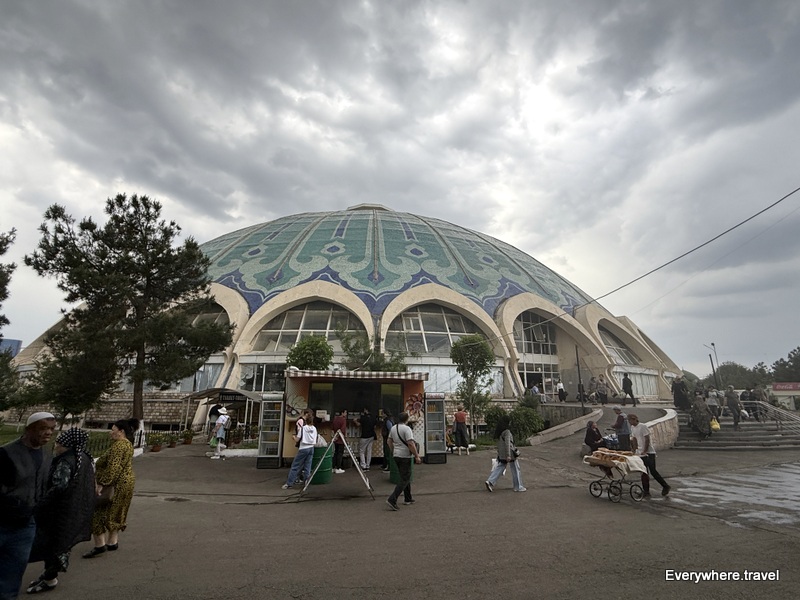
Chorsu Bazaar is my favorite place to spend time in Tashkent. I love exploring local markets when I travel, and this enormous bazaar is a fantastic place to experience everyday life in Uzbekistan.
Located in the old town, within walking distance of Khast Imam Complex, Chorsu Bazaar is one of Tashkent’s most famous attractions. It’s particularly recognizable for its enormous blue dome, which covers a large section of the market.
Inside, you’ll find stalls piled high with fresh fruit, vegetables, meat, spices, nuts and dried fruit. There’s so much to look at, and I loved simply wandering around and taking in the atmosphere.
Don’t limit yourself to the main domed building, either. The market spreads into the surrounding streets and smaller shopping areas, where you’ll find everything from clothes and household goods to traditional Uzbek handicrafts.
One of the highlights is the food. I recommend looking out for freshly baked non, Uzbekistan’s delicious round bread, as well as samsa, plov and other local specialties.
What I particularly love about Chorsu Bazaar is that it’s not just a tourist attraction. It’s a working market where local people come to shop, eat and go about their daily lives.
I recommend allowing plenty of time here rather than rushing through. For me, wandering around Chorsu Bazaar is one of the best things to do in Tashkent, and it’s somewhere I wouldn’t want to miss on a return visit.
3. Visit the Juma (Friday) Mosque

Just a short walk from Chorsu Bazaar, the Juma Mosque is another interesting historic attraction in Tashkent’s old town.
Also known as the Khoja Ahrar Vali Mosque, it stands close to the magnificent Kukeldash Madrasa and has been an important religious site for centuries.
The mosque’s history stretches back to medieval Tashkent, with a major building constructed here in 1451 through the efforts of Khoja Ahrar Vali, an influential Sufi religious leader.
However, the building you see today is largely a modern reconstruction. The mosque was damaged and rebuilt several times over the centuries, with major reconstruction taking place around the beginning of the 21st century.
Its three turquoise domes are particularly distinctive, and the building is an interesting contrast to some of Tashkent’s older Islamic monuments.
I love how easy it is to explore several different historic attractions around Chorsu. You can visit the bustling market, admire the Juma Mosque and see the nearby Kukeldash Madrasa without having to travel across the city.
The mosque remains an active place of worship, so dress respectfully and be mindful of prayer times.
I recommend stopping here while exploring the Chorsu area, even if you only have time to admire the building from outside.
4. Relax in Navoi Park

Navoi Park is one of Tashkent’s most interesting green spaces and a great place to explore if you enjoy discovering unusual architecture alongside more traditional tourist attractions.
Named after Alisher Navoi, the famous 15th-century poet and writer, the park is a large recreational area with walking paths, trees, gardens and plenty of open space.
While it’s a lovely place to relax, what I particularly like about this part of Tashkent is the collection of impressive Soviet-era and monumental buildings nearby.
If you’re interested in Soviet architecture, I recommend taking a walk past Istiklol Palace, formerly known as the Palace of Friendship of Peoples. It’s an enormous building with a distinctive design and a great example of the monumental architecture found throughout Tashkent.
The nearby Wedding Palace is another interesting building to admire, while the Oliy Majlis, Uzbekistan’s parliament complex, adds to the area’s grand appearance.
I find this side of Tashkent fascinating because it’s so different from the historic Silk Road cities elsewhere in Uzbekistan. Instead of enormous blue-tiled madrasas, you’re surrounded by grand public buildings, wide roads and landscaped parks.
There are also playgrounds and open spaces, making Navoi Park a good option if you’re traveling with children or simply want a break from sightseeing.
I recommend combining a walk through the park with some time exploring the surrounding architecture. It’s a great way to experience another side of Uzbekistan’s capital.
5. Visit Magic City

Magic City has to be one of the most unexpected attractions in Tashkent. After spending so much time exploring Uzbekistan’s historic mosques, madrasas and Soviet architecture, suddenly finding somewhere that looks like Disneyland is quite a surprise!
Located beside Navoi Park, Magic City is a colorful entertainment complex filled with elaborate buildings, shops, restaurants, cafés and family attractions.
The first thing I noticed was how much it reminded me of Disneyland. With its fairytale-style architecture, colorful streets and enormous castle-like buildings, it feels completely different from anywhere else I’ve visited in Uzbekistan.
It’s a fun place to wander around, even if you’re not particularly interested in the rides or other attractions. There are plenty of opportunities for photographs, and the whole complex has a playful, almost surreal atmosphere.
Magic City is particularly popular with families, with entertainment and attractions aimed at children as well as places to eat and shop.
One of the best things is that general admission to the complex is free, although individual attractions and activities may charge separately.
I recommend visiting in the evening when the buildings are illuminated and the atmosphere becomes particularly lively.
We visited with our two kids, and it was a perfect break for them from all the historical sites.
6. Explore the Museum of Applied Arts

The Museum of Applied Arts is one of Tashkent’s most interesting museums, particularly if you love traditional architecture, beautiful interiors and local handicrafts.
The museum is housed in a magnificent historic residence associated with Alexander Polovtsev, a Russian diplomat. The building itself is one of the main reasons to visit, with beautifully decorated rooms showcasing traditional Uzbek craftsmanship.
I love visiting museums where the building is just as interesting as the exhibits, and this is a great example. The intricate wood carvings, colorful painted ceilings and decorative plasterwork give you plenty to admire before you’ve even started exploring the collections.
Inside, you’ll find an impressive range of traditional Uzbek handicrafts, including ceramics, embroidered textiles, carpets, jewelry, wood carvings and metalwork.
The displays offer a fascinating insight into the skills and artistic traditions that have developed across Uzbekistan over centuries.
One thing I particularly like about visiting museums like this is seeing the details up close. After admiring the enormous historic buildings in places like Samarkand and Bukhara, it’s interesting to appreciate the smaller decorative objects and craftsmanship that are also such an important part of Uzbekistan’s cultural heritage.
Even if you’re not usually a big museum person, I think the Museum of Applied Arts is worth considering for its beautiful architecture alone.
I recommend allowing time to appreciate both the building and the collections rather than simply rushing through the exhibits.
7. Visit the Holy Assumption Cathedral

The Holy Assumption Cathedral is one of Tashkent’s most distinctive religious buildings and an interesting contrast to the Islamic mosques and madrasas you’ll see throughout Uzbekistan.
This beautiful Russian Orthodox cathedral is particularly striking with its bright blue walls, golden domes and decorative architectural details.
I love how Tashkent has such a fascinating mixture of architectural styles, and this cathedral is a great example of the city’s Russian and Soviet influences.
The history of the cathedral stretches back to the 19th century, when an Orthodox church was established on the site. The building has undergone several changes and reconstructions over the years, including during the Soviet period.
Today, it remains an important place of worship for Tashkent’s Orthodox Christian community.
Inside, you’ll find religious icons, ornate decorations and the distinctive atmosphere of an Orthodox church. It’s quite different from the Islamic religious buildings that dominate many Uzbekistan itineraries.
I recommend stopping here if you’re interested in religious architecture or want to experience another side of Tashkent’s cultural history.
As this is an active cathedral, remember to dress respectfully and avoid disturbing anyone attending religious services.
8. Discover the State Museum of History of Uzbekistan
If you’re interested in understanding Uzbekistan’s fascinating history, I recommend visiting the State Museum of History of Uzbekistan in central Tashkent.
This is one of Central Asia’s oldest museums, originally established in 1876. Its enormous collection covers thousands of years of history, from the region’s earliest settlements to the development of modern Uzbekistan.
The museum reopened in July 2026 following a major two-year renovation, with updated exhibitions, multimedia displays and improved facilities.
Inside, you can learn about the ancient civilizations of Central Asia, the development of the Silk Road, the arrival of Islam and the powerful empires that once controlled the region.
The displays also explore the achievements of scholars and scientists, the Timurid dynasty, the Russian and Soviet periods and Uzbekistan’s development since independence in 1991.
What I particularly like about visiting museums like this is how they help put everything else you see into context. After exploring the historic monuments in Samarkand and Bukhara, it’s fascinating to understand how the different periods of Uzbekistan’s history fit together.
The building itself is also interesting. Originally constructed during the Soviet period, it has a distinctive modernist design that makes it quite different from Tashkent’s traditional Islamic architecture.
The museum is conveniently located near Independence Square, making it easy to combine the two attractions.
I recommend allowing at least an hour or two if you’re interested in history, as there’s plenty to explore.
9. Stroll Through Independence Square (Mustakillik Maydoni)
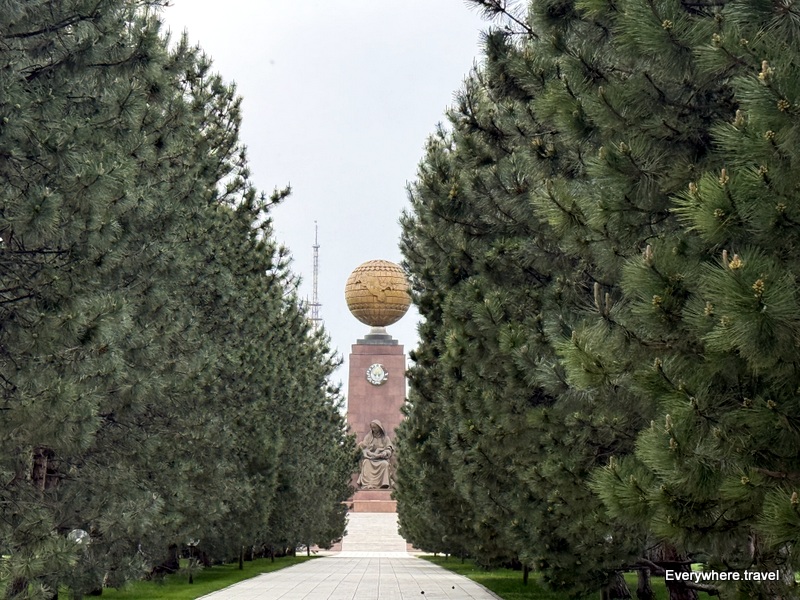
Independence Square is one of Tashkent’s most important public spaces and a fascinating place to appreciate the city’s Soviet history and its transformation since Uzbekistan became independent.
Known locally as Mustaqillik Maydoni, this enormous square was previously called Lenin Square during the Soviet period. Following independence in 1991, it was renamed and its Soviet monuments were replaced with symbols of the new nation.
Today, the square is surrounded by impressive government buildings, landscaped gardens, fountains and monuments.
One of the main landmarks is the Independence Monument, featuring a globe with a map of Uzbekistan. Beneath it is a sculpture of a mother holding a child, representing the country’s future and independence.
Nearby, you’ll also find the Memory and Honor Square, with its memorial to those who died during the Second World War.
I love exploring enormous public squares like this when traveling through former Soviet countries. The scale of the buildings, wide open spaces and monumental architecture tell you so much about the city’s more recent history.
It’s a completely different experience from visiting Tashkent’s traditional bazaars and historic mosques, and that’s one of the things I find most interesting about the city.
I recommend combining Independence Square with the nearby State Museum of History of Uzbekistan and a walk towards Broadway and Amir Temur Square.
Be aware that access to some areas may be restricted because of the nearby government buildings.
10. Walk Broadway to Amir Temur Square
One of the best ways to experience central Tashkent is to take a walk along Broadway, the popular pedestrian street leading towards Amir Temur Square.
Officially known as Sayilgoh Street, Broadway is a lively area with artists, souvenir stalls, cafés and places to stop and watch the world go by.
I love exploring cities on foot, and this is a great place to do it. It’s a completely different atmosphere from the old town around Chorsu Bazaar, with wide streets, leafy public spaces and some impressive architecture.
As you walk along Broadway, you’ll often find artists displaying paintings and portraits, along with stalls selling souvenirs and handicrafts.
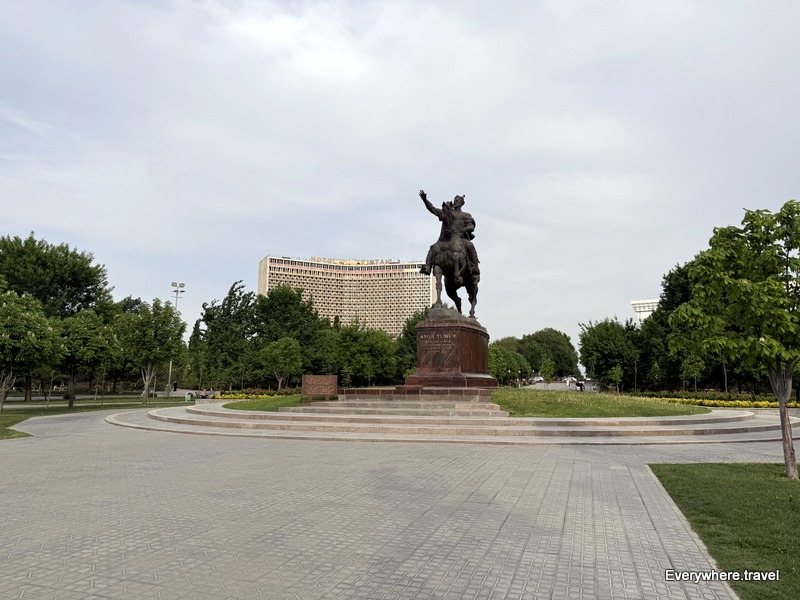
At the end of the walk, you’ll reach Amir Temur Square, one of Tashkent’s most recognizable landmarks.
The centerpiece is an enormous equestrian statue of Amir Timur (Tamerlane), the famous conqueror who established the Timurid Empire and made Samarkand his capital.
The square is surrounded by gardens and impressive buildings, including the distinctive Hotel Uzbekistan, a huge Soviet-era hotel with a striking curved facade.
I particularly recommend taking a look at Hotel Uzbekistan if you’re interested in Soviet architecture. It’s one of the most recognizable buildings in Tashkent and a great example of the city’s unusual architectural heritage.
Amir Temur Square is also close to the State Museum of the History of the Timurids, which is the next attraction on this list.
I recommend allowing time to wander around the square and appreciate the surrounding buildings rather than just stopping for a photograph of the statue.
11. Visit the Amir Timur Museum (State Museum of the Temurids)

The Amir Timur Museum is one of Tashkent’s most impressive museums and a great place to learn more about the powerful conqueror who shaped so much of Uzbekistan’s history.
Also known as the State Museum of the History of the Timurids, it’s dedicated to Amir Timur (Tamerlane), his descendants and the achievements of the Timurid Empire.
The first thing that makes this museum stand out is the building itself. Opened in 1996, it has an enormous blue dome, elegant columns and elaborate decorative details inspired by traditional Central Asian architecture.
I love how different Tashkent’s museums look from one another. While some are housed in enormous Soviet-era buildings, this museum was deliberately designed to celebrate Uzbekistan’s history and identity following independence.
Inside, you’ll find displays about Timur’s life, his military campaigns and the enormous empire he established in the 14th century.
The museum also explores the cultural and scientific achievements of the Timurid period, including the work of Timur’s grandson Ulugh Beg, the famous astronomer associated with Samarkand.
There are historical manuscripts, paintings, models of important buildings and other objects illustrating the history of the dynasty.
One of the things I find fascinating about traveling through Uzbekistan is seeing how much of the country’s history is connected to Timur. After visiting places like Registan Square and Gur-e Amir in Samarkand, it’s interesting to learn more about the people responsible for this extraordinary period of architecture and cultural development.
I recommend visiting the museum while exploring Amir Temur Square, as it’s located nearby and the two attractions complement each other particularly well.
12. Experience the Alisher Navoi Theater

The Alisher Navoi Theater is one of Tashkent’s most beautiful buildings and a fantastic place to visit if you’re interested in architecture, opera or ballet.
Officially known as the Alisher Navoi State Academic Bolshoi Theater, it’s named after the famous 15th-century poet Alisher Navoi and is one of Uzbekistan’s most important performing arts venues.
The theater was completed in 1947 and is a beautiful example of architecture combining Soviet-era monumental design with traditional Central Asian decorative influences.
From outside, the building is particularly impressive, with its grand entrance, elegant columns and beautifully landscaped square.
I love how Tashkent has so many different architectural styles, and this is another building that really stands out. It’s quite different from the enormous Soviet modernist structures elsewhere in the city, while still reflecting the period in which it was built.
Inside, the theater is famous for its elaborate decoration, including rooms featuring traditional artistic styles from different regions of Uzbekistan.
If you enjoy live performances, I recommend checking the program to see whether there’s an opera or ballet scheduled during your visit. Attending a performance would be a fantastic way to experience another side of Uzbek culture.
Even if you don’t have time to see a show, I think the building is worth admiring from outside.
It’s conveniently located in central Tashkent, so it’s easy to include while exploring the surrounding streets and squares.
13. Visit the Tashkent Botanical Garden

If you’re looking for somewhere peaceful to escape the busy streets of Tashkent, the city’s enormous Botanical Garden is a lovely place to spend a couple of hours.
Located in the northern part of the city, near Tashkent Zoo, the garden covers approximately 66 hectares and is home to an impressive collection of plants and trees from around the world.
The present garden was developed during the Soviet period, although its origins go back further. Today, it’s an important center for botanical research as well as a popular place for visitors to enjoy nature.
One of the things I love about traveling is finding places where you can escape the sightseeing crowds for a while, and botanical gardens are often perfect for this.
Here, you can wander along peaceful paths surrounded by trees, explore different sections of the gardens and enjoy a completely different atmosphere from central Tashkent.
The collections include plants from Central Asia, East Asia, Europe and North America, with different areas dedicated to particular regions of the world.
It’s a particularly appealing place if you enjoy nature, photography or simply want somewhere quiet to walk around.
The main downside is its location. The Botanical Garden is quite a distance from most of Tashkent’s central attractions, so you’ll probably want to take a taxi rather than try to walk here.
I recommend visiting if you have a little extra time in Tashkent, particularly during spring or autumn when the gardens can be especially beautiful.
If you only have one day in the city, though, I’d prioritize the historic attractions and metro stations instead.
14. Admire the Tashkent Metro Stations
One of the most unusual things to do in Tashkent is to explore its metro stations. This might sound like a strange tourist attraction, but trust me, the Tashkent Metro is absolutely worth seeing!
Opened in 1977, it was the first metro system in Central Asia and is famous for its extraordinary Soviet-era architecture.
Unlike most underground railway systems, where stations are simply somewhere to wait for a train, many of Tashkent’s stations are beautifully decorated with enormous chandeliers, colorful mosaics, intricate tilework and elaborate ceilings.
I love discovering unusual Soviet architecture when traveling, and the Tashkent Metro is a fantastic example of how impressive even everyday public transport buildings can be.
Each station has its own design and theme, so it’s worth getting off at several rather than simply traveling from one destination to another.
One of the most beautiful is Alisher Navoi station, with its elegant domed ceilings, intricate decorative panels and traditional Uzbek architectural influences. It almost feels like stepping into an underground palace.
Another station I particularly recommend is Kosmonavtlar, which celebrates Soviet space exploration. Its blue walls are decorated with portraits of famous cosmonauts, including Yuri Gagarin and Valentina Tereshkova, and the whole station has a wonderfully futuristic atmosphere.
Pakhtakor is also worth visiting for its beautiful cotton-themed mosaics, while Mustaqillik Maydoni station is known for its grand columns and chandeliers.
One interesting fact is that photography was prohibited in the Tashkent Metro for decades because it was considered a strategically sensitive site. Thankfully, the ban was lifted in 2018, so you can now take photographs of the stations.
The metro is also a cheap and convenient way to travel around Tashkent, making it easy to combine sightseeing with getting from one attraction to another.
I recommend setting aside an hour or two specifically to explore some of the most beautiful stations. It’s one of the most memorable experiences in Tashkent and a fantastic way to appreciate the city’s Soviet architectural heritage.
How To Get To Tashkent
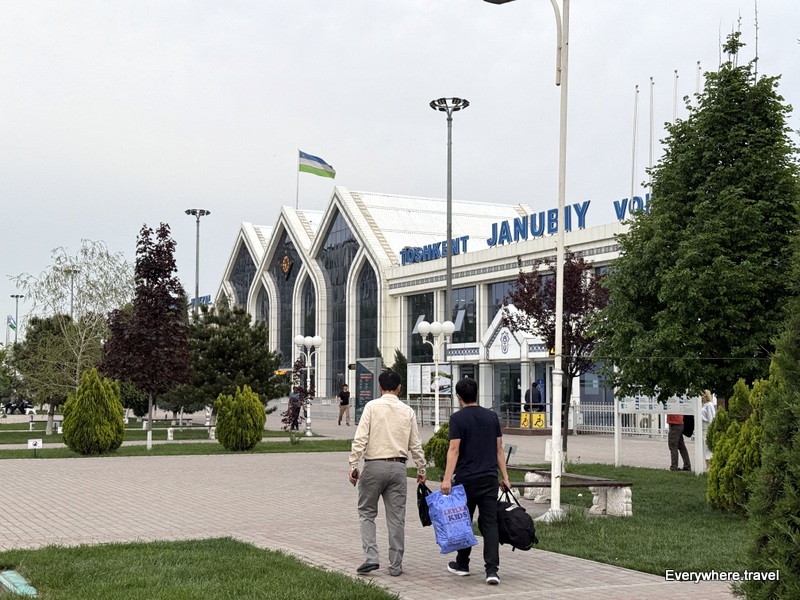
Tashkent is Uzbekistan’s main international transport hub, so it’s a relatively easy city to reach whether you’re flying into the country or traveling overland from elsewhere in Central Asia.
We visited Tashkent as part of a longer Central Asia trip, traveling overland from Kazakhstan and eventually flying out of Uzbekistan from Tashkent.
Here are the main ways to get to Tashkent.
From Kazakhstan
If you’re traveling around Central Asia, it’s possible to reach Tashkent overland from Kazakhstan.
One option is to travel from Almaty, Kazakhstan’s largest city. There are international train services connecting Almaty and Tashkent, with journeys generally taking around 16–20 hours, depending on the service and timetable.
You can check train options through Tickets.kz or the relevant national railway operators.
Long-distance buses may also be available, although they can take considerably longer and are generally less comfortable than traveling by train.
Another option, and the route we chose, is to travel from Shymkent in southern Kazakhstan.
Shymkent is much closer to Tashkent, making this a convenient overland route if you’re exploring both countries.
The journey involves traveling to the Kazakhstan–Uzbekistan border, passing through immigration and customs, and then continuing to Tashkent.
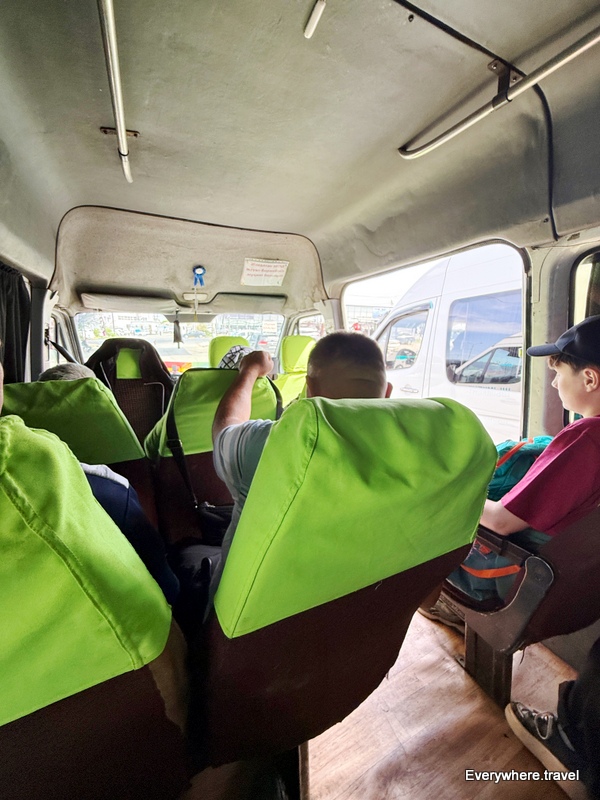
You can use a combination of minibuses, shared taxis and regular taxis, depending on the transport available and which border crossing is operating.
Border crossing arrangements between Kazakhstan and Uzbekistan can change, particularly around the Gisht-Kuprik/Zhibek Zholy crossing. Check which crossing is operating before traveling from Shymkent, as you may need to use an alternative such as Kaplanbek–Navoi.
Allow several hours for the journey from Shymkent to Tashkent, particularly if there are queues at the border.
I recommend having some cash available for local transport on either side of the border and making sure you meet the entry requirements for both countries.
Click here to read my full guide to best places to visit in Kazakhstan.
From Samarkand
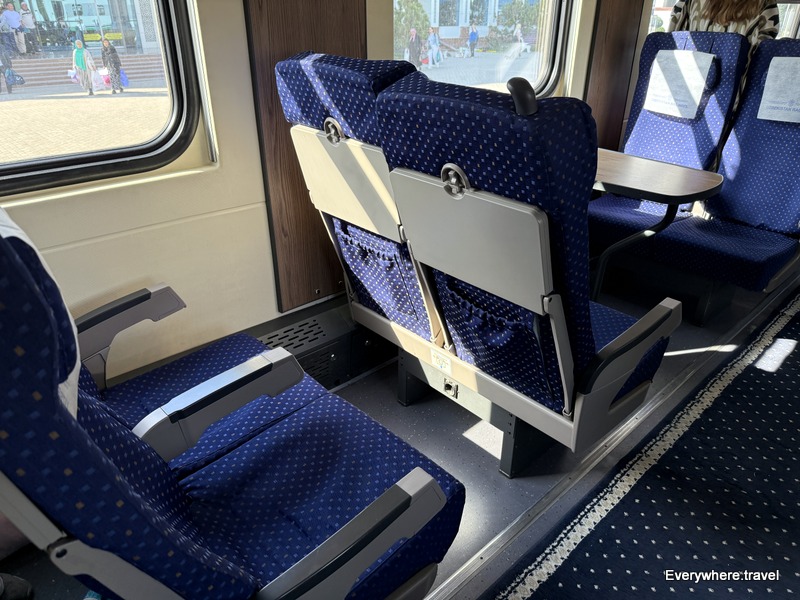
Traveling from Samarkand to Tashkent is incredibly straightforward, and I recommend taking the train.
The two cities are approximately 300 kilometers apart by road, but Uzbekistan’s Afrosiyob high-speed trains make the journey in around 2–2.5 hours.
These modern trains are comfortable and a fantastic way to travel between Uzbekistan’s major cities.
You can book tickets through the official Uzbekistan Railways website.
I recommend booking ahead, particularly during the busy spring and autumn travel seasons, as the most convenient trains can sell out.
Slower trains are also available and can be a cheaper alternative if you’re not in a hurry.
You can also travel by taxi or private transfer, with the road journey generally taking around 4–5 hours.
For most travelers, though, the high-speed train is the easiest option.
One thing to remember is that Tashkent has more than one railway station, so check your ticket carefully to make sure you arrive at the correct one.
Click here to read my full guide to Samarkand.
Flying In
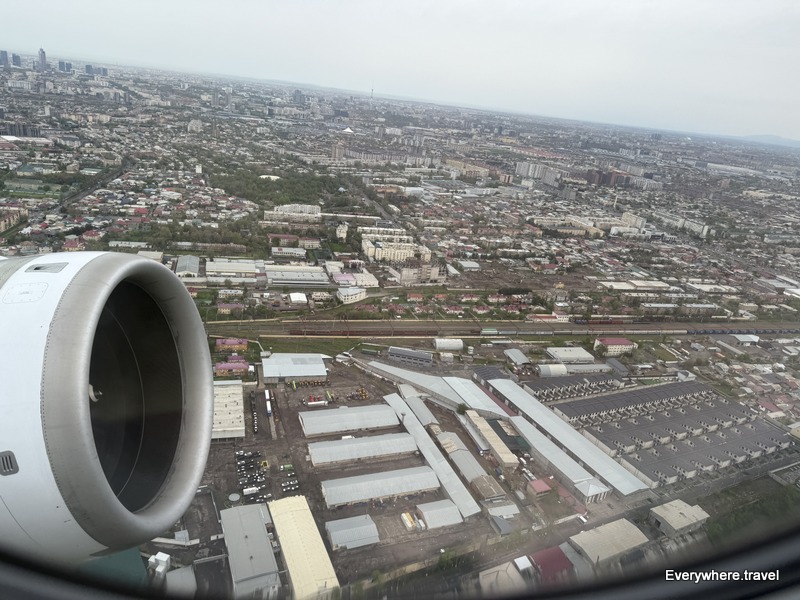
For many international travelers, the easiest way to reach Uzbekistan is to fly into Tashkent International Airport (TAS).
Officially known as Islam Karimov Tashkent International Airport, it’s the country’s main international airport, with connections to destinations across Central Asia, the Middle East, Europe and beyond.
There are flights from major hubs such as Istanbul and Dubai, making Tashkent relatively easy to reach even if you’re traveling from further away.
The airport is conveniently located within Tashkent, so reaching the city center is generally straightforward.
I recommend using the Yandex Go app to arrange a taxi. We found Yandex useful when traveling in Uzbekistan, as it makes it easy to see the fare before getting into the car.
Official airport taxis and pre-booked transfers are also available.
One thing worth knowing is that we actually left Central Asia from Tashkent on a very cheap Air Arabia flight to Sharjah in the United Arab Emirates.
It worked out particularly well for us, and I recommend checking Air Arabia’s fares if you’re looking for an inexpensive way to travel between Uzbekistan and the Middle East.
It’s worth comparing different departure dates and keeping an eye out for sales, as you can sometimes find excellent fares.
Whether you’re arriving by air or traveling overland, Tashkent is a convenient starting or finishing point for an Uzbekistan itinerary.
Final Words
Tashkent surprised me with just how much there was to see and do. While it doesn’t have the same concentration of spectacular Silk Road monuments as Samarkand and Bukhara, it offers something completely different.
I particularly loved exploring Chorsu Bazaar, admiring the unusual Soviet architecture and discovering the city’s beautiful metro stations. And then there are places like Magic City, which are so unexpected that they make exploring Tashkent even more interesting.
One of my favorite things about traveling around Uzbekistan was seeing how different the cities were from one another. Tashkent gives you a chance to experience the country’s modern capital alongside its fascinating history.
I recommend spending at least two days in Tashkent if you can. This gives you enough time to explore the main attractions without rushing and appreciate some of the places that make the city unique.
Whether you’re starting your Uzbekistan adventure here or finishing your trip in the capital, I definitely recommend allowing time to explore rather than simply passing through.
Read our guide to the best places to visit Uzbekistan here and Kazakhstan here. Find more guides to amazing Uzbekistan here.