Bukhara is one of the most fascinating places to visit in Uzbekistan. This ancient Silk Road city is packed with magnificent madrasas, towering minarets, beautiful mosques and bustling bazaars. With more than 2,500 years of history, it’s a fantastic place to explore and one of my favourite places to experience Uzbekistan’s incredible past.
When I visited Bukhara, I loved how much there was to see simply by walking around the historic centre. There are incredible buildings around practically every corner, and it’s easy to spend hours wandering through the old streets, exploring the markets and admiring the beautiful architecture.
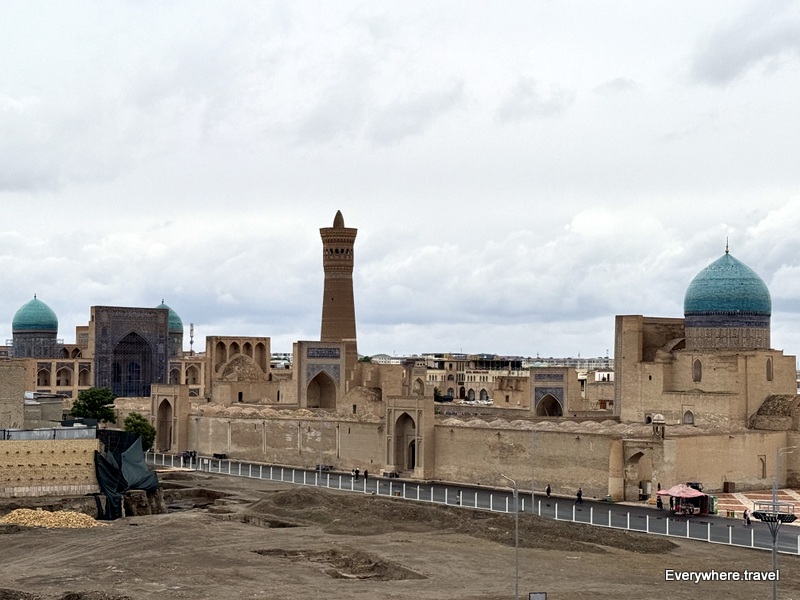
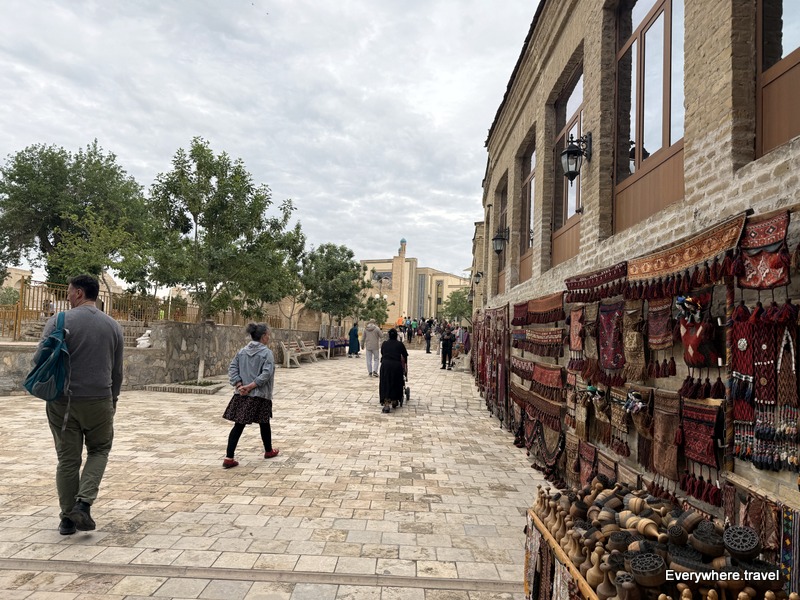
One of the things I particularly enjoyed about Bukhara was that it wasn’t just about visiting individual attractions. The whole historic centre is an experience in itself, and I recommend allowing plenty of time to wander without a particular destination in mind.
In this guide, I’ll share my ten favourite things to do in Bukhara, from the enormous Ark Fortress and magnificent Kalyan Minaret to the atmospheric trading domes and beautiful Lyab-i Hauz square. I’ll also share some of the city’s fascinating history and explain how to get here from other popular destinations in Uzbekistan, so you can plan your own visit.
A Brief History of Bukhara
Bukhara is one of the oldest cities in Central Asia, with a history stretching back more than 2,500 years. Located on an oasis along the ancient Silk Road, it developed into an important centre of trade, culture and religion, attracting merchants and travellers from across Asia.
For centuries, Bukhara was influenced by Persian empires and cultures. Following the Arab conquest in the early eighth century, Islam gradually became central to the city’s identity. Bukhara eventually developed into one of the Islamic world’s most important centres of religious scholarship.
The city experienced a golden age under the Samanid dynasty in the ninth and tenth centuries, when it served as the capital of a powerful state. Scholars, poets and scientists flourished here, while impressive buildings such as the Samanid Mausoleum demonstrated the architectural achievements of the period.
Bukhara suffered enormous destruction when Genghis Khan’s Mongol armies invaded in 1220. Although the city eventually recovered, it passed through several periods of political upheaval and changing rulers, including the Timurid era.
In the 16th century, Bukhara became the capital of the Khanate of Bukhara under the Shaybanid dynasty. Many of the magnificent madrasas, mosques and trading domes that visitors admire today were built or developed during this period. The city later became the centre of the Emirate of Bukhara.
In 1868, the emirate became a protectorate of the Russian Empire, although its rulers retained some internal authority. The emirate was abolished in 1920, and Bukhara subsequently became part of Soviet Central Asia before Uzbekistan gained independence in 1991.
Today, Bukhara’s remarkably well-preserved historic centre is a UNESCO World Heritage Site. Walking through its old streets, past ancient minarets, magnificent madrasas and covered bazaars gives you an incredible glimpse into the city’s Silk Road past.
10 Awe-Inspiring Things To Do In Bukhara
The centre of Bukhara is amazing, with magnificent madrasas, minarets, an enormous fortress and more. Below are ten of my favourite things to do in Bukhara. But don’t rush from one attraction to another. Make sure you leave time to wander through the old streets and soak up the atmosphere without a particular destination in mind.
1. Visit the Ark of Bukhara
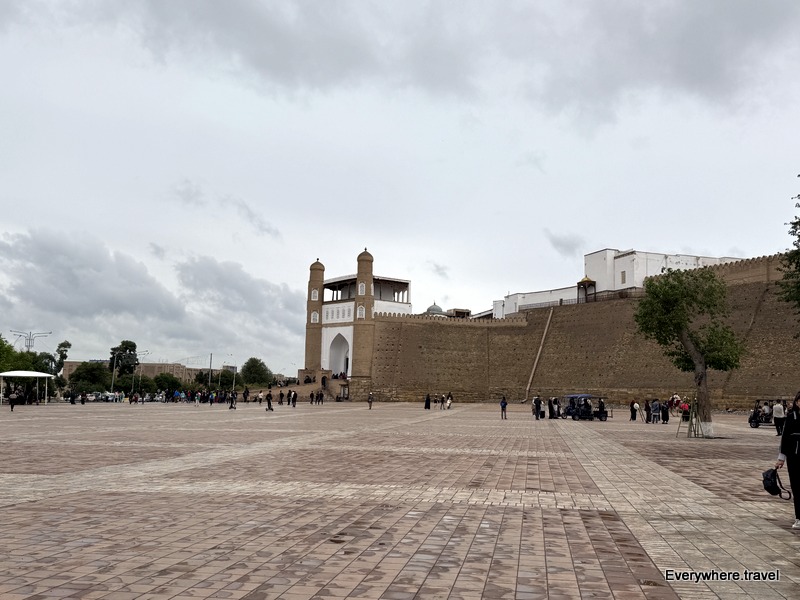
The Ark of Bukhara is one of the city’s most impressive landmarks. This enormous fortress was once the residence of Bukhara’s rulers and the centre of political power for centuries. Although the site has ancient origins, much of what you see today dates from later periods, particularly the 16th century onwards.
The fortress is particularly striking from outside, with its massive sloping walls rising above the surrounding streets. It’s worth stopping to admire the entrance before heading inside to explore.
Today, the Ark houses several museum exhibitions where you can learn about Bukhara’s rulers, history and traditional culture. You can also see surviving sections of the royal complex, including the former throne room and mosque.
One of the highlights is looking out across Bukhara from the elevated fortress. It’s a great place to appreciate how the city’s historic buildings fit together, with minarets and domes rising above the old streets.
I recommend visiting the Ark alongside the nearby Bolo Haouz Mosque, which is just across the road.
2. Explore the Bolo Haouz Mosque
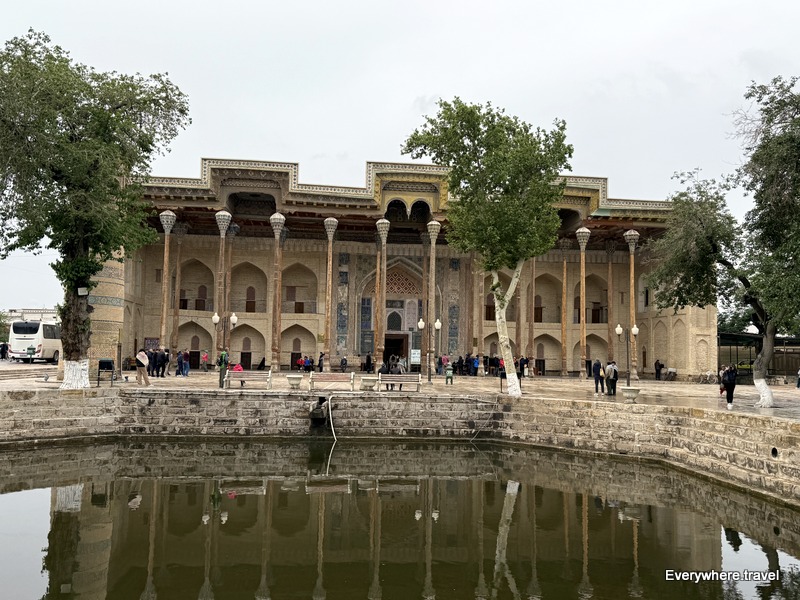
Just across from the Ark Fortress, the Bolo Haouz Mosque is one of the most beautiful buildings in Bukhara. Built in the early 18th century, it’s particularly famous for its magnificent wooden entrance portico, supported by 20 tall, intricately carved columns.
These slender columns are one of the most striking architectural features in the city. Their painted ceilings and detailed carvings are incredible, and the reflections in the pond in front of the mosque make the building even more impressive.
The name Bolo Haouz refers to the pond in front of the mosque, which was once an important source of water for the surrounding community. Today, it creates a lovely setting for photographs.
The mosque remains a place of worship, so remember to dress respectfully and avoid disturbing anyone praying.
I recommend combining this stop with the Ark Fortress and nearby Samanid Mausoleum, as all three attractions are within easy walking distance of each other.
3. Discover the Samanid Mausoleum
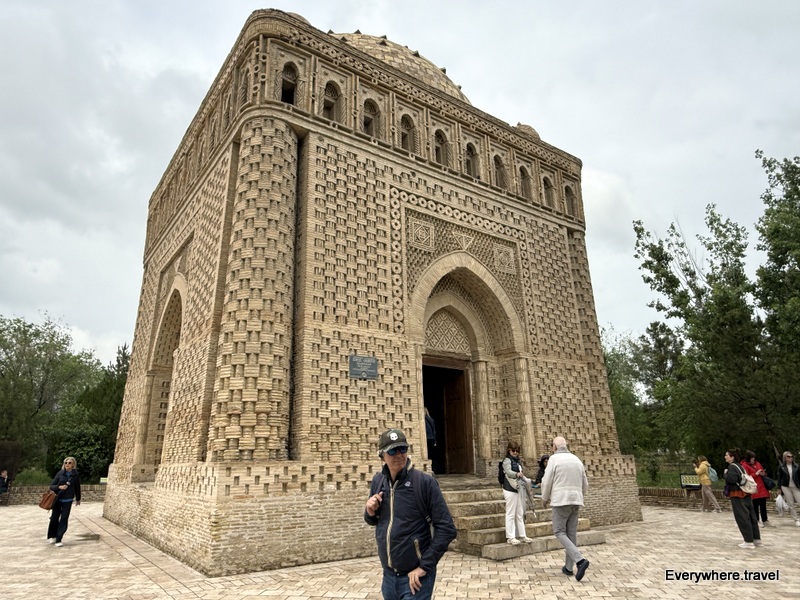
The Samanid Mausoleum is one of Bukhara’s oldest and most remarkable surviving buildings. Dating from the late ninth or early tenth century, it’s considered one of the finest examples of early Islamic architecture in Central Asia.
The mausoleum is associated with Ismail Samani, the influential ruler who helped establish Bukhara as a major political and cultural centre under the Samanid dynasty.
What makes this building particularly special is its extraordinary brickwork. Rather than relying on colourful tiles, the builders arranged simple baked bricks into intricate geometric patterns. As the sunlight changes throughout the day, the patterns create different shadows across the walls.
It’s also remarkable that the mausoleum survived the Mongol destruction of Bukhara in 1220, when so much of the city was devastated.
Inside, you’ll find a relatively simple chamber containing tombs associated with the Samanid dynasty. The contrast between the understated interior and elaborate exterior is part of what makes the building so fascinating.
The mausoleum is located in a park west of the old city centre, making it easy to combine with the Ark Fortress and Bolo Haouz Mosque.
4. Stroll through the Lyab-i Hauz Complex
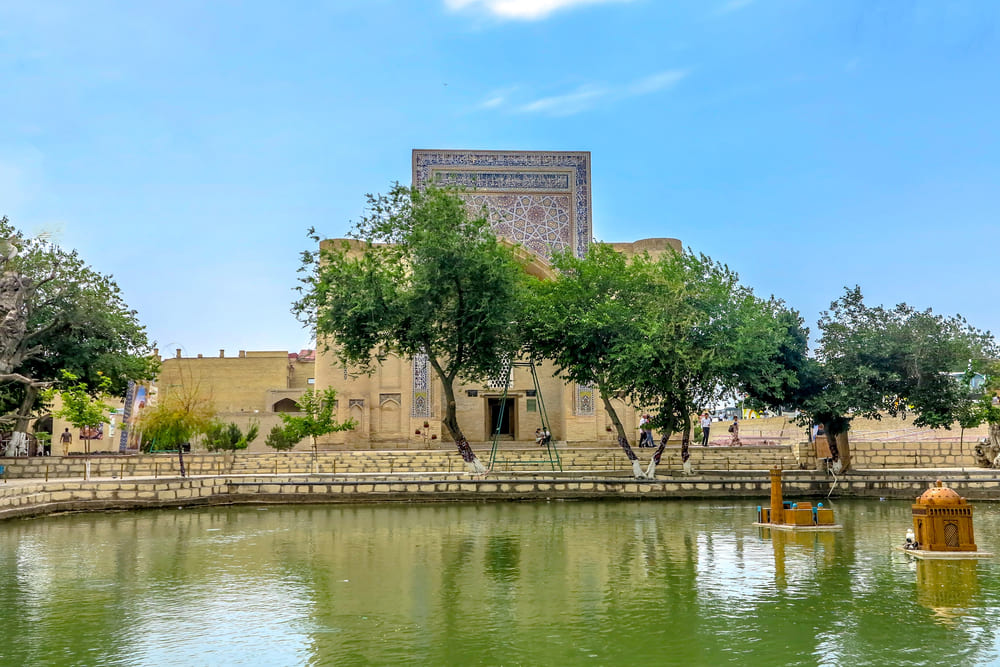
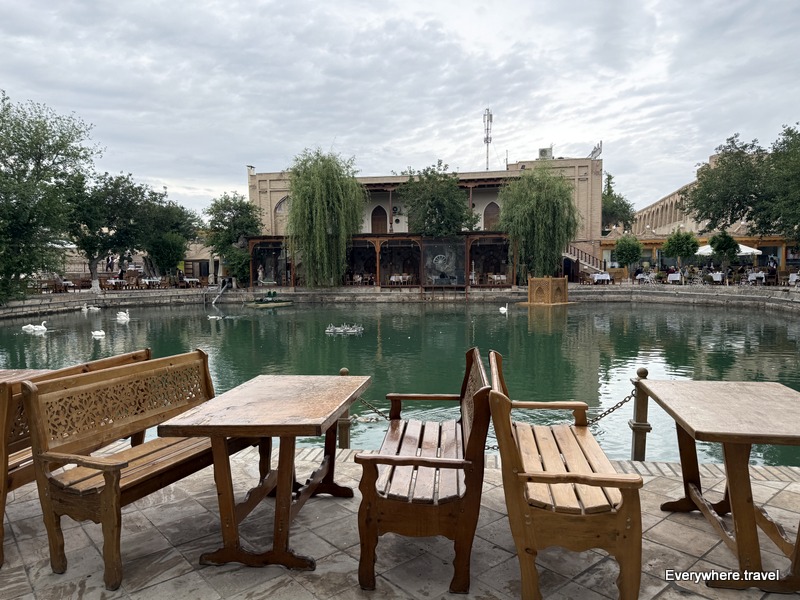
Lyab-i Hauz is one of my favourite places to recommend spending time in Bukhara. This beautiful historic square centres around a large pond surrounded by old trees, traditional buildings, restaurants and cafés.
The name Lyab-i Hauz means “by the pond”, and the area has been an important gathering place for centuries. Although Bukhara once had numerous public ponds, most have disappeared, making this surviving example particularly special.
Three historic buildings surround the square: the Kukeldash Madrasa, Nadir Divan Begi Madrasa and Nadir Divan Begi Khanaka. Together, they create one of the most atmospheric architectural ensembles in the city.
While the buildings are impressive, one of the best things to do here is simply sit beside the water and enjoy the atmosphere. There are plenty of places to stop for a meal or drink, and it’s a lovely spot to watch people passing through the square.
I particularly recommend visiting in the evening, when the buildings are illuminated and the cafés become lively. It’s a great place to relax after a day exploring Bukhara’s historic attractions.
5. Discover the Nadir Divan Begi Khanaka
The Nadir Divan Begi Khanaka is one of the historic buildings surrounding Lyab-i Hauz and an interesting place to learn more about Bukhara’s religious heritage.
Built in the early 17th century, the khanaka was designed as a gathering and accommodation place for Sufi followers. Sufism, a mystical tradition within Islam, played an important role in Bukhara’s religious and cultural history.
The building has an impressive entrance decorated with intricate tilework, along with a large central hall and smaller rooms that were historically used by members of the Sufi community.
Today, the building is associated with museum displays exploring local history and traditional crafts. It’s worth checking which exhibitions are open when you visit.
Don’t confuse the khanaka with the Nadir Divan Begi Madrasa on the opposite side of the pond. The madrasa is particularly famous for its colourful façade featuring birds and a human-faced sun, an unusual design for an Islamic religious building.
Since both buildings are part of the Lyab-i Hauz ensemble, it’s easy to explore them together while enjoying one of Bukhara’s most atmospheric squares.
6. Visit the Kalyan Minaret and Mosque
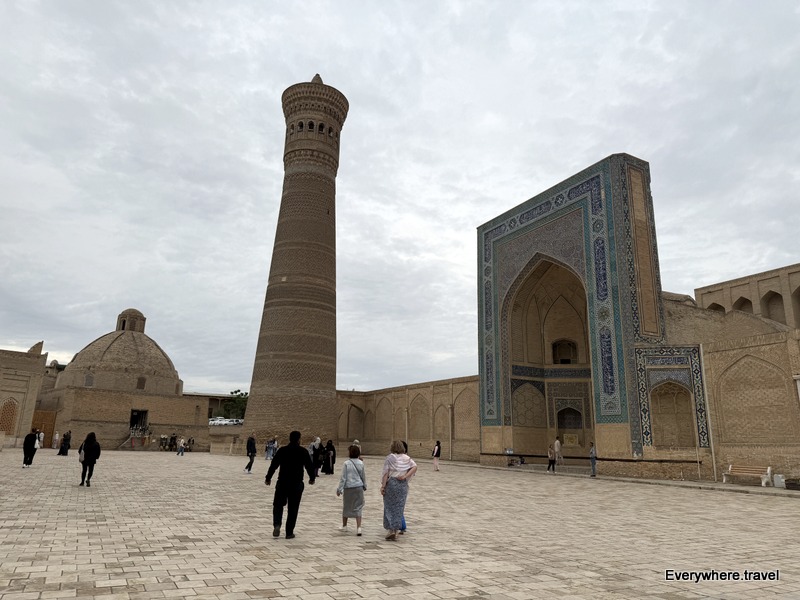
The Kalyan Minaret is one of Bukhara’s most famous landmarks and an absolute must-see when visiting the city. Standing around 46 metres tall, this magnificent tower has dominated the skyline since it was built in 1127.
The minaret is particularly impressive because of its intricate brickwork. Look closely and you’ll notice different decorative patterns running around the tower, creating a beautiful effect without relying on the colourful tiles found on many of Bukhara’s other buildings.
It’s also one of the few major structures to have survived the Mongol invasion in 1220. According to local legend, Genghis Khan was so impressed by the tower that he ordered it to be spared.
The minaret stands in the magnificent Poi Kalyan complex, alongside the Kalyan Mosque and Mir-i-Arab Madrasa. The mosque has an enormous courtyard surrounded by elegant arches, while the madrasa features beautiful blue domes and intricate tilework.
Although you generally can’t climb the minaret, there are plenty of fantastic places to admire it from the surrounding square and nearby rooftops.
I recommend visiting twice if you have time: once during the day to appreciate the architectural details and again in the evening when the buildings are illuminated. It’s one of the most spectacular sights in Bukhara.
7. Experience the Trade Domes (Toki)
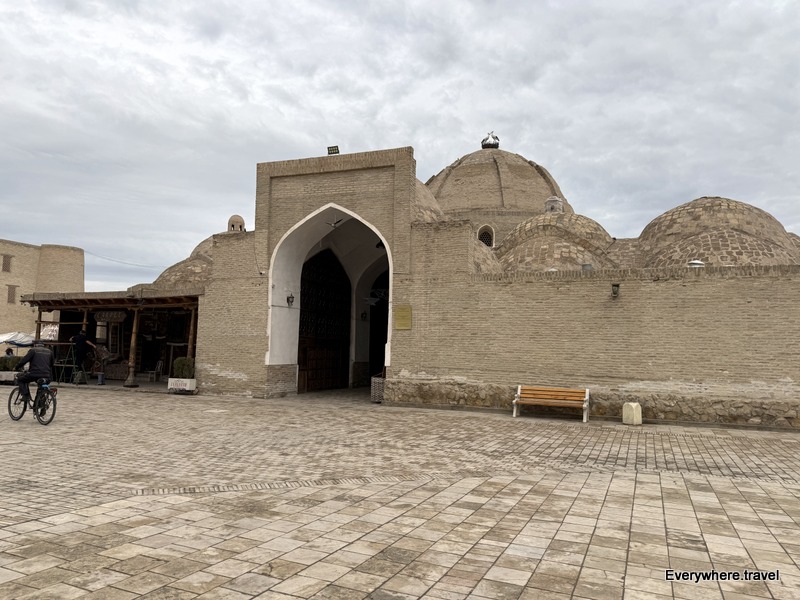
One of the best ways to experience Bukhara’s Silk Road history is to wander through its historic trading domes, known as Toki. These covered markets date mainly from the 16th century, when Bukhara was an important centre of trade connecting merchants from across Asia.
Three of the most famous surviving domes are Toki Zargaron, once associated with jewellers, Toki Telpak Furushon, traditionally linked with hat sellers, and Toki Sarrafon, where money changers once operated.
Each dome has a distinctive architectural design, with vaulted ceilings and covered passageways that provided shelter from the hot sun. Walking through them gives you a sense of how merchants would have traded here centuries ago.
Today, the domes are filled with shops selling traditional Uzbek handicrafts, carpets, ceramics, jewellery, embroidered textiles and souvenirs. They’re great places to browse, even if you’re not planning to buy anything.
I recommend taking your time rather than simply walking straight through. Look up at the beautiful ceilings, explore the surrounding streets and stop to admire the traditional crafts.
The trading domes are conveniently located between Poi Kalyan and Lyab-i Hauz, so you’ll naturally encounter them while exploring Bukhara’s historic centre on foot.
8. Visit the Chor Minor
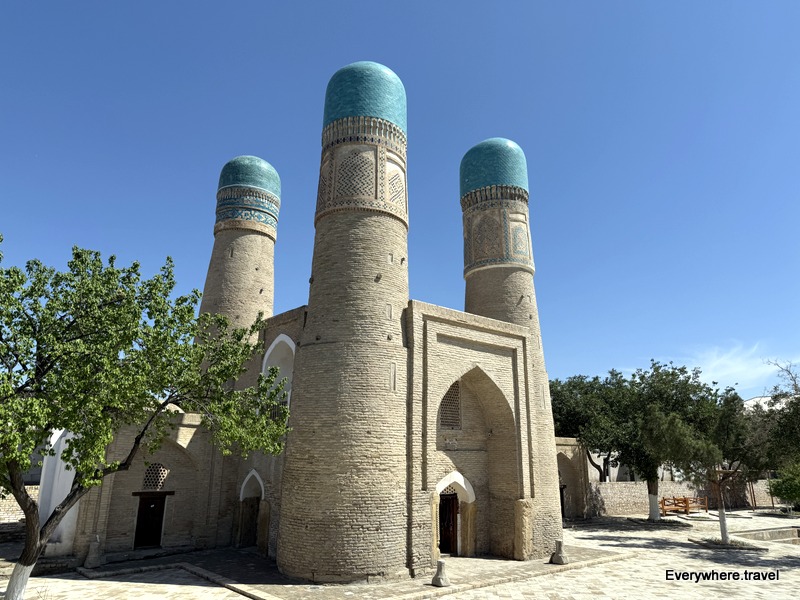
Chor Minor is one of Bukhara’s most unusual and photogenic buildings. Its name means “Four Minarets”, referring to the four small towers topped with beautiful turquoise domes.
Built in 1807 by a wealthy merchant named Khalif Niyaz-kul, Chor Minor originally served as the entrance to a madrasa. Most of the original complex has since disappeared, leaving this distinctive gatehouse standing among the narrow residential streets.
What makes Chor Minor particularly interesting is that each of its four towers has slightly different decorations. There are various theories about what these designs represent, including the possibility that they symbolise different religions, although their exact meaning remains uncertain.
The building is much smaller than many of Bukhara’s famous monuments, but that’s part of its charm. Its unusual design makes it a lovely contrast to the enormous mosques and madrasas elsewhere in the city.
You can admire Chor Minor from outside for free. It’s sometimes possible to pay a small fee to climb a narrow staircase to the rooftop, where you can get a closer look at the turquoise domes and enjoy views over the surrounding neighbourhood.
Chor Minor is around a 10-minute walk from Lyab-i Hauz, so I recommend making the short detour while exploring this part of Bukhara.
9. Visit Maghok-i-Attar
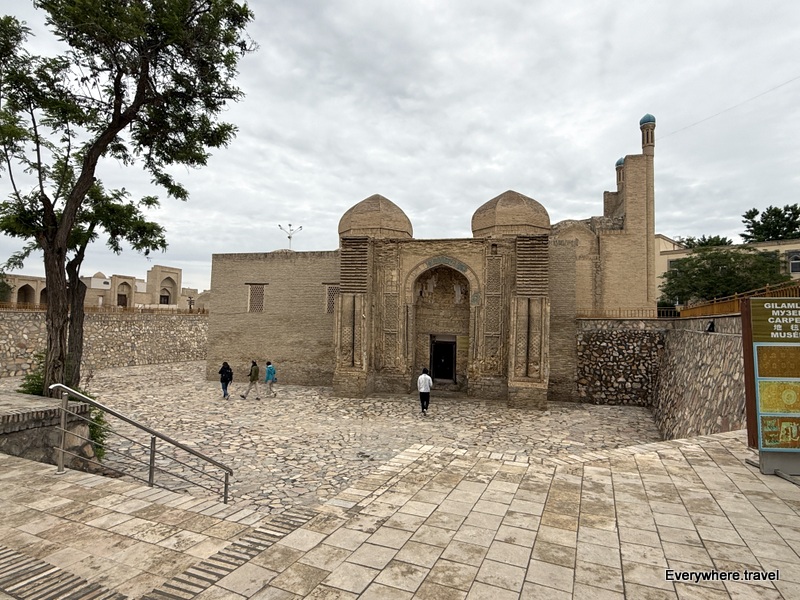
Maghok-i-Attar is one of Bukhara’s oldest and most fascinating historic buildings. Located just west of Lyab-i Hauz, this former mosque has a particularly interesting history stretching back to the city’s pre-Islamic past.
The site is believed to have once contained a Zoroastrian temple before becoming a mosque following the arrival of Islam in Central Asia. Over the centuries, the building was rebuilt and altered several times, leaving behind an intriguing combination of architectural styles.
One of the first things you’ll notice is that the mosque sits several metres below the surrounding streets. This is because the ground level of Bukhara gradually rose over centuries as new buildings and layers of settlement developed.
The building’s most impressive feature is its beautiful medieval entrance portal, decorated with intricate carved brickwork and terracotta patterns. It’s quite different from the colourful tiled facades found elsewhere in the city.
Inside, the former mosque has housed a museum displaying traditional carpets and textiles, offering another glimpse into the region’s cultural heritage.
I recommend stopping here while walking between Lyab-i Hauz and the trading domes. It’s an easy attraction to overlook, but its unusual position below street level and fascinating history make it well worth visiting.
10. Explore the Ulugbek Medressa
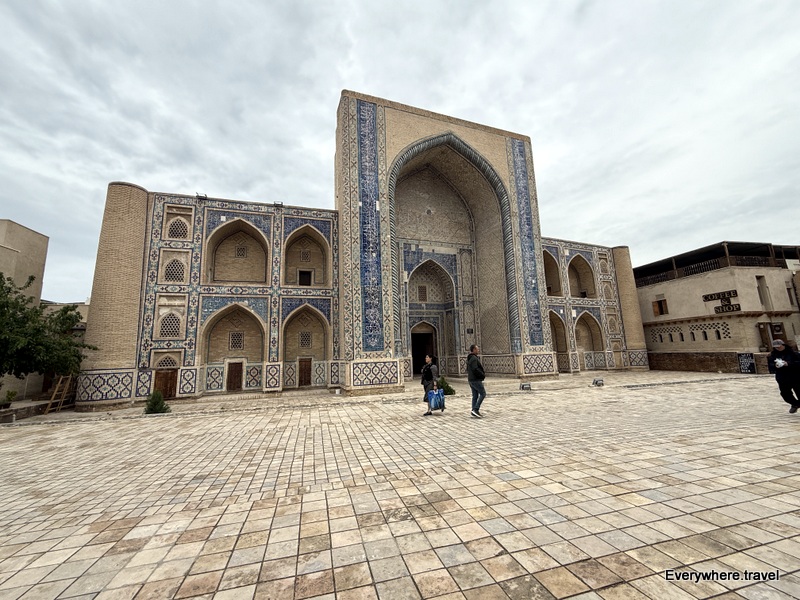
The Ulugbek Madrasa is one of Bukhara’s most important historic educational buildings. Built in 1417, it was commissioned by Ulugh Beg, the Timurid ruler who was also a renowned astronomer and mathematician.
Ulugh Beg believed strongly in education and scientific learning, and he established several madrasas across Central Asia. This one in Bukhara is among the earliest surviving examples.
The building has a magnificent entrance decorated with geometric patterns, colourful tiles and Arabic inscriptions. One of its most famous inscriptions emphasises the importance of seeking knowledge, reflecting Ulugh Beg’s commitment to education.
Inside, the madrasa has a traditional courtyard surrounded by former student rooms and teaching spaces. It’s interesting to imagine the scholars who once studied here, learning subjects ranging from religious studies to mathematics and astronomy.
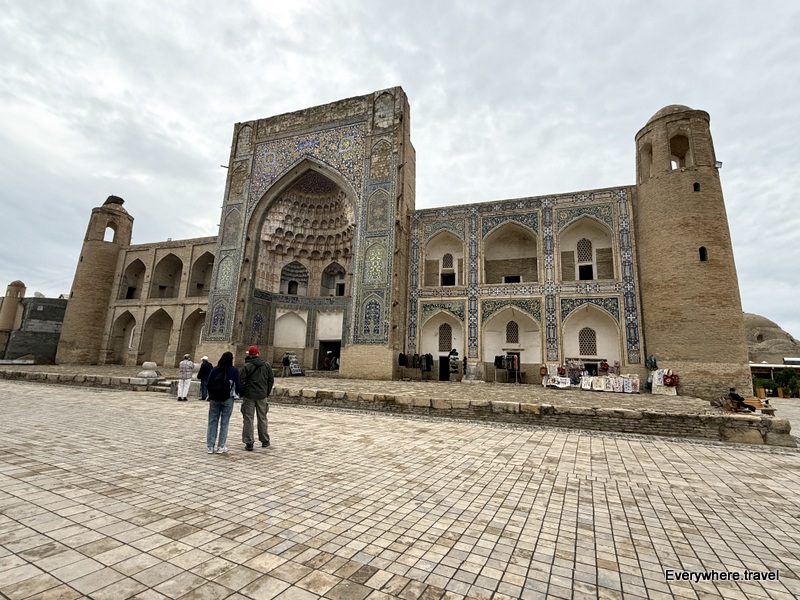
Directly opposite stands the Abdulaziz Khan Madrasa, built more than two centuries later. I recommend taking time to compare the two buildings, as their different decorative styles reveal how Central Asian architecture evolved over the centuries.
The Ulugbek Madrasa is close to the Toki Zargaron trading dome and Poi Kalyan complex, making it easy to include while exploring Bukhara’s old city.
How To Get To Bukhara
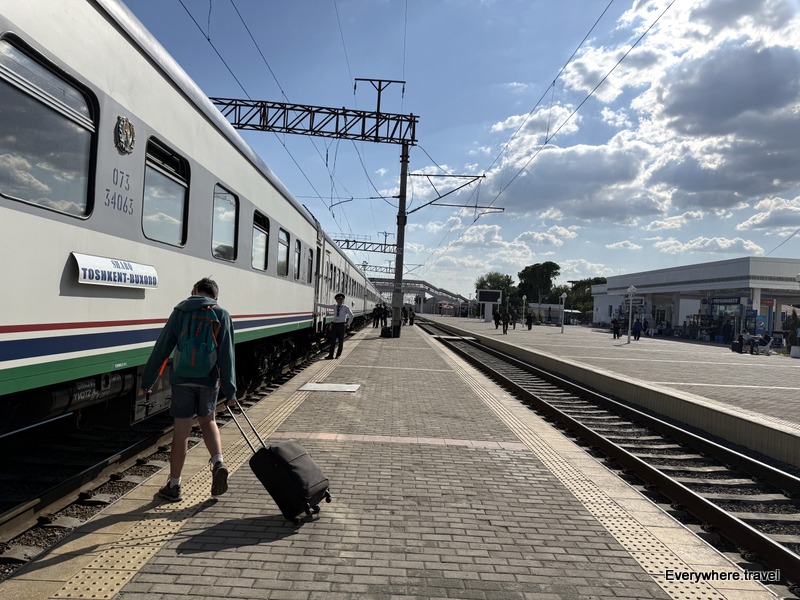
Getting to Bukhara is relatively easy, particularly if you’re travelling from other popular destinations in Uzbekistan. The country has an extensive railway network, and taking the train is generally the most convenient way to travel between the main Silk Road cities.
One important thing to know is that Bukhara’s main railway station, Bukhara-1, is actually in Kagan, around 12–15 kilometres from the historic centre. You’ll need to take a taxi or arrange a transfer to reach your accommodation.
Below are the best ways to reach Bukhara from Tashkent, Samarkand, Nurata and Khiva.
From Tashkent
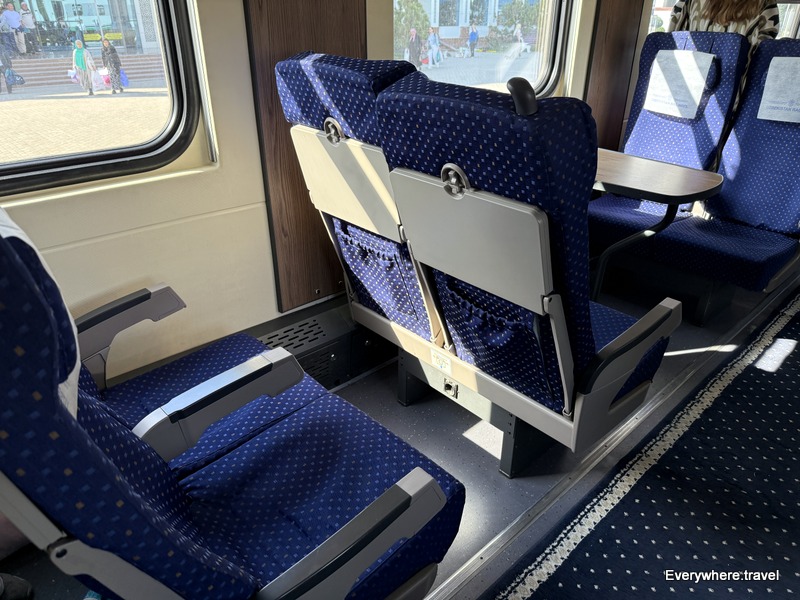
The easiest way to travel from Tashkent to Bukhara is by train. Uzbekistan’s modern Afrosiyob high-speed trains connect the two cities in approximately four hours, making this a comfortable and convenient option.
Slower trains are also available, generally taking around six hours. These can be worth considering if you’re travelling on a budget or can’t find seats on the high-speed services.
Most high-speed services depart from Tashkent Central Railway Station, although you should always check the departure station printed on your ticket.
You can book tickets through the official Uzbekistan Railways website. I recommend booking ahead, particularly during the busy spring and autumn travel seasons, as popular departures can sell out.
Flying is another option, with direct flights taking approximately an hour when available. However, once you account for travelling to the airport, checking in and collecting your luggage, the train is often more convenient.
Click here to read our full guide to Tashkent.
From Samarkand
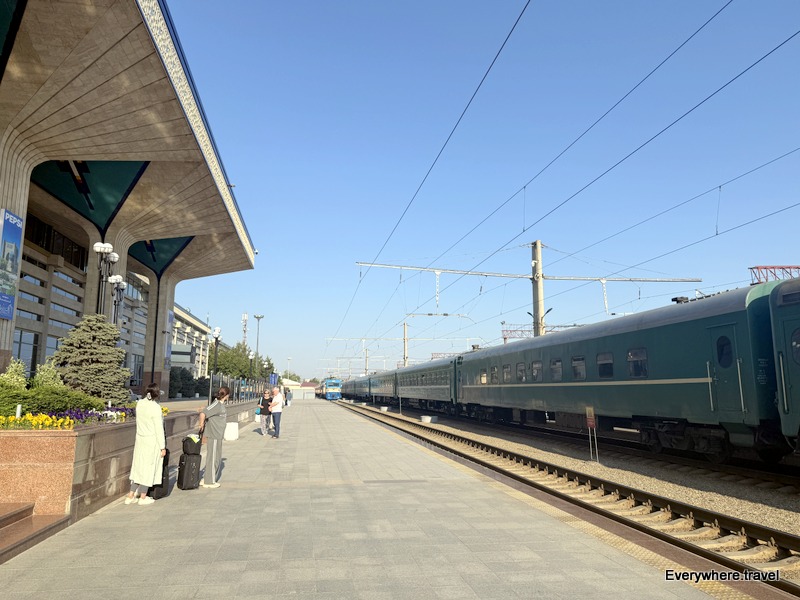
Travelling from Samarkand to Bukhara is particularly easy, making these two cities a great combination for an Uzbekistan itinerary.
The fastest option is the Afrosiyob high-speed train, which takes approximately 1.5–2 hours. Slower trains are also available, generally taking around 2.5–3 hours.
The train journey passes through the Uzbek countryside, and you’ll arrive at Bukhara-1 station in Kagan, where you can take a taxi to the old town.
You can also travel by private car or taxi. The road journey is approximately 270 kilometres and generally takes around 3.5–4 hours, depending on traffic and road conditions.
For most travellers, I recommend taking the high-speed train. It’s comfortable, straightforward and saves you time compared to travelling by road.
Click here to read our full guide to Samarkand.
From Nurata
If you’re visiting Nurata, travelling to Bukhara by car or private transfer is generally the easiest option.
The road journey is approximately 170–200 kilometres, depending on the route, and usually takes around 2.5–3.5 hours.
Hiring a driver is particularly convenient if you’re travelling with luggage or visiting Nurata as part of a longer trip through Uzbekistan. You can also arrange stops along the way to explore the surrounding countryside.
Public transport is less straightforward because there isn’t a direct train between Nurata and Bukhara. One alternative is to travel to Navoi and continue by train or bus, although this requires more planning.
If you’re combining Nurata with a stay at a desert yurt camp near Lake Aydarkul, I recommend arranging a private transfer that includes your accommodation and sightseeing stops.
From Khiva
Khiva and Bukhara are two of Uzbekistan’s most fascinating Silk Road cities, and travelling between them is a popular part of an Uzbekistan itinerary.
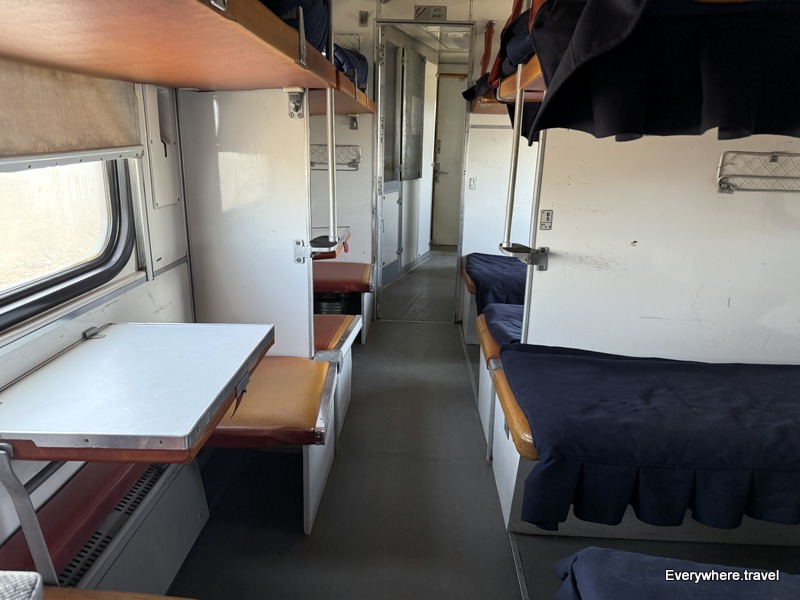
The train is now a particularly convenient option. In September 2026, a new electric train service began operating directly between Khiva and Bukhara, taking approximately 4 hours and 40 minutes. Other services are available, with journey times varying according to the train.
The route crosses the vast desert landscapes of western Uzbekistan, giving you a chance to see a very different side of the country.
You can also travel by private car or transfer. The road distance is approximately 450–500 kilometres, and the journey generally takes around 6–8 hours, depending on road conditions and stops.
A private transfer is more expensive than the train but offers the convenience of travelling directly between your hotels. It can be a good option for families or groups, particularly if train tickets are unavailable.
For most travellers, I recommend taking a direct train. Check the latest timetable and book tickets in advance, as services and departure days can vary.
Final Words
Bukhara is one of the most fascinating places to visit in Uzbekistan. With its ancient mosques, magnificent madrasas, historic trading domes and atmospheric streets, it’s a city where you can really appreciate the country’s Silk Road history.
While the Ark Fortress, Kalyan Minaret and Samanid Mausoleum are definite highlights, I recommend allowing time to explore without a particular destination in mind. Some of the best experiences in Bukhara come from wandering through the old streets, browsing the markets and relaxing beside the pond at Lyab-i Hauz.
I’d allow at least two full days to explore Bukhara, although three days would give you more time to enjoy the city at a relaxed pace and visit some attractions outside the historic centre.
Whether you’re visiting as part of a longer Uzbekistan itinerary or making Bukhara your main destination, it’s a city that’s well worth taking your time to discover.
Read our our guide to nearby Tashkent here and Samarkand here. Find more guides to amazing Uzbekistan here and Asia here.