
Planning a trip to Bogotá, Colombia? You’re in for a fascinating experience! This enormous South American capital is packed with colorful neighborhoods, historic buildings, incredible museums and some seriously good food.
Located high in the Andes at around 2,600 meters above sea level, Bogotá is quite different from the tropical Colombia you might be imagining. The weather is surprisingly cool, mountains rise above the city and its streets are filled with a wonderful mixture of colonial architecture, street art and modern city life.
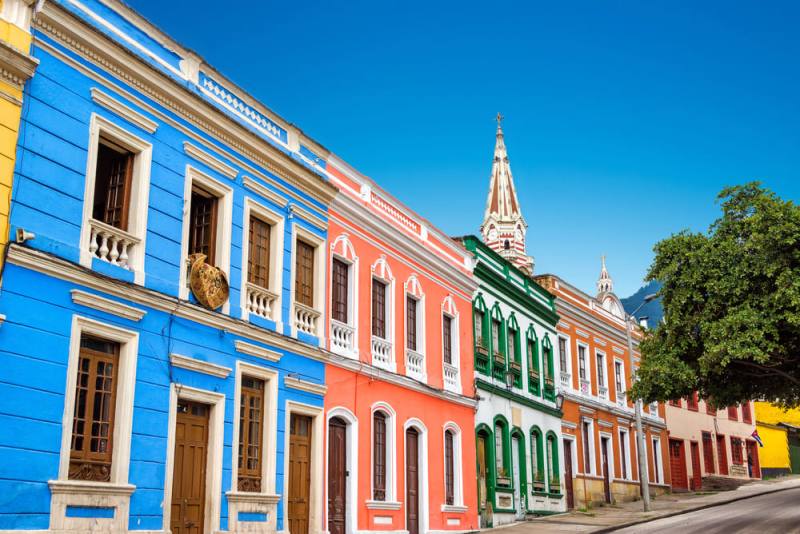
There are so many interesting things to do in Bogotá. You can explore centuries of Colombian history, admire spectacular pre-Hispanic goldwork, ride a cable car high above the city or eat your way through a traditional food market. And that’s before considering the fantastic attractions just outside the capital.
I think Bogotá deserves at least a few days rather than being treated simply as somewhere to catch a connecting flight. It’s a city with so many different sides, and exploring its neighborhoods is just as important as visiting the famous landmarks.
In this guide, I’ll share the 15 best things to do in Bogotá, including some less obvious places that are well worth your time. I’ll also cover where to stay, the best time to visit, how to get here and how to organize your sightseeing.
Best Things To Do In Bogotá
Bogotá is a huge city, and the attractions are spread across several neighborhoods. I recommend exploring one area at a time rather than spending half your day sitting in traffic.
Here are my 15 favorite things to do in Bogotá.
1. Take A Walking Tour Of La Candelaria
La Candelaria is Bogotá’s historic heart and one of the best places to start exploring the city.
This fascinating neighborhood is filled with colorful colonial houses, narrow streets, churches, museums and incredible street art. It’s also where many of the city’s most important historical events took place.
One of the most interesting spots is Chorro de Quevedo, a small square traditionally associated with Bogotá’s founding in 1538. There’s a little white chapel here, colorful buildings and plenty of places nearby to stop for a drink.
Don’t miss Callejón del Embudo, the narrow street leading toward the square. Its walls are covered in colorful murals, and you’ll find small establishments selling chicha, a traditional fermented corn drink.
I love the contrast between La Candelaria’s old buildings and its contemporary street art. The murals aren’t just decorative, either. Many explore Colombia’s history, politics and social issues.
I recommend joining a walking tour early in your visit. A local guide can explain the significance of the buildings, introduce you to Colombian history and point out details you’d probably miss on your own.
Free walking tours are available, although they’re tip-based rather than completely free. Allow around two to three hours for a guided introduction, then spend some time exploring independently.
La Candelaria is particularly enjoyable during the day when museums, cafes and shops are open. As with any major city, keep your valuables secure and be more cautious about wandering unfamiliar streets after dark.
2. Visit Museo De Bogotá
While Bogotá has several famous museums, Museo de Bogotá is particularly interesting because it focuses on the city itself.
Rather than concentrating on one period of history, the museum explores how Bogotá developed, how its neighborhoods changed and what life has been like for the people who live here.
The museum operates in two historic buildings in La Candelaria: Casa de los Siete Balcones and Casa Sámano.
Casa de los Siete Balcones is especially attractive, with its traditional architecture and distinctive wooden balconies. It’s worth taking a moment to appreciate the building before going inside.
The exhibitions explore subjects such as urban development, cultural heritage and the changing identity of Bogotá. Temporary displays and educational activities add different perspectives on the city.
I think this is an excellent museum to visit near the beginning of your trip. Understanding a little about Bogotá’s development makes the neighborhoods and buildings you see afterward much more meaningful.
Admission is free, and the museum is easy to combine with other attractions in La Candelaria.
Check which exhibitions are showing at each building before visiting, as the displays and activities can change.
3. Explore Museo Del Oro (Gold Museum)
If you only have time for one museum in Bogotá, make it Museo del Oro.
The Gold Museum contains one of the world’s most important collections of pre-Hispanic goldwork, with thousands of extraordinary objects created by Indigenous cultures long before the Spanish arrived.
And these aren’t simply pieces of jewelry.
You’ll see elaborate ceremonial objects, intricate animal figures, masks, ornaments and items used in religious rituals. The craftsmanship is astonishing, particularly when you consider the tools and techniques available at the time.
One of the most famous exhibits is the Muisca Raft, a small gold sculpture depicting a ceremonial scene associated with the traditions behind the legend of El Dorado.
It’s fascinating to see how gold held spiritual and cultural significance for these societies rather than simply representing wealth.
I recommend allowing at least two hours here. There’s a lot to see, and rushing through would mean missing much of what makes the collection so interesting.
The museum is in central Bogotá, close to La Candelaria, so it’s easy to combine with other historic attractions.
It’s generally closed on Mondays, and admission arrangements can change. Check the official Banco de la República museum website before visiting.
4. Eat At La Perseverancia Market
One of the experiences I’m most enthusiastic about in Bogotá is visiting Plaza de Mercado La Perseverancia.
This traditional market, often called La Perse, is a wonderful place to discover Colombian food without the polished atmosphere of a tourist restaurant.
The market dates back to 1940 and has become particularly well known for its traditional cooking. Inside, you’ll find stalls selling fresh produce alongside kitchens preparing dishes from different regions of Colombia.
The outside is worth a look, too. A large mural by Colombian artist Guache celebrates the women and rural communities associated with the market.
Come hungry!
One dish to look for is ajiaco, Bogotá’s famous chicken and potato soup, traditionally served with corn, capers, cream and avocado.
You might also find lechona, a pork and rice dish, or mondongo, a traditional tripe soup. The range of regional food makes this a fantastic place to try something unfamiliar.
I recommend visiting around lunchtime when the food stalls are busy and there’s plenty happening. Take a look around before choosing where to eat rather than sitting down at the first stall.
La Perseverancia is north of the historic center, near the National Museum area, so it works well with a visit to Museo Nacional de Colombia.
5. Take The Cable Car Or Funicular Up Monserrate
Monserrate is one of Bogotá’s most famous landmarks, and the views from the top are spectacular.
The mountain rises to approximately 3,150 meters above sea level, overlooking the enormous city below.
From the summit, you can see Bogotá stretching across the plateau, with buildings continuing toward the horizon. It’s the sort of view that really helps you appreciate just how big the Colombian capital is.
There are three main ways to reach the top: cable car, funicular railway or walking.
I recommend taking the cable car or funicular, particularly if you’ve only recently arrived in Bogotá. The altitude is noticeable enough in the city itself, and climbing hundreds of steps to an even higher elevation can be exhausting.
The cable car offers beautiful views during the ascent, while the funicular travels up the steep mountainside on tracks.
At the summit, you’ll find the white Sanctuary of the Fallen Lord of Monserrate, a significant pilgrimage destination, along with viewpoints, restaurants and places to buy souvenirs.
Although the views are the main attraction for many visitors, the religious significance of Monserrate is an important part of its history.
Try to visit on a clear morning before clouds obscure the city. Sunset can also be beautiful, although you’ll need to check operating hours and plan your return.
Allow around two to three hours, including transportation and time to explore the summit.
6. Explore Quinta Camacho
Quinta Camacho is one of Bogotá’s most distinctive neighborhoods, and it looks surprisingly different from the rest of the city.
Located in Chapinero, this attractive area is known for its English-inspired architecture, with red-brick houses, steeply pitched roofs, chimneys and pretty front gardens.
Some streets look more like somewhere you’d expect to find in an English town than in the middle of Colombia.
The neighborhood developed during the early 20th century, and many of its historic houses have been preserved.
Today, some of these buildings contain excellent restaurants, cafes, bars and small businesses.
I particularly like the idea of exploring Quinta Camacho without a strict sightseeing checklist. It’s more about enjoying the architecture and atmosphere than visiting one famous landmark.
Walk along streets such as Carrera 9 and the surrounding blocks between Calles 67 and 72, looking out for the old houses and their interesting architectural details.
Then stop for a coffee or lunch in one of the converted buildings.
Quinta Camacho is also close to Zona G, one of Bogotá’s well-known dining areas, making it an excellent place to spend an afternoon before going out for dinner.
7. Visit Plaza De Bolívar
Plaza de Bolívar is Bogotá’s main historic square and one of the most important places in Colombia.
Located in the center of La Candelaria, the enormous plaza is surrounded by some of the country’s most significant buildings.
These include the Primatial Cathedral of Bogotá, the National Capitol, the Palace of Justice and the Liévano Palace.
A statue of Simón Bolívar stands in the center, commemorating one of the key figures in South America’s independence movements.
The square has witnessed major political events, public demonstrations and important moments in Colombia’s history.
It’s also a lively public space, with people crossing the square, taking photographs and gathering around its historic buildings.
I recommend taking a few minutes to look at each side of the plaza rather than simply photographing the cathedral and moving on. The buildings represent different parts of Colombia’s political and religious history.
Plaza de Bolívar is included on many La Candelaria walking tours, but it’s worth returning independently if you want more time.
The plaza itself is free to visit.
8. Admire The Art At Museo Botero
Even if you’re not usually enthusiastic about art museums, Museo Botero is worth visiting.
Fernando Botero was one of Colombia’s most famous artists, known for his distinctive paintings and sculptures featuring exaggerated, rounded figures.
His work is immediately recognizable, and some of the pieces are wonderfully playful.
The museum displays a substantial collection donated by Botero, including his own artwork and pieces by internationally famous artists.
You’ll find works by artists such as Picasso, Dalí and Monet alongside Botero’s paintings and sculptures.
The museum itself is housed in an attractive colonial building in La Candelaria, with courtyards and galleries that add to the experience.
I think this is one of the most approachable art museums in Bogotá. You don’t need to know much about art to appreciate Botero’s unusual style.
Admission is free, which makes it particularly appealing if you’re traveling on a budget.
Allow around an hour or two, depending on how interested you are in the collection. It’s also close to other historic-center attractions, so you can easily include it during a day exploring La Candelaria.
9. Take A Bogotá Graffiti Tour
Bogotá has an incredible street art scene, and some of the city’s most interesting artwork is found around La Candelaria.
You’ll see enormous murals covering building walls, smaller paintings tucked into narrow streets and colorful artwork exploring Colombia’s culture and history.
However, there’s much more to Bogotá’s graffiti than bright colors and impressive photographs.
Many pieces address political issues, Indigenous identity, inequality, environmental concerns and the country’s difficult past.
That’s why I recommend taking a dedicated graffiti tour rather than simply looking at the murals independently.
A knowledgeable guide can explain the stories behind individual artworks, introduce you to local artists and help you understand the significance of the images.
You’ll also learn how Bogotá developed its distinctive street art culture.
Some tours focus on La Candelaria and the surrounding historic center, while others explore different neighborhoods.
I recommend choosing a tour led by people connected to the local street art community.
It’s a particularly good activity to combine with a walking tour of La Candelaria, although the two experiences cover different subjects.
10. Visit Museo Nacional De Colombia
Museo Nacional de Colombia is another excellent attraction for anyone interested in understanding the country’s history.
The museum occupies an imposing former prison building, which is interesting in itself.
Inside, you’ll find exhibitions exploring Colombian history, archaeology, art and cultural identity.
The collections cover different periods, from Indigenous societies and the Spanish colonial era through to more recent Colombian history.
I particularly recommend this museum if you’re interested in the country’s political and social development rather than simply seeing its most famous landmarks.
The building’s former prison architecture adds an unusual atmosphere, with galleries occupying spaces that once served a very different purpose.
It’s worth checking which temporary exhibitions are showing, as these can provide additional perspectives on Colombian society.
Allow around two hours for a visit.
The museum is north of La Candelaria, close enough to combine with lunch at La Perseverancia Market.
11. Browse Usaquén’s Sunday Flea Market
If you’re in Bogotá on a Sunday, make time for Usaquén.
This charming neighborhood in northern Bogotá was once a separate town, and parts of its historic character remain.
You’ll find attractive old buildings, a pretty central square, restaurants and cafes.
However, the main attraction for many visitors is the Sunday flea market.
The market brings together stalls selling handicrafts, jewelry, artwork, clothing, souvenirs and other locally made products.
It’s a wonderful place to look for gifts that are a little more interesting than the usual mass-produced tourist souvenirs.
I recommend allowing time to explore the surrounding streets as well as the market itself.
Usaquén has some excellent places to eat, so combining the market with a leisurely Sunday lunch makes a lot of sense.
It’s also a good opportunity to experience a different side of Bogotá from the busy historic center.
The market generally operates on Sundays, but check arrangements around public holidays or special events.
12. Relax At Simón Bolívar Park
After a few days of museums and busy streets, Simón Bolívar Park provides a welcome change of pace.
This enormous green space is one of Bogotá’s most important recreational areas, with walking paths, grassy areas, trees and a large lake.
It’s popular with local residents who come here to exercise, spend time with family or simply relax outdoors.
I think visiting a city park is a great way to see a little of everyday life in a destination rather than concentrating entirely on tourist attractions.
On weekends, the park can be particularly lively, with families enjoying picnics and people walking, jogging or cycling.
There’s plenty of space to wander, although you don’t need to explore the entire park to enjoy it.
Bring a jacket, as Bogotá’s weather can change quickly even when the sun is shining.
Simón Bolívar Park is farther west than most of the historic attractions, so I recommend combining it with other activities in that part of the city rather than making a separate journey across Bogotá.
13. Explore Zona T And Bogotá’s Nightlife
Bogotá isn’t just about history and museums. It also has an excellent restaurant and nightlife scene.
One of the best-known areas for going out is Zona T, part of the larger Zona Rosa entertainment district in northern Bogotá.
The neighborhood is filled with restaurants, cocktail bars, cafes, shops and nightclubs.
It’s particularly lively in the evenings, when people come here for dinner, drinks and dancing.
If you enjoy trying different restaurants, I recommend spending at least one evening in this area.
You’ll find everything from casual dining to more sophisticated restaurants serving contemporary Colombian and international food.
Bogotá also has a strong salsa culture, although its nightlife extends well beyond salsa clubs.
If you’re interested in dancing, look for a venue with live music or a salsa-focused evening rather than assuming every club plays the same music.
Zona T is also close to several major shopping centers, including Andino.
As with nightlife anywhere, keep an eye on your belongings, use reputable transportation and avoid leaving drinks unattended.
14. Visit The Salt Cathedral Of Zipaquirá
One of the most unusual attractions near Bogotá is the Salt Cathedral of Zipaquirá.
Located approximately 50 kilometers north of the capital, this extraordinary underground cathedral was constructed within the tunnels of a former salt mine.
And it’s far more impressive than the name might suggest.
The cathedral lies around 180 meters underground, with enormous chambers, illuminated sculptures and religious artwork carved into the surrounding salt rock.
As you walk through the tunnels, you’ll pass representations of the Stations of the Cross before reaching the cathedral’s impressive main spaces.
The combination of darkness, colored lighting and huge underground chambers creates a remarkable atmosphere.
The mine’s history also stretches back long before the present cathedral. Salt was an important resource for the Indigenous Muisca people, who lived in this region before the Spanish conquest.
I recommend allowing at least half a day for the excursion, although a full day is more comfortable if you’re using public transportation.
You can visit independently or join an organized tour from Bogotá.
Zipaquirá is accessible by road, with public transportation options via northern Bogotá, but a guided excursion is often the simplest choice if you don’t want to organize connections.
15. Take A Day Trip To Laguna De Guatavita
Another fascinating excursion from Bogotá is Laguna de Guatavita, a beautiful mountain lake associated with one of South America’s most famous legends.
The lake is particularly significant because of its connection to the Indigenous Muisca people and the story of El Dorado.
According to accounts of Muisca traditions, ceremonies involved a leader covered in gold dust making offerings of gold and precious objects into a sacred lake.
These stories helped inspire the Spanish search for the legendary riches of El Dorado.
Today, Guatavita is protected for its natural and cultural significance.
The landscape is beautiful, with green hills surrounding the lake and walking trails offering views over the water.
However, don’t expect to walk right down to the shoreline or swim in the lake. Visits follow designated routes designed to protect the environment.
I recommend taking a guided visit so you can learn about the Muisca culture and the significance of the site rather than simply admiring the scenery.
The lake is at an even higher elevation than Bogotá, so bring warm clothing and take your time on the walking trails.
Guatavita can be visited on a day trip from Bogotá, although the journey takes longer than you might expect because of traffic and mountain roads.
If you have limited time, I recommend choosing between Guatavita and the Salt Cathedral rather than trying to squeeze both into an already busy sightseeing itinerary.
Where To Stay In Bogotá
Choosing the right area to stay in Bogotá can make a big difference to your visit because the city is so large.
La Candelaria is particularly convenient if your priority is exploring the historic center, museums and colonial architecture. However, some streets become quiet at night, so choosing accommodation carefully is important.
Chapinero is a great alternative, with excellent restaurants, cafes and convenient access to several neighborhoods. The Zona G area is particularly appealing if you enjoy dining out.
Farther north, Zona Rosa and Zona T are popular for shopping, restaurants and nightlife, although you’ll need to travel farther to reach the historic attractions.
Here are three accommodation options worth considering.
Best: Sofitel Bogotá Victoria Regia Review
Sofitel Bogotá Victoria Regia is a luxurious five-star hotel in one of Bogotá’s most attractive upscale neighborhoods, close to Zona Rosa and Zona T.
The location is particularly appealing if you want excellent restaurants, shopping and nightlife within easy reach. Shopping centers such as Andino, El Retiro and Atlantis Plaza are nearby.
Rooms combine contemporary design with French-inspired elegance and Colombian touches. Expect comfortable beds, stylish bathrooms and the high standard of service associated with the Sofitel brand.
The hotel also offers dining facilities and wellness amenities, making it a comfortable place to return to after a busy day exploring Bogotá.
I recommend Sofitel Bogotá Victoria Regia for travelers who want a more luxurious stay and prefer being close to restaurants and nightlife rather than the historic center.
Click here to check the latest prices for Sofitel Bogotá Victoria Regia.
Midrange: Holiday Inn Express & Suites Bogotá Zona G Review
Holiday Inn Express & Suites Bogotá Zona G is a practical, comfortable option in Chapinero, close to some of the city’s best dining areas.
Located on Carrera 7 near Calle 67, the hotel is well positioned for exploring Zona G and nearby Quinta Camacho.
The rooms have a modern, business-hotel style, with comfortable beds, private bathrooms and useful amenities for a city stay. Suites offer additional space, which can be helpful if you’re traveling as a family or staying longer.
One of the main advantages is the location. There are plenty of restaurants and cafes nearby, so finding somewhere to eat after a day sightseeing is easy.
I recommend this hotel if you want comfortable accommodation in a good neighborhood without paying luxury hotel prices.
Click here to check the latest prices for Holiday Inn Express & Suites Bogotá Zona G.
Budget: Delgadillo Boutique Hotel By Socialtel Review
Delgadillo Boutique Hotel by Socialtel is an appealing budget-friendly option if you’d prefer to stay right in Bogotá’s historic center.
The property occupies a restored heritage building in La Candelaria, just a short walk from attractions such as Plaza de Bolívar and Museo Botero.
Its historic architecture gives it considerably more character than a standard modern hotel, with exposed brickwork and traditional features incorporated into the accommodation.
The property offers different room types, including private rooms and larger options, as well as dining and shared spaces.
I particularly like the location for travelers who want to spend most of their time exploring La Candelaria’s museums, historic buildings and colorful streets.
With its affordable rates and character-filled setting, Delgadillo Boutique Hotel is a great choice if you want to keep accommodation costs down without sacrificing location.
Click here to check the latest prices for Delgadillo Boutique Hotel by Socialtel.
Best Time To Visit Bogotá
Bogotá has a relatively cool climate throughout the year because of its high altitude.
Daytime temperatures commonly sit around the high teens Celsius, while evenings and mornings can feel quite chilly.
Unlike Colombia’s Caribbean coast, Bogotá isn’t somewhere to expect consistently hot, sunny weather.
The city has relatively drier periods around December to February and July to August, although rain is possible at any time of year.
April and May, along with October and November, are generally among the wetter periods.
I recommend bringing layers regardless of when you visit. A light jacket, comfortable walking shoes and something waterproof are particularly useful.
The relatively drier months are good for sightseeing, especially if you want clear views from Monserrate or plan outdoor excursions.
However, Bogotá is a year-round destination, and most of its museums, restaurants and cultural attractions can be enjoyed whatever the weather.
If you’re interested in festivals, August is particularly notable for Bogotá’s birthday celebrations and cultural events. The city also hosts major music, theater and arts festivals at different times of year.
How To Get To Bogotá
Bogotá is Colombia’s main international gateway, with flights connecting the capital to destinations throughout the Americas and beyond.
You can also reach the city by long-distance bus from other parts of Colombia.
Flying To Bogotá
Most international visitors arrive at El Dorado International Airport, located west of the city center.
The airport handles domestic and international flights and is a major hub for Colombian airline Avianca.
There are frequent domestic connections to destinations such as Medellín, Cartagena, Cali and other Colombian cities.
Flying is often the most practical way to travel long distances within Colombia, particularly because mountainous roads can make overland journeys surprisingly slow.
Getting From El Dorado Airport To The City
The easiest way to reach your accommodation is generally by official airport taxi or a prearranged private transfer.
Journey times vary enormously depending on traffic and where you’re staying.
Allow roughly 30–60 minutes for many central and northern neighborhoods, but longer journeys are possible during busy periods.
I recommend organizing your airport transportation before arriving, particularly if your flight lands late at night.
Public transportation is also available through Bogotá’s TransMilenio and feeder bus network, although this can be less convenient if you have large bags or are unfamiliar with the system.
Traveling To Bogotá By Bus
Bogotá has long-distance bus connections to cities and towns throughout Colombia.
The main intercity terminal is Terminal Salitre, although other terminals serve different routes.
Bus travel can be economical, but Colombia’s mountainous terrain means journeys often take longer than the distance suggests.
If you’re traveling from somewhere relatively close, such as Zipaquirá, buses are a practical option.
For longer journeys, compare the bus travel time with domestic flights before deciding.
Getting Around Bogotá
Bogotá is much too large to explore entirely on foot, although individual neighborhoods such as La Candelaria and Quinta Camacho are enjoyable to walk around.
For longer journeys, taxis and ride-hailing services are convenient.
I recommend using reputable services or arranging taxis through your accommodation rather than accepting unsolicited rides.
Bogotá also has an extensive TransMilenio bus rapid transit system, which can be useful for avoiding some of the city’s traffic congestion.
However, buses can become extremely crowded during peak hours, so keep your belongings secure.
Traffic is one of the biggest challenges when sightseeing in Bogotá. A journey that looks short on a map can take considerably longer than expected.
That’s why I recommend grouping attractions by neighborhood and avoiding unnecessary journeys across the city.
For example, explore La Candelaria, Plaza de Bolívar and the nearby museums together, then dedicate another part of your trip to Chapinero and the northern neighborhoods.
Bogotá’s altitude is another consideration. If you’ve just arrived from sea level, take things a little easier on your first day and drink plenty of water.
Bogotá Itinerary: How Many Days Do You Need?
I recommend spending at least two full days in Bogotá, although three days is much better if you want to see more than the main historic attractions.
With four or five days, you can explore at a more relaxed pace and include one or both of the day trips.
Here’s how I’d organize your visit.
One Day In Bogotá
If you only have one day, concentrate on the historic center.
Start with a walking tour of La Candelaria, including Chorro de Quevedo and Plaza de Bolívar.
Afterward, visit Museo del Oro to see its extraordinary collection of pre-Hispanic goldwork.
If you still have time, explore Museo Botero or Museo de Bogotá.
Finish the day with a meal in the historic center or travel north to one of Bogotá’s restaurant neighborhoods.
This is a busy day, but it covers some of the city’s most important sights without spending too much time traveling between them.
Two Days In Bogotá
With two days, you can include Monserrate and explore another part of the city.
Follow the one-day itinerary above, then start your second day with a trip up Monserrate.
I recommend visiting in the morning when visibility can be better.
After returning to the city, visit Museo Nacional de Colombia and have lunch at La Perseverancia Market.
In the afternoon, explore Quinta Camacho and enjoy its distinctive architecture and cafes.
Finish with dinner around Zona G or Zona T.
This gives you a good combination of Bogotá’s history, food, neighborhoods and spectacular mountain scenery.
Three Days In Bogotá
Three days gives you more flexibility and time to enjoy the city without rushing.
Spend your first day exploring La Candelaria, Plaza de Bolívar and the nearby museums.
On your second day, visit Monserrate, La Perseverancia Market and Quinta Camacho.
For your third day, choose an experience based on your interests.
If you love unusual architecture and history, take a day trip to the Salt Cathedral of Zipaquirá.
If you’d prefer beautiful scenery and Indigenous history, visit Laguna de Guatavita.
Alternatively, stay in Bogotá and explore Usaquén, particularly if it’s Sunday, or spend time at Simón Bolívar Park.
I think three days is an excellent introduction to Bogotá, but there’s easily enough here to justify a longer stay.
Final Words
Bogotá is a fascinating destination that offers far more than many travelers expect from Colombia’s capital.
Its historic streets, extraordinary museums, traditional food markets and distinctive neighborhoods provide an incredible introduction to the country’s culture and history.
What appeals to me most is the variety. You can spend one morning admiring centuries-old goldwork, another exploring colorful street art and an afternoon looking out over the entire city from Monserrate.
I particularly recommend making time for the neighborhoods as well as the famous attractions. Places such as La Perseverancia and Quinta Camacho offer a different perspective on Bogotá and help make a visit more memorable.
Whether you’re stopping for a couple of days or planning a longer stay, Bogotá deserves a place on your Colombia itinerary.