
Planning a trip to Chichicastenango in Guatemala? You’re in for a treat! This colorful town in the Guatemalan Highlands is famous for its enormous traditional market, but there’s much more to discover here than shopping.
Chichicastenango, often called Chichi, is one of the most fascinating places in Guatemala to experience living Maya culture. From centuries-old religious traditions to sacred ceremonial sites, brightly painted tombs and traditional wooden masks, there’s plenty to explore.
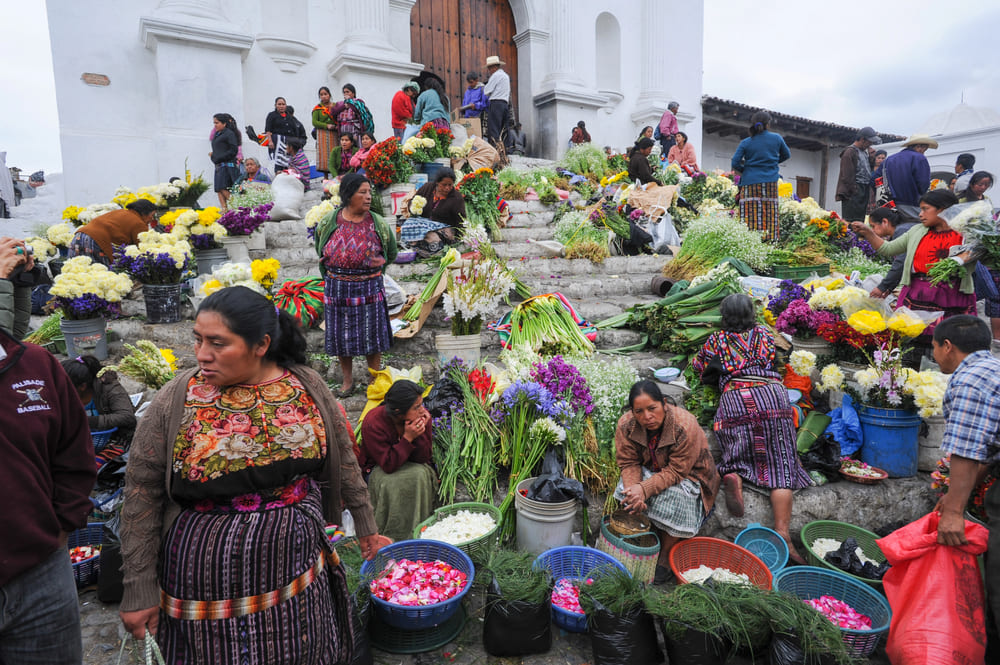
I’ve visited Chichicastenango many times, and it’s somewhere I always enjoy returning to. The market is a highlight, but I also love how much history and culture you can discover simply by wandering around town.
Most travelers visit Chichicastenango on a day trip from Antigua or Lake Atitlán. However, I recommend staying overnight if your itinerary allows it. Arriving the afternoon before market day means you can explore the town without rushing and visit the market early the following morning, before the tourist shuttles arrive.
In this guide, I’ll share the best things to do in Chichicastenango, where to stay, how to get here and how to make the most of your visit.
Best Things To Do In Chichicastenango
Chichicastenango isn’t a destination with dozens of conventional tourist attractions. Its appeal comes from its fascinating cultural traditions, historic sites and the incredible atmosphere of its famous market.
Here are seven of the best things to do in Chichicastenango.
1. Explore Chichicastenango Market
If there’s one reason most travelers visit Chichicastenango, it’s the market!
Chichicastenango Market is one of the most famous traditional markets in Central America and an incredible place to experience the colors, sounds and energy of Guatemala.
Held every Thursday and Sunday, the market transforms the center of town into a maze of stalls selling just about everything imaginable.
You’ll find beautiful woven textiles, colorful bags, traditional clothing, wooden masks, pottery, jewelry, blankets and handicrafts. Other areas sell fresh produce, flowers, household goods and everyday essentials.
This isn’t simply a tourist market. It’s also an important trading place for people from Chichicastenango and surrounding communities.
One minute you might be looking at a stall filled with brightly colored textiles, and the next you’ll find yourself surrounded by vendors selling vegetables and other everyday goods.
Guatemala is particularly famous for its traditional Maya textiles, and the market is a wonderful place to admire the different patterns, colors and weaving techniques.
If you’re interested in buying something, take your time looking around. Similar products can vary in quality, and prices aren’t fixed.
Bargaining is common, but keep it friendly and respectful. Remember that handmade textiles can take considerable time and skill to produce.
When is Chichicastenango Market open?
The main market days are Thursday and Sunday. Although you’ll find some shops and market activity on other days, these are the days to visit for the full experience.
I recommend arriving early, before the tourist shuttles from Antigua and Lake Atitlán bring larger crowds.
Allow at least two or three hours to explore properly. If you love markets, shopping or photography, you could easily spend longer.
Bring cash in small denominations, keep an eye on your belongings in crowded areas and always ask before taking close-up photographs of people.
For me, Chichicastenango Market is an experience rather than simply somewhere to shop. Even if you don’t buy anything, it’s worth visiting for the atmosphere alone.
2. Visit Iglesia de Santo Tomás And Capilla del Calvario
One of the most fascinating things to see in Chichicastenango is Iglesia de Santo Tomás.
This historic white church stands beside the market and is one of the town’s most important religious landmarks.
Built during the Spanish colonial period on a site with earlier Maya religious significance, the church is particularly interesting because Catholic and Maya spiritual traditions continue to coexist here.
Outside, you’ll often see people burning incense, making offerings or praying on the church’s broad stone steps.
Inside, Catholic imagery and religious practices exist alongside traditions maintained by the local K’iche’ Maya community.
It’s an extraordinary example of Guatemala’s cultural and religious history, but remember that this is an active place of worship rather than a museum.
The church is also associated with the history of the Popol Vuh, the sacred narrative of the K’iche’ Maya. Dominican friar Francisco Ximénez worked with an early written version of this important text while serving in Chichicastenango.
Be respectful of people praying or participating in ceremonies. Photography may be restricted, particularly inside the church.
Don’t miss Capilla del Calvario, either.
At the opposite end of the market area is Capilla del Calvario, another historic church associated with the town’s religious traditions.
It’s smaller and less famous than Santo Tomás, but worth visiting while you’re exploring the center.
Together, these two churches offer a fascinating introduction to the combination of Maya and Catholic traditions that makes Chichicastenango so distinctive.
3. Explore Chichicastenango Regional Museum
If you’re interested in learning more about the town’s history, consider visiting the Chichicastenango Regional Museum.
Also known as the Museo Regional de Chichicastenango or Museo Regional Rossbach, this small museum is near the center of town.
Its collection includes archaeological objects from the region, including pottery, sculptures, obsidian artifacts and jade jewelry.
Don’t expect a huge museum with elaborate displays. This is a modest attraction, but it provides useful historical context for the places you’re visiting.
In particular, it helps demonstrate that the area’s cultural heritage extends far beyond the colonial buildings you see today.
Allow around 20–30 minutes to explore, depending on your interest in the exhibits.
At the time of publishing, admission cost Q5.
I’d prioritize the market and churches if you’re short on time, but the museum is worth including if you have longer.
4. Discover Traditional Maya Masks And Workshops
One of the more unusual things to explore in Chichicastenango is its tradition of making wooden ceremonial masks.
These masks are an important part of traditional dances and festivals, particularly the Fiesta de Santo Tomás.
Some represent animals, while others depict historical or religious characters. Many are beautifully carved and painted with elaborate details.
Chichicastenango has traditional workshops known as morerías, where ceremonial masks and dance costumes are made, maintained or rented.
One place worth visiting is the Museo Ceremonial de Máscaras, located along the route toward Pascual Abaj.
Opened to visitors in 1970 by Luis Ricardo Ignacio, the museum houses traditional masks and costumes associated with a family tradition spanning several generations.
You’ll find items associated with dances such as the Dance of the Deer, the Dance of the Conquest and the Dance of the Torito.
It’s an interesting way to learn more about the traditions behind the elaborate masks you may see for sale at the market.
The museum is located near the base of Pascual Abaj, so I’d recommend combining these two attractions. It’s only tiny but the guided tour is worth it.
5. Visit Pascual Abaj
Pascual Abaj is one of the most fascinating places to visit in Chichicastenango, particularly if you’re interested in Maya culture and religious traditions.
This sacred ceremonial site is located on a wooded hill south of town.
At its heart is a carved stone figure associated with Huyup Tak’ah, an earth deity in local Maya tradition.
The site remains important to local K’iche’ Maya communities, and ceremonies involving offerings, incense, candles and prayers continue to take place here.
Unlike an archaeological ruin, Pascual Abaj is a living religious site where people come to practice their beliefs.
How do you get to Pascual Abaj?
You can walk here from central Chichicastenango, although the final approach involves an uphill path through the trees.
Allow approximately 20–40 minutes from the center, depending on your starting point and route.
The paths can be uneven or slippery, particularly after rain, so wear comfortable shoes with a reasonable grip.
The Museo Ceremonial de Máscaras is along one of the approaches, making it easy to combine both attractions.
A local guide can also be worthwhile if you want to understand more about the site’s spiritual significance.
Visiting respectfully
If a ceremony is taking place, keep your distance and don’t interrupt participants.
Avoid photographing people or ceremonies without permission, and don’t touch or disturb offerings.
Remember that these spiritual practices aren’t performances for tourists.
Pascual Abaj offers a fascinating opportunity to appreciate an important part of Chichicastenango’s living Maya heritage.
6. See Chichicastenango’s Colorful Cemetery
You might not normally think of visiting a cemetery while sightseeing, but Chichicastenango’s cemetery is one of the town’s most striking places.
The Cementerio General de Chichicastenango is famous for its brightly painted tombs and mausoleums, creating an extraordinary collection of colors across the hillside.
You’ll see graves painted in shades of blue, green, yellow, pink and white, along with elaborate tomb structures and small chapel-like memorials.
It’s visually very different from many cemeteries elsewhere in the world.
The cemetery is also an important place for local families to remember and honor their relatives.
There are two Maya ceremonial altars within the cemetery, and religious ceremonies continue to take place here.
This makes it another interesting place to appreciate the town’s living Maya traditions, particularly if you aren’t able to make the uphill walk to Pascual Abaj.
Although the colorful tombs make it interesting for photography, remember that this is a working cemetery, not an attraction created for tourists.
The cemetery is within walking distance of central Chichicastenango. Allow around 30 minutes to wander through part of it.
It’s particularly significant around All Saints’ Day and the Day of the Dead in early November, when families visit and remember their loved ones.
This is one of the most unusual and visually memorable places to explore in Chichicastenango.
7. Experience The Fiesta de Santo Tomás
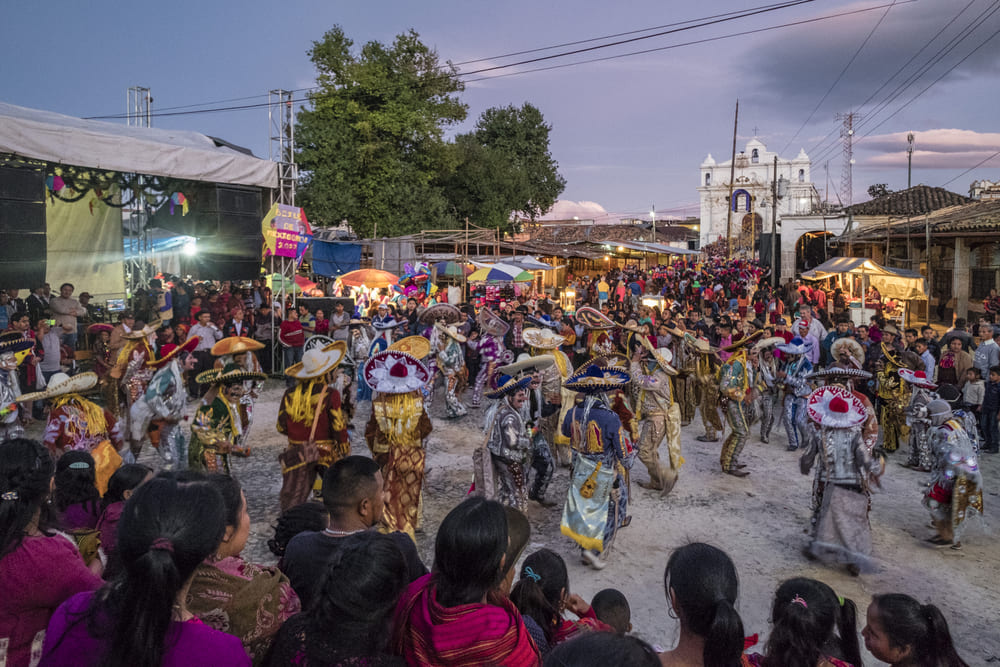
If you’re lucky enough to visit Chichicastenango in December, you may be able to experience one of Guatemala’s most fascinating traditional festivals.
The Fiesta de Santo Tomás celebrates the town’s patron saint and combines Catholic religious observances with longstanding Maya cultural traditions.
It’s a major community event, with processions, traditional dances, music, ceremonies and celebrations taking place around town.
The main feast day is December 21, although festivities begin on December 13, with some of the biggest celebrations traditionally taking place between December 18 and 21.
One of the most spectacular traditions is the Palo Volador, or flying pole.
This involves performers descending from a tall pole while attached to ropes, creating a dramatic spectacle with deep roots in traditional ceremonial practices.
There are also masked dances featuring elaborate costumes and traditional characters.
Another important event is the Baile Regional on December 19, when participants wear traditional clothing representing communities from different parts of Guatemala.
The celebrations around Iglesia de Santo Tomás are particularly important, with religious processions and activities involving traditional brotherhoods known as cofradías.
When should you visit?
If the festival is a priority, I’d aim to be in Chichicastenango between December 18 and 21.
The traditional festival calendar lists Palo Volador performances on December 18–20, with the principal religious celebrations on December 21.
However, the exact program can vary from year to year, so check the current local schedule before booking. Don’t assume every performance happens every day.
I’d also recommend staying overnight rather than attempting a rushed day trip. This gives you more flexibility to enjoy the celebrations.
Accommodation is limited, so book early during festival dates.
Remember that this is a religious and cultural celebration for the local community. Be respectful of ceremonies and ask before photographing participants.
If your Guatemala itinerary coincides with the festival, it’s definitely worth spending extra time in Chichicastenango.
Where To Stay In Chichicastenango
Although most travelers visit Chichicastenango on a day trip, I recommend staying overnight if your itinerary allows it.
The best option is to arrive on Wednesday or Saturday afternoon, stay the night and explore the market early the following morning. This gives you time to visit the town’s other attractions without rushing and experience the market before the day-trip crowds arrive.
You don’t need to stay for several nights unless you’re visiting during the Fiesta de Santo Tomás. One night is enough for most travelers.
Accommodation options are relatively limited, but here are three places to consider.
Best: Hotel Museo Mayan Inn Review

If you’re looking for somewhere special to stay in Chichicastenango, Hotel Museo Mayan Inn is my top recommendation.
This historic hotel features colonial-style architecture, attractive courtyards, antique furnishings and individually decorated rooms. Some rooms feature fireplaces, which are a nice touch in the cooler highland climate.
There’s also an on-site restaurant and bar.
The location is excellent, just a short walk from the market and next to Capilla del Calvario.
I’d particularly recommend Hotel Museo Mayan Inn if you want somewhere with plenty of atmosphere and character rather than a modern hotel.
Click here to see the latest prices for Hotel Museo Mayan Inn.
Midrange: Casa Diego Ignacio Review

Casa Diego Ignacio is a smaller, family-run accommodation in the Cantón Chilimá area of Chichicastenango.
It offers relatively simple rooms with private bathrooms, Wi-Fi and a garden where guests can relax. Breakfast is also available.
The property is near Pascual Abaj and the ceremonial mask museum, and within walking distance of the town’s main attractions.
It’s worth considering if you’d prefer a smaller property with a more personal atmosphere.
Click here to see the latest prices for Casa Diego Ignacio.
Budget: Hotel Chalet Review

Hotel Chalet is a budget-friendly option located within walking distance of Chichicastenango’s market and central attractions.
The hotel offers simple rooms, including options for solo travelers, couples and small groups. Facilities include Wi-Fi, a shared kitchen and a terrace.
It’s a practical choice if you’re mainly looking for somewhere inexpensive to sleep while exploring the town.
However, feedback about cleanliness and facilities is mixed, so I’d recommend checking recent guest reviews before booking.
Click here to see the latest prices for Hotel Chalet.
Best Time To Visit Chichicastenango
For most travelers, Thursday or Sunday is the best day to visit Chichicastenango, as these are the two main market days.
The town becomes much busier, with vendors arriving from surrounding communities and stalls filling the streets around the center.
If the market is your main reason for visiting, I wouldn’t plan your trip for another day of the week.
Dry Season Vs Rainy Season
The dry season generally runs from November to April. This is usually the best time to visit, with less rain and more comfortable conditions for exploring.
The rainy season runs from approximately May to October.
You can still visit during these months, but rain can make walking around the market and visiting Pascual Abaj less comfortable.
Chichicastenango is also at a relatively high altitude, so mornings and evenings can be cool. Bring a jacket even if it’s warm elsewhere in Guatemala.
Visiting During The Fiesta de Santo Tomás
If you’re interested in traditional festivals, December is an especially exciting time to visit.
The Fiesta de Santo Tomás takes place during December, with the main feast day on December 21.
The town becomes particularly lively during the celebrations, but accommodation can be harder to find and transport arrangements may be affected.
I’d book well ahead and allow extra time.
For most visitors, though, I’d recommend visiting on a Thursday or Sunday and arriving the afternoon before if possible. This gives you time to explore the town and enjoy the market before the busiest crowds.
How To Get To Chichicastenango
Chichicastenango is located in the Guatemalan Highlands, and most visitors travel here from Antigua, Guatemala City or Lake Atitlán.
You can visit using tourist shuttles, local buses, private transfers or organized tours.
From Antigua Guatemala
Antigua is one of the most popular starting points for a trip to Chichicastenango.
The journey generally takes around 2.5–3 hours each way, depending on traffic and road conditions.
A shared tourist shuttle is one of the easiest options, particularly on market days.
Several companies offer Thursday and Sunday services, with early-morning departures from Antigua and afternoon returns.
This makes a day trip possible, although you’ll need to prioritize which attractions to visit.
If you’d prefer to stay overnight, check whether your shuttle operator offers a one-way transfer or a service that allows you to travel onward the next day.
Click here to check Antigua to Chichicastenango shuttle and taxi options.
From Panajachel And Lake Atitlán
Chichicastenango is also a popular day trip from Lake Atitlán.
Panajachel is the most convenient departure point, with the journey taking approximately 1–1.5 hours each way.
Shared tourist shuttles operate on market days, generally departing in the morning and returning in the afternoon.
If you’re staying in another Lake Atitlán village, you’ll usually need to reach Panajachel first.
You can also arrange a private transfer or tour.
Another option is to visit Chichicastenango while traveling between Antigua and Lake Atitlán, rather than making a separate return journey.
Click here to check the latest shuttle schedules and prices.
From Guatemala City
You can also visit Chichicastenango from Guatemala City, although it’s a longer journey. Some tourist shuttle services may involve transfers in Antigua, so check the route when booking.
Allow approximately three to four hours each way, depending on traffic.
Tourist shuttle operators offer market-day services, while private transfers and guided tours are other options.
A return day trip makes for a long day, so consider staying overnight if you have time.
Taking Local Buses
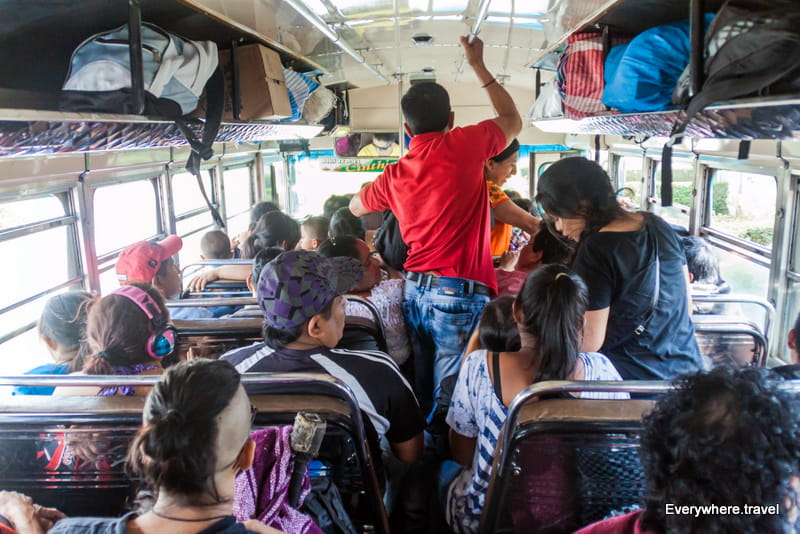
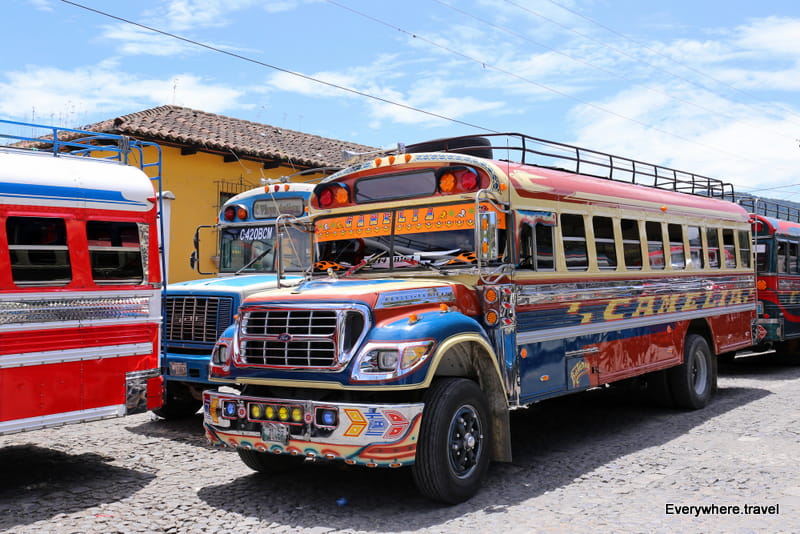
Local buses, often called chicken buses, are an inexpensive way to reach Chichicastenango.
However, journeys may involve changes, crowded vehicles and less predictable travel times.
If you’re comfortable using local transportation and have plenty of time, this can be an interesting option.
Otherwise, I’d recommend a tourist shuttle or private transfer.
Getting Around Chichicastenango
Once you arrive, Chichicastenango is relatively easy to explore on foot.
The market, churches and regional museum are all in the central area, while the cemetery is also within walking distance.
Pascual Abaj requires a longer walk, including an uphill section, so allow extra time and wear suitable shoes.
You generally won’t need a vehicle to visit the main attractions.
Chichicastenango Itinerary: How Long Do You Need?
You can see Chichicastenango’s main attractions in a day, and if you’re short on time, a market day trip from Antigua or Lake Atitlán is absolutely worthwhile.
However, my preferred option is to spend one night in Chichicastenango. Arrive the afternoon before a Thursday or Sunday market, explore some of the quieter attractions, then enjoy the market early the following morning.
This gives you the best of both experiences without needing to spend two full days here.
Here’s how I’d organize your visit depending on how much time you have.
One Day In Chichicastenango
If you only have one day, make sure it’s a Thursday or Sunday so you can experience the market.
Start your morning exploring Chichicastenango Market before the busiest crowds arrive.
While you’re in the center, visit Iglesia de Santo Tomás and Capilla del Calvario.
After lunch, visit the regional museum if it’s open, then head to the colorful cemetery.
If you have enough time, you could also walk to Pascual Abaj, but I wouldn’t rush this visit.
If you’re traveling on a shared shuttle, check your return departure time carefully. Many services leave around 2 pm, so you may need to choose between the cemetery, museum and Pascual Abaj.
One Night In Chichicastenango
If you have time, this is the option I’d recommend.
Day 1: Arrive on Wednesday or Saturday afternoon. Visit Pascual Abaj, explore the traditional mask museum and workshops, and see the colorful cemetery. You can also visit the churches and enjoy a quieter evening in town.
Day 2: Get up early on Thursday or Sunday to experience the market before the day-trip crowds arrive. Take your time browsing the stalls, shopping for handicrafts and enjoying the atmosphere before continuing your journey.
This gives you a much more relaxed experience and the opportunity to see more of Chichicastenango than most day-trippers.
If you’re visiting during the Fiesta de Santo Tomás, organize your itinerary around the festival schedule instead.
Final Words
Chichicastenango is one of Guatemala’s most fascinating destinations, and there’s a good reason its famous market attracts so many visitors.
However, there’s much more to this town than shopping.
From the religious traditions of Iglesia de Santo Tomás and the sacred site of Pascual Abaj to the colorful cemetery and traditional wooden masks, Chichicastenango offers a wonderful opportunity to learn about Guatemala’s living Maya heritage.
I’ve visited Chichicastenango many times, and it’s a place that continues to interest me.
If you’re short on time, I’d prioritize visiting on a Thursday or Sunday to experience the market and explore the nearby churches.
However, if you have longer, I recommend staying overnight to discover some of the other cultural sites and enjoy the market before the busiest crowds arrive.
And if your visit coincides with the Fiesta de Santo Tomás in December, you’ll have the chance to experience a particularly important part of Chichicastenango’s cultural calendar.
Whatever you choose to do, Chichicastenango is a memorable place to visit and a fantastic addition to a Guatemala itinerary.
Find our full guide to Antigua here or more guides to Guatemala here.