
Planning a trip to Sagada and wondering how to spend your time? This beautiful mountain town in the northern Philippines is a fantastic destination for hiking, exploring caves, discovering fascinating cultural traditions and enjoying spectacular scenery.
Located high in the Cordillera mountains, Sagada feels very different from the Philippines’ famous beach destinations. Here, you’ll find pine forests, rice terraces, waterfalls, limestone caves and cool mountain air. It’s also home to the famous Hanging Coffins of Echo Valley and the breathtaking sea of clouds that can appear over the surrounding mountains at sunrise.
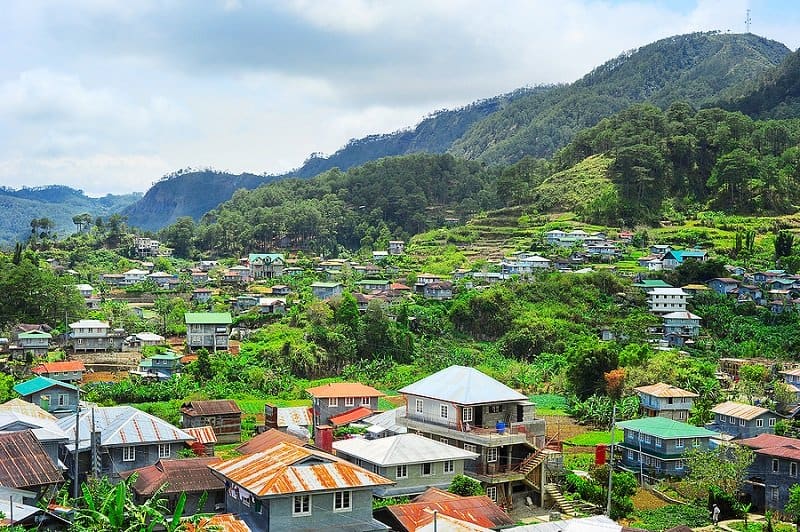
Sagada is often combined with a visit to Banaue, but it’s worth spending at least a couple of days here to appreciate everything the area has to offer.
In this guide, I’ll share my recommended Sagada itinerary for one, two or three days, including the best attractions to visit and how to organize your time. You’ll also find detailed information about things to do in Sagada, where to stay, how to get here and visiting with kids.
Full Sagada Itinerary
This Sagada itinerary covers three days and two nights, but you can easily adapt it if you have less time. With one day, focus on Sagada’s cultural attractions and the famous Hanging Coffins. With two days, you can also experience the mountain scenery at Marlboro Hills and Blue Soil. A third day gives you time for another adventure, such as trekking to Bomod-ok Falls.
Keep in mind that Sagada is a long journey from Manila or Baguio. If you’re arriving after an overnight bus ride, you may want to take it easy on your first day rather than trying to fit everything in.
You’ll also need to register with the Sagada Tourism Office and arrange accredited local guides for many attractions. It’s worth doing this as soon as you arrive, as opening arrangements and tour availability can change.
You can make this a budget-friendly Sagada itinerary or spend more on accommodation and activities depending on your preferences.
Day 1: Historic Sagada, With The Hanging Coffins
If you only have one day in Sagada, I recommend concentrating on the town’s cultural attractions, particularly Echo Valley and the famous Hanging Coffins. This gives you a great introduction to Sagada without needing to travel far from the town center.
Here’s how I’d spend your first day:
- Start at the Sagada Tourist Information Center. Register as a visitor and arrange an accredited guide for Echo Valley and the Hanging Coffins. You can also organize any tours you want to take over the following days.
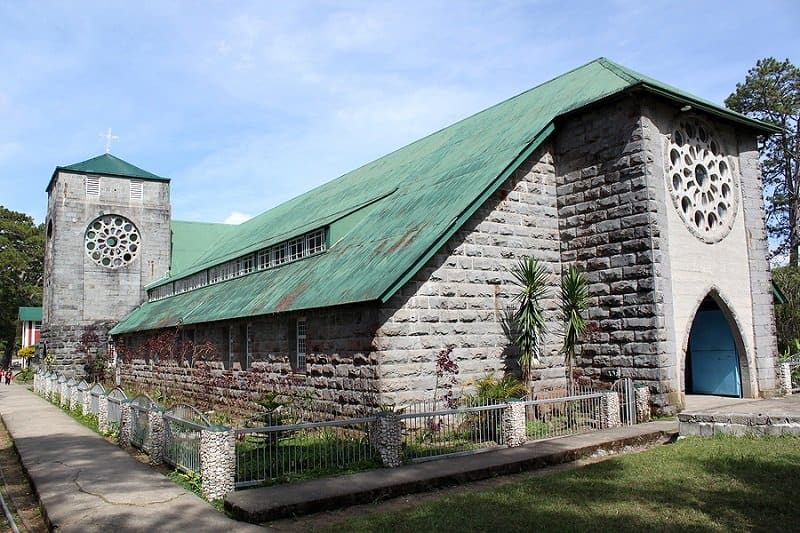
- Visit the Church of St. Mary the Virgin. This historic Episcopal church is one of Sagada’s best-known landmarks and a convenient starting point for exploring the area.
- Walk through Calvary Hill Cemetery and Echo Valley. Follow your guide along the scenic trails to see Sagada’s famous Hanging Coffins, an important part of the area’s Indigenous burial traditions.
- Have lunch in Sagada town. Take a break and enjoy some local food or a cup of Sagada-grown coffee.
- Visit the Ganduyan Museum, if open. This small museum is a great place to learn more about Sagada’s history, culture and traditions. Opening arrangements can be unpredictable, so check before visiting.
- Spend the late afternoon relaxing. Explore the town, visit a cafe or head toward Danum Lake for the scenery if you have time and can arrange transportation.
If you’ve just arrived after an overnight journey from Manila, don’t feel you need to do everything. I’d prioritize Echo Valley and the Hanging Coffins, then enjoy a relaxed afternoon.
Day 2: Sagada Sea-of-Clouds, Treks And Caves
Today is all about Sagada’s spectacular mountain scenery, with an optional caving adventure if you’re feeling energetic. You’ll need an early start, but the views can make it well worth the effort!
- Leave Sagada around 4am for Marlboro Hills. Travel with your guide to the trailhead, then hike to the viewpoint in time for sunrise.
- Watch the sunrise and look out for the sea of clouds. On the right morning, the valleys below fill with clouds, creating one of Sagada’s most memorable sights. However, this depends on the weather, so don’t count on seeing it.
- Continue hiking to Blue Soil Hills. Follow the trail through pine forests and mountain scenery to the unusual blue-green landscape of Kaman-utek, also known as Blue Soil. Allow around 4–5 hours for the complete sunrise and trekking experience, including stops.
- Return to Sagada for a late breakfast or early lunch. After your early start, you’ll probably appreciate some time to relax.
- Optional: Explore Sumaguing Cave. If you’re still feeling energetic and the cave is open for guided tours, you could spend the afternoon exploring its impressive rock formations. Be prepared for slippery rocks, steep sections and some scrambling. This isn’t an activity for everyone, particularly after a long morning hike.
- Enjoy a relaxed evening in Sagada. Have dinner in town and get some rest after a busy day.
If you’re following a two-day Sagada itinerary, this is a great way to finish your visit. You can skip Sumaguing Cave if you’d rather take things slowly or need to leave earlier in the day.
If you’re staying for three days, I’d recommend saving your energy for tomorrow’s waterfall trek.
Day 3: Waterfalls And More
If you have a third day in Sagada, you have time to explore even more of the beautiful countryside. Today, I’d recommend heading to Bomod-ok Falls, one of the area’s most impressive natural attractions.
Option 1: Trek to Bomod-ok Falls
- Start your morning with a guided trek to Bomod-ok Falls. The trail takes you through mountain villages and rice terraces, with spectacular views along the way.
- Enjoy the waterfall. Once you reach Bomod-ok Falls, take time to admire the scenery and relax before beginning the return journey. Swimming may be possible when conditions permit.
- Return to Sagada for a late lunch. The walk back involves a significant uphill climb, so allow plenty of time and bring enough water.
- Spend the rest of the afternoon relaxing. After two days of hiking and exploring, you’ll have earned it!
Allow around 3–4 hours or longer for this excursion, depending on your pace, transportation and conditions. The trek is steep in places and can be challenging, especially on the return climb.
Bomod-ok Falls can also close temporarily because of weather, trail conditions or local community observances. Check with the Tourism Office before making plans.
Option 2: Enjoy a more relaxed day in Sagada
If you don’t feel like another challenging hike, spend your final day exploring more of Sagada at a slower pace.
You could visit the Sagada Pottery workshop, explore the old village of Demang, enjoy some locally grown coffee or visit attractions you missed earlier in your trip.
Alternatively, if you skipped Sumaguing Cave on Day 2, you could arrange a guided cave tour today, provided it’s open and conditions are suitable.
This option is particularly good for families, travelers who aren’t keen hikers or anyone who wants more time to appreciate Sagada’s peaceful mountain atmosphere.
Important: Many Sagada attractions require accredited local guides, and some can close temporarily because of heavy rain, safety concerns or community traditions. Before setting off, check the latest arrangements with the Sagada Tourism Office. It’s also worth organizing your guided activities as soon as you arrive, particularly if you’re visiting during a busy period.
Best Things To Do In Sagada
There are some fantastic things to do in Sagada, from exploring caves and trekking through the mountains to learning about the area’s fascinating Indigenous culture.
Many Sagada attractions require an accredited local guide, so make sure you register at the Tourist Information Center and arrange your tours before setting off. Some attractions also close temporarily because of weather, safety concerns or local cultural observances.
Below are the best places to visit in Sagada, including the attractions featured in our itinerary and some additional options if you have more time.
Hanging Coffins In Echo Valley
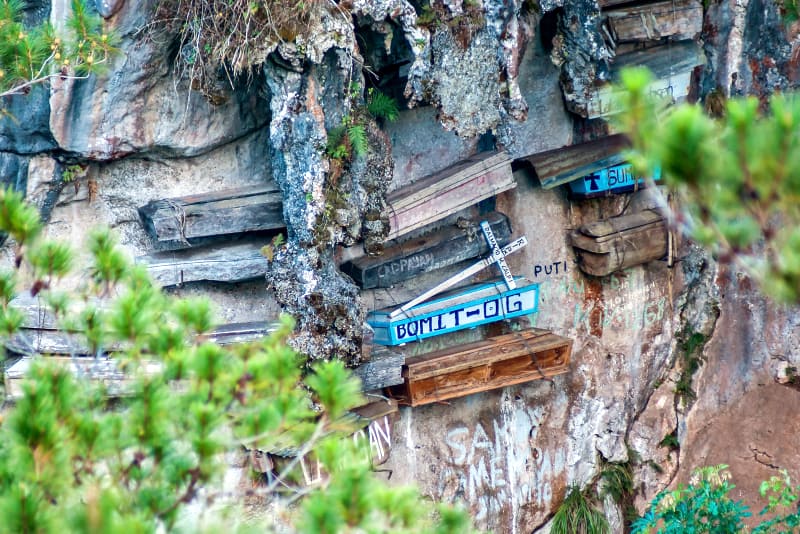
One of Sagada’s most famous attractions is its Hanging Coffins, an extraordinary burial site where wooden coffins are attached to the sides of towering limestone cliffs.
This traditional burial practice is associated with the Indigenous Kankanaey people of the Cordillera region. Rather than burying their dead in the ground, some families placed coffins high on cliff faces as part of their spiritual beliefs and ancestral traditions.
The practice has existed for generations, although the precise age of the oldest coffins is difficult to establish. Some coffins are centuries old, while others were placed much more recently.
The Hanging Coffins are located in Echo Valley, a short guided walk from central Sagada. You’ll follow scenic trails through the surrounding hills before reaching viewpoints overlooking the cliffs and coffins.
It’s a fascinating place to visit, but remember that this is a sacred burial site rather than simply a tourist attraction. Follow your guide’s instructions and respect any restrictions on access or photography.
Echo Valley Lookout
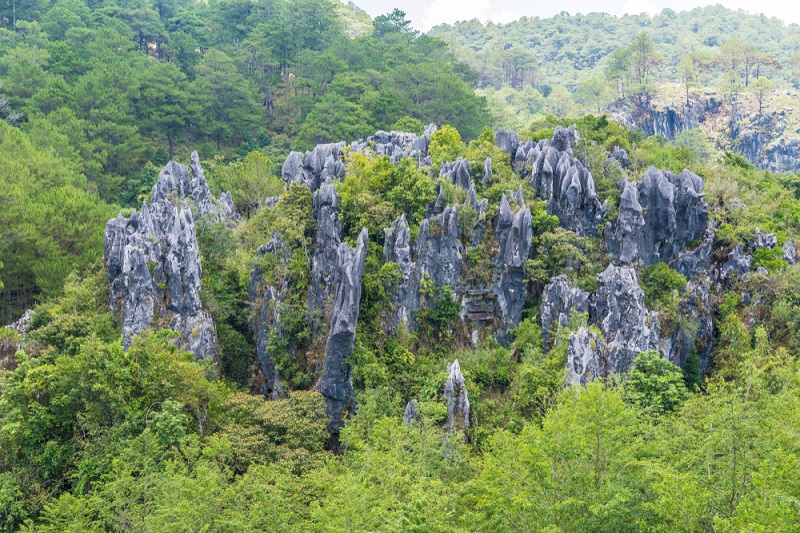
Echo Valley is one of the most beautiful places to explore around Sagada, with dramatic limestone cliffs, pine trees and sweeping views of the surrounding mountains.
It’s best known as the location of the Hanging Coffins, but the valley itself is worth experiencing. The trails lead through peaceful mountain scenery, with several viewpoints along the way.
As its name suggests, the valley is also known for its echoes. Try calling out across the cliffs and you may hear your voice bouncing back!
Most visitors explore Echo Valley as part of a guided Hanging Coffins tour. The walk involves uneven ground and some steep or slippery sections, so wear comfortable shoes with good grip.
It’s an easy attraction to combine with St. Mary’s Church and Calvary Hill Cemetery, making it a great choice for your first day in Sagada.
Calvary Hill
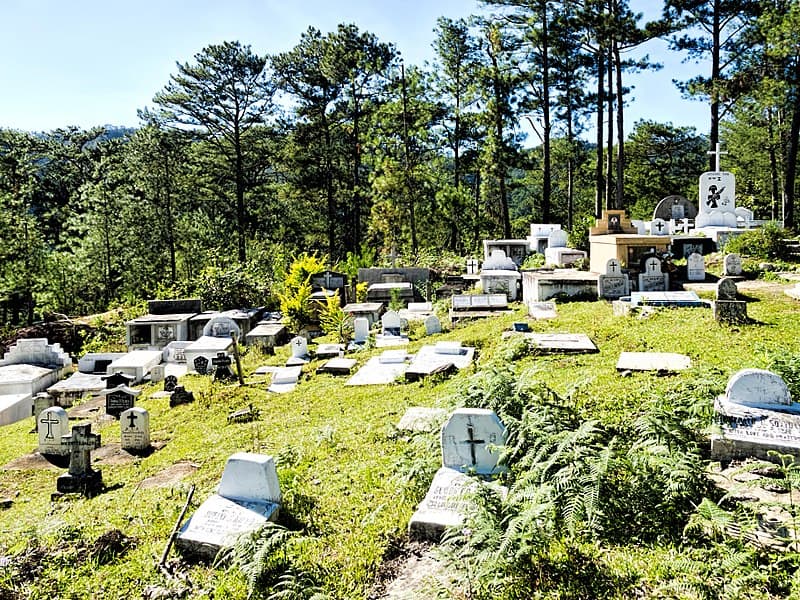
On the way to Echo Valley and the Hanging Coffins, you’ll pass through Calvary Hill Cemetery, one of Sagada’s most interesting historical and cultural sites.
The cemetery is located near the Church of St. Mary the Virgin and reflects the influence of Christianity on Sagada’s burial traditions. It’s quite a contrast to the traditional Hanging Coffins found nearby.
The cemetery is particularly atmospheric, surrounded by pine trees and mountain scenery. As you walk through, you’ll see a variety of graves and memorials that reflect the community’s history.
One notable person buried here is William Henry Scott, an American historian and anthropologist who spent much of his life studying the history and cultures of the Cordillera region.
Your local guide can explain more about the cemetery, its traditions and how burial practices in Sagada have changed over time.
Remember that this is an active cemetery and an important place for the local community, so explore respectfully.
Marlboro Hill to Blue Soil Trek
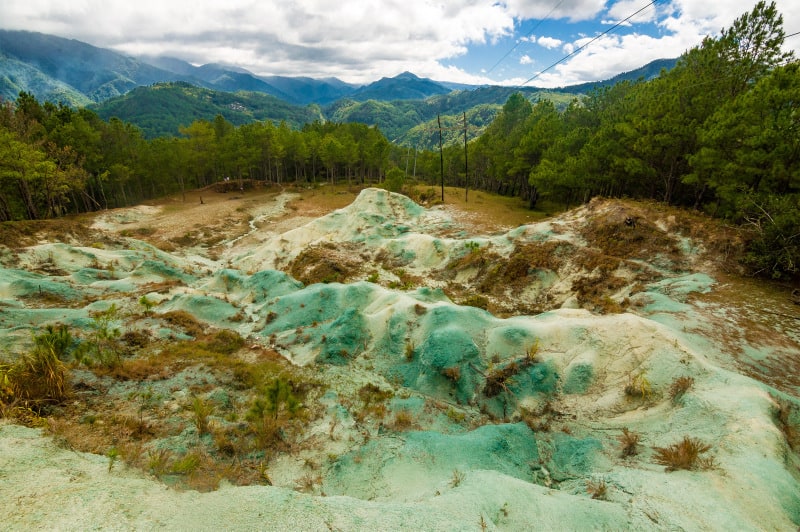
One of the best hikes in Sagada is the Marlboro Hills to Blue Soil trek, which combines spectacular mountain scenery with one of the area’s most unusual natural attractions.
Most visitors start before dawn, traveling by jeep or another local vehicle to the Marlboro Hills trailhead. From here, you’ll walk uphill to a viewpoint where you can watch the sunrise over the surrounding mountains.
If conditions are right, you’ll also see Sagada’s famous sea of clouds, when thick white clouds fill the valleys below the peaks. It’s an incredible sight, although it’s never guaranteed.
After sunrise, continue along the trail toward Blue Soil Hills, also known locally as Kaman-utek. The route passes through pine forests, open hillsides and beautiful mountain scenery.
The highlight is the unusual blue-green soil, which gives the hills their distinctive appearance. The color is associated with the mineral composition of the ground, making it quite different from the surrounding landscape.
Allow approximately 4–5 hours for the complete sunrise and Blue Soil excursion, including stops, although the exact duration depends on your route and pace.
You’ll need an accredited guide, and transportation to and from the trailheads is generally arranged as part of the excursion. Check the current prices when booking.
Wear sturdy walking shoes, bring drinking water and pack a warm layer for the early morning. The trail can become muddy and slippery after rain, so check conditions before setting off.
For anyone who enjoys hiking and beautiful scenery, this is one of the highlights of a Sagada itinerary.
Sumaguing Cave
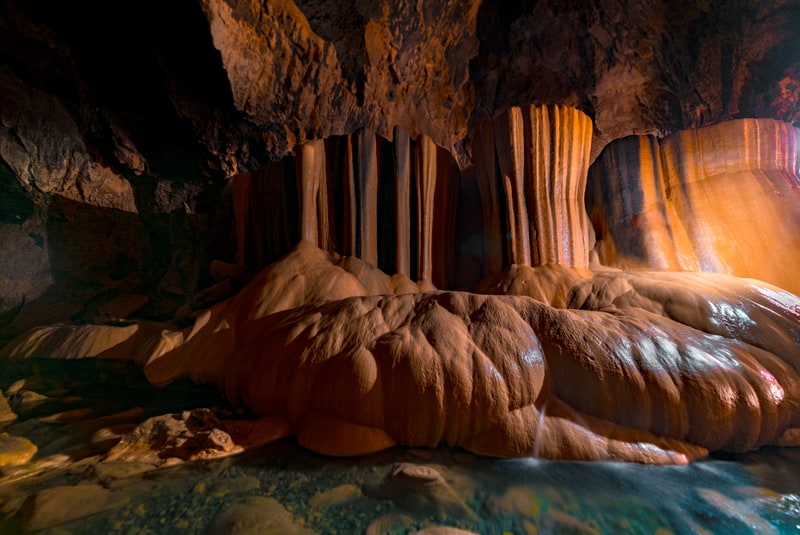
Sumaguing Cave is one of Sagada’s most popular attractions and a fantastic place to visit if you’re looking for adventure.
Also known as the Big Cave, Sumaguing is famous for its enormous limestone chambers, impressive stalactites and stalagmites, and unusual rock formations that have developed over thousands of years.
Exploring the cave is much more adventurous than simply walking along a paved path. You’ll descend into the darkness with an accredited local guide, scrambling over rocks, navigating slippery surfaces and making your way through different chambers.
Some sections involve steep descents and climbing over large rock formations, while others may require you to wade through water. Your guide will help you navigate the more challenging areas.
Allow around two hours for a typical guided cave exploration, although this varies depending on the route and conditions.
Wear comfortable clothing that you don’t mind getting dirty or wet, and follow your guide’s advice about suitable footwear. You’ll also want to protect your phone and other valuables from water.
Sumaguing Cave isn’t suitable for everyone. You’ll need reasonable fitness, good mobility and a willingness to tackle slippery and sometimes challenging terrain. It’s particularly important to consider this if you’re traveling with younger children.
Cave tours can be suspended during heavy rain or when conditions are unsafe, so check with the Sagada Tourism Office before planning your visit.
Lumiang Burial Cave
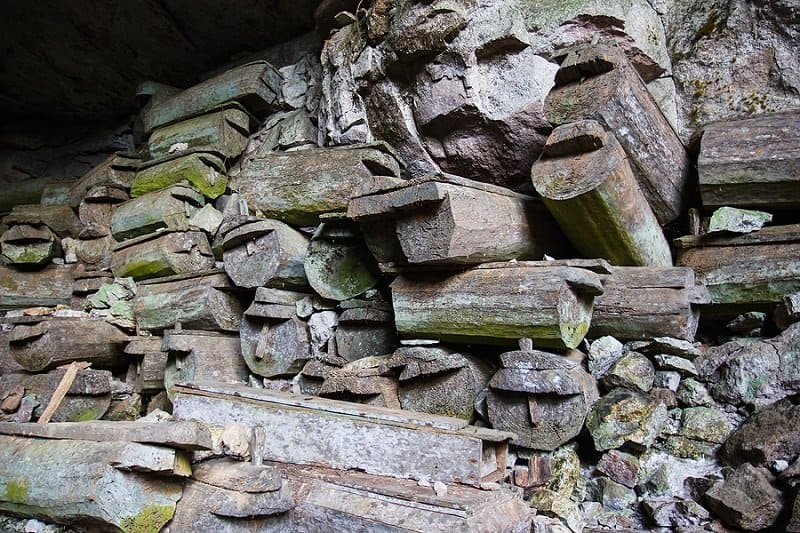
Lumiang Burial Cave is another fascinating place to visit in Sagada, particularly if you’re interested in the area’s traditional burial practices.
Located south of the town center, the cave is best known for the wooden coffins stacked near its entrance. These are associated with the Indigenous burial traditions of the Kankanaey people and are believed to be centuries old.
The coffins are quite different from those hanging on the cliffs in Echo Valley. Many are small, reflecting traditional burial practices in which the deceased were placed in a curled position.
Even if you don’t venture deep into the cave, seeing the coffins at the entrance is an interesting cultural experience.
For more adventurous visitors, Lumiang Cave is also the starting point for the famous Cave Connection, a challenging underground route that links Lumiang with Sumaguing Cave.
This excursion involves scrambling through narrow passages, climbing over rocks and navigating slippery terrain. It’s considerably more demanding than a standard Sumaguing Cave visit and usually takes several hours.
An accredited guide is essential, and the Cave Connection is only suitable for visitors who are physically prepared for a challenging caving experience.
Access to the caves can change because of rainfall and safety restrictions, so check that your preferred tour is operating before making plans.
Marlboro Hills
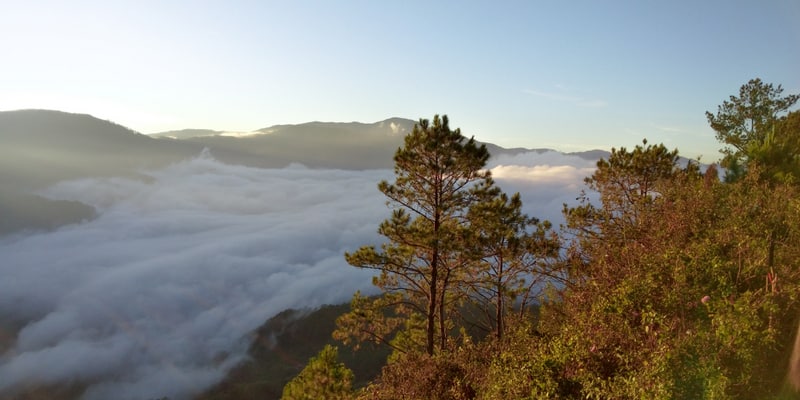
Marlboro Hills is one of the best places in Sagada to watch the sunrise, with spectacular views across the surrounding mountains and valleys.
The biggest attraction is the famous sea of clouds. On the right morning, thick clouds settle in the valleys below, leaving the mountain peaks rising above a blanket of white.
It’s a beautiful sight, particularly as the first rays of sunlight illuminate the landscape. However, the sea of clouds depends on the weather and isn’t guaranteed.
Most sunrise tours start very early, often around 4am, with a vehicle transfer to the trailhead followed by a walk uphill to the viewpoint.
You’ll need an accredited local guide, and it’s worth bringing a warm jacket as the mountain air can be surprisingly cold before sunrise.
If you have time and enjoy hiking, I recommend combining Marlboro Hills with the Blue Soil trek described above. However, if you’re not keen on a longer hike, ask locally whether a shorter sunrise-only excursion is available.
Either way, Marlboro Hills is one of Sagada’s most memorable natural attractions.
Danum Lake
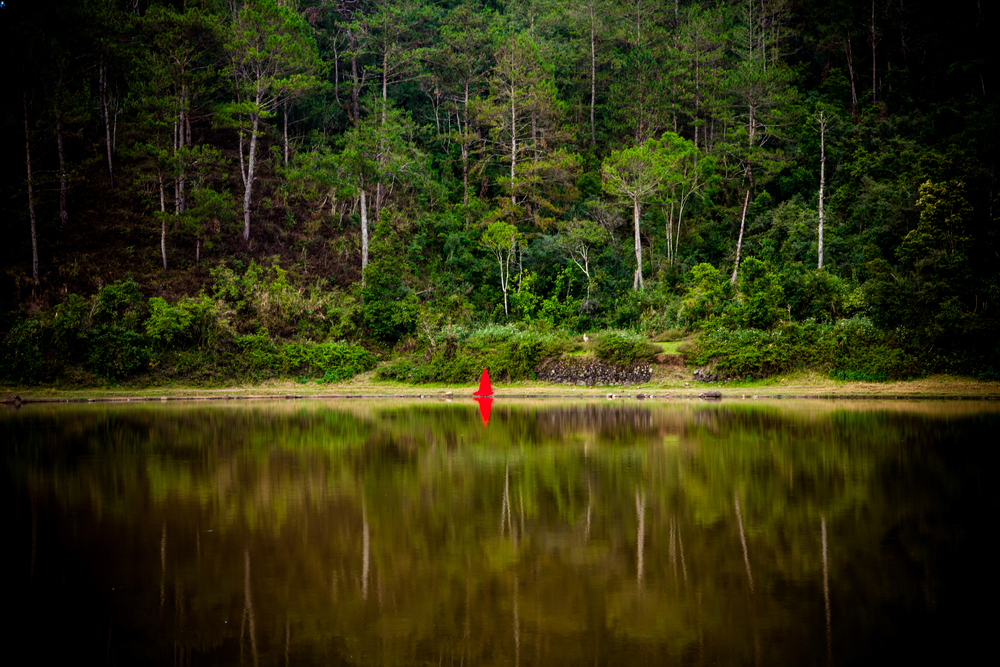
Located west of Sagada town, Danum Lake is a peaceful spot surrounded by pine trees and mountain scenery.
The lake is relatively small, more like a pond, but its beautiful surroundings make it a lovely place to relax and enjoy the fresh mountain air.
It’s particularly popular around sunset, when the changing light creates beautiful reflections on the water and surrounding landscape.

Danum Lake is several kilometers from the town center, so you can walk there if you’re feeling energetic or arrange local transportation for a more relaxed visit.
If you’re staying longer in Sagada and enjoy hiking, you could also consider exploring the trails around nearby Mt. Ampacao, which offers panoramic views of the surrounding mountains.
Danum Lake is a good option for a quieter afternoon, particularly if you’ve spent the morning hiking or exploring caves.
Ganduyan Museum
If you’re interested in learning more about Sagada’s history and Indigenous culture, the Ganduyan Museum is worth visiting.
This small, privately owned museum is located near the center of town and contains a collection of traditional artifacts, photographs and objects associated with the area’s history and the Kankanaey people.
The museum offers an opportunity to learn about local customs, beliefs and everyday life, providing useful context for the cultural attractions you’ll encounter around Sagada.
One of the highlights has traditionally been hearing explanations about the exhibits and local traditions from the museum’s knowledgeable custodians.
However, opening arrangements can be irregular, so don’t assume you’ll be able to visit at any particular time. Ask at the Tourist Information Center or check locally before heading there.
If it’s open during your stay, it’s a worthwhile addition to your Sagada itinerary, particularly on your first day.
Demang
Demang is one of Sagada’s older village areas and a great place to experience a quieter side of the town.
Located south of the main center, it’s an interesting area to explore if you want to see more of everyday life beyond Sagada’s major tourist attractions.
As you walk around, you’ll find traditional houses, local homes and beautiful mountain surroundings. It’s a good opportunity to appreciate Sagada at a slower pace.
Demang is a residential community rather than a purpose-built tourist attraction, so remember to respect people’s privacy and avoid entering private property without permission.
If you have extra time in Sagada, it’s a pleasant place to explore alongside the town’s cafes and cultural attractions.
Bomod-ok Falls
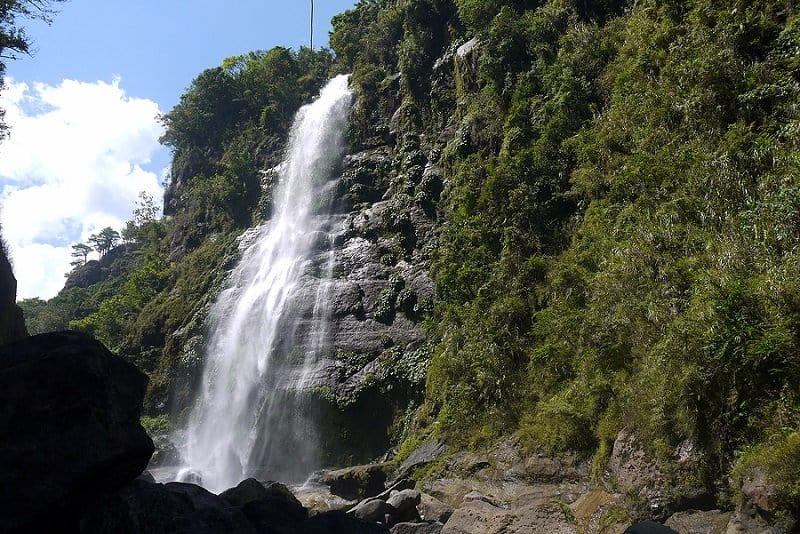
Bomod-ok Falls is one of the most beautiful waterfalls in Sagada and a fantastic destination for anyone who enjoys hiking.
Also known as Big Falls, this impressive waterfall drops approximately 60 meters into a natural pool, surrounded by lush mountain scenery.
Getting there is part of the adventure. The trek takes you through traditional villages, beautiful rice terraces and steep mountain paths, with spectacular views along the way.
The trail includes plenty of steps, and while the walk down to the waterfall is manageable for many visitors, the return climb can be challenging, particularly in hot weather.
Allow approximately 3–4 hours or longer for the complete excursion, depending on your pace, the route and how much time you spend at the waterfall.
Once you arrive, you can relax and enjoy the scenery. Swimming may be possible when conditions are safe and local rules permit it, but don’t assume you’ll always be allowed into the water.
Bring plenty of drinking water, wear comfortable walking shoes and be prepared for steep and sometimes slippery sections.
You’ll need to arrange a local guide and check that the trail is open before visiting. Bomod-ok Falls sometimes closes because of weather, safety concerns or traditional community observances.
It’s a challenging but rewarding excursion and one of the best ways to experience Sagada’s beautiful countryside.
Kapay-Aw Rice Terraces
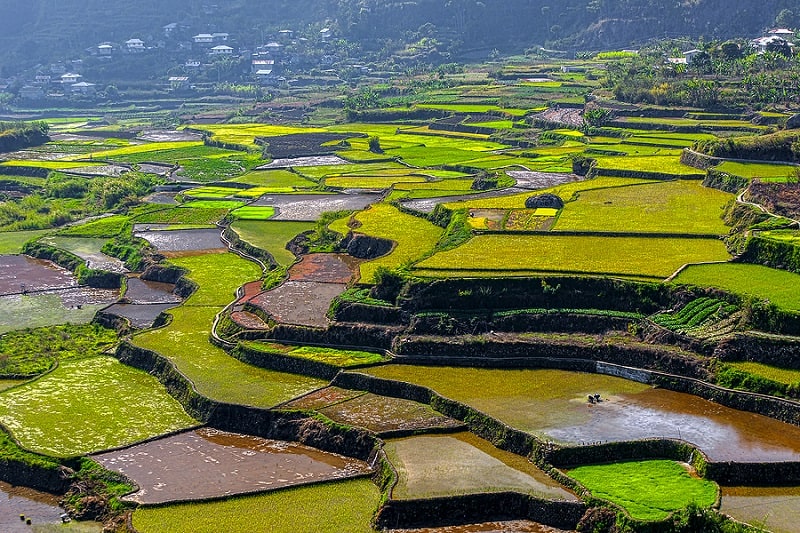
Sagada may not have rice terraces as famous as those in Banaue, but the surrounding mountains are dotted with beautiful terraced fields that are well worth seeing.
The Kapay-Aw Rice Terraces offer a glimpse of the agricultural traditions that have shaped life in the Cordillera mountains for generations.
Depending on the season, the terraces can be lush and green, filled with water or golden as the rice approaches harvest.
The scenery is beautiful, with layers of cultivated fields set against the surrounding hills and mountains.
If you’re interested in exploring the terraces more closely, ask a local guide about suitable walking routes and viewpoints. Remember that these are working agricultural areas, so stay on permitted paths and avoid walking through planted fields.
For anyone who enjoys photography or mountain scenery, the rice terraces are another lovely part of Sagada’s landscape.
Try The Local Coffee

Sagada is a fantastic destination for coffee lovers, thanks to its cool mountain climate and locally grown coffee.
Coffee has long been cultivated in the surrounding highlands, and you’ll find cafes around town serving freshly brewed local beans.
Some cafes also sell roasted beans to take home, making Sagada coffee a great souvenir from your trip.
After an early morning trek or a busy day exploring caves and waterfalls, there’s nothing better than relaxing with a hot cup of coffee while enjoying the mountain atmosphere.
Make time to try some during your visit. It’s one of the simplest and most enjoyable things to do in Sagada!
Sagada Pottery
If you’re looking for something different from Sagada’s hikes and caves, visiting a local pottery workshop is a great option.
Sagada Pottery is known for its handmade ceramics, offering visitors a chance to appreciate the skill and craftsmanship involved in traditional pottery making.
Depending on current arrangements, you may be able to watch pottery being made, browse handmade pieces or participate in a pottery activity.
It’s a particularly appealing option for families or anyone wanting a more relaxed cultural experience.
Check locally about opening times, demonstrations and whether hands-on activities need to be booked in advance.
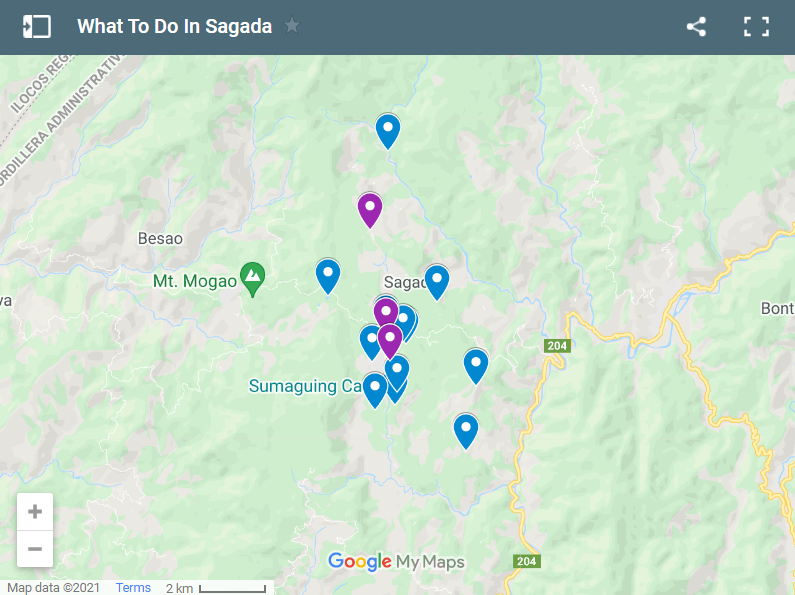
Sagada Attractions Map
Find all the attractions above and the hotels below on this map.
Best Places To Stay In Sagada
When it comes to finding the best places to stay in Sagada, you’ll discover plenty of affordable guesthouses, inns and small lodges, although there aren’t many luxury hotels.
For most travelers, I recommend staying in or close to Sagada town center. This makes it easier to walk to restaurants, visit the Tourist Information Center and arrange tours without having to organize transportation every time you want to go somewhere.
However, if you’re looking for a peaceful mountain retreat with beautiful views, there are also some great accommodation options outside the center.
Below are three of my favorite places to consider, depending on your budget and how you prefer to travel.
Coffee Heritage House & Hostel Review

Looking for peaceful accommodation surrounded by beautiful mountain scenery? Coffee Heritage House & Hostel is a fantastic option if you want to escape the busier center of Sagada.
Located around 6–8 kilometers from Sagada town center, this coffee-themed accommodation is surrounded by greenery, pine trees and spectacular countryside views. It’s particularly appealing for travelers who want to relax and enjoy Sagada’s natural beauty.
As the name suggests, coffee is a big part of the experience. The property celebrates locally grown Philippine coffee, and guests regularly praise the coffee and food served here.
Accommodation includes both dormitory-style beds and private rooms, making it suitable for backpackers, couples and small groups. There’s also a welcoming communal area where you can relax after a day of exploring.
The biggest downside is the location. Being several kilometers outside Sagada means you’ll need to arrange transportation to reach restaurants, the Tourist Information Center and many tour departure points. It’s much more convenient if you have your own vehicle.
Some rooms also have shared bathrooms, so check the facilities carefully when booking.
However, if you love coffee, beautiful scenery and peaceful surroundings, Coffee Heritage House & Hostel is a memorable place to stay in Sagada.
Click here for the latest prices.
Isabelo’s Inn and Cafe Review

If you want to stay right in the center of Sagada, Isabelo’s Inn and Cafe is one of the most convenient accommodation options.
Located in the heart of town, it’s just steps from the Tourist Information Center and within easy walking distance of restaurants, cafes and shops. This makes it particularly convenient if you’re visiting Sagada without your own transportation.
The accommodation is fairly basic, but rooms are generally clean, comfortable and good value. There are several room types available, including double and twin rooms, with both private and shared bathroom options depending on your booking.
There’s also an on-site cafe serving breakfast and other meals, which is handy before heading out on an early morning excursion. Guests regularly praise the helpful staff and convenient location.
Facilities include Wi-Fi, luggage storage and hot showers, although you shouldn’t expect the amenities of a large hotel. Some rooms can also be noisy because of the central location.
The biggest advantage of Isabelo’s Inn and Cafe is how easy it makes exploring Sagada. You can walk to the Tourism Office to arrange guides, enjoy local restaurants and get around town without constantly organizing transportation.
For most travelers following this Sagada itinerary, this would be my first choice, particularly if you want an affordable and convenient base.
Click here for the latest prices.
Kanip Aw Pines View Lodge Review

Want beautiful mountain views without staying too far from the center of Sagada? Kanip Aw Pines View Lodge is an excellent option.
Located on a hillside around 750 meters from the town center, this affordable lodge offers spectacular views of the surrounding mountains, pine forests and limestone cliffs.
One of the biggest attractions is the scenery. Many rooms have mountain views, and some have balconies where you can sit and enjoy the fresh air and beautiful surroundings.
The accommodation is simple but comfortable, with several room configurations suitable for couples, families and small groups. Some rooms can accommodate four or more guests, making this a particularly good option if you’re traveling with children.
Guests consistently praise the cleanliness, friendly staff and value for money. Wi-Fi is available in public areas, although the connection can be unreliable.
The lodge is close enough to walk to many of Sagada’s restaurants and attractions, but keep in mind that the hillside location means some uphill walking. There are also stairs throughout the property, which may be inconvenient if you have mobility difficulties or heavy luggage.
If you want a peaceful place to stay with memorable views, while still being reasonably close to town, Kanip Aw Pines View Lodge is a great choice.
Click here for the latest prices.
Visiting Sagada With Kids
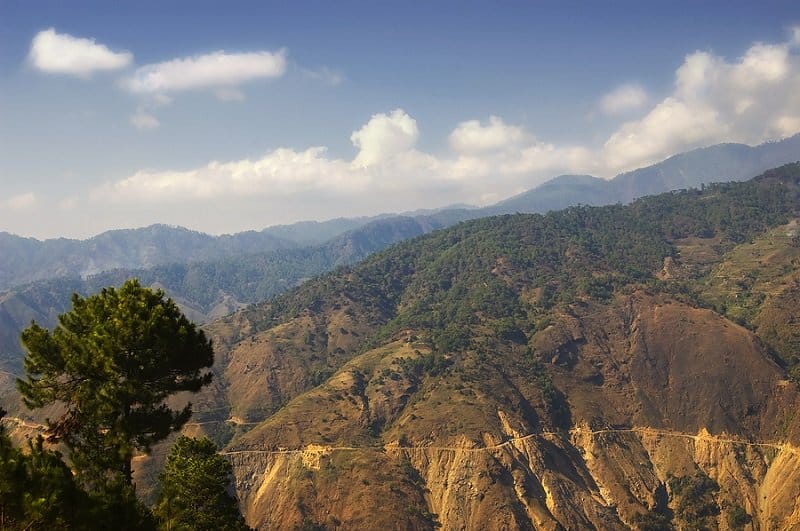
Sagada can be a fantastic destination for families, especially if your kids love the outdoors. With its cooler mountain climate, beautiful scenery, caves, waterfalls and fascinating cultural attractions, there’s plenty to keep everyone entertained.
Younger children may particularly enjoy exploring Sagada town, seeing the Hanging Coffins from the viewpoints in Echo Valley, visiting local pottery workshops and enjoying the mountain scenery. However, some walking trails have steep or uneven sections, so you’ll need to consider your children’s ages and abilities.
Older kids and teenagers who enjoy adventure may love the Marlboro Hills sunrise trek, exploring Sumaguing Cave or hiking to Bomod-ok Falls. These activities can be physically demanding, though, and some cave routes involve scrambling over slippery rocks and navigating narrow passages. Check with local guides about age restrictions and suitability before booking.
One of the best things about visiting Sagada with kids is the opportunity to learn about the area’s Indigenous Kankanaey culture and traditions. Visiting cultural sites with a knowledgeable local guide can make the experience both interesting and educational.
I’d recommend allowing at least two or three days in Sagada if you’re traveling with children. This gives you time to enjoy the attractions without rushing, particularly after the long journey to get here.
With a little planning and the right choice of activities, Sagada can be a memorable destination for the whole family.
How To Get To Sagada
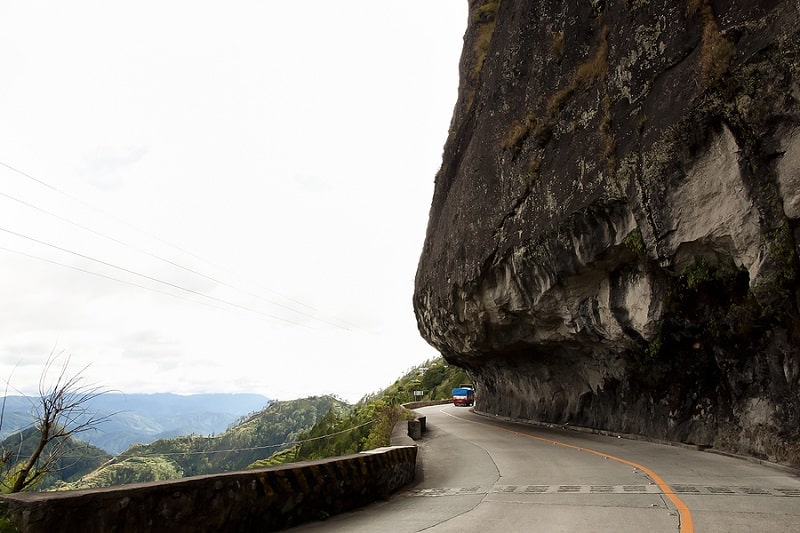
Reaching Sagada takes some time, but the beautiful mountain scenery makes the journey worthwhile. Located in Mountain Province in northern Luzon, Sagada doesn’t have an airport, so you’ll need to travel by road.
The two most common ways to get here are by direct overnight bus from Manila or by bus from Baguio.
Manila To Sagada
The easiest way to reach Sagada from Manila is to take a direct Coda Lines overnight bus from Cubao in Quezon City.
The journey takes approximately 11–12 hours, although it can take longer depending on traffic and road conditions. Buses generally depart in the evening and arrive in Sagada the following morning.
Coda Lines offers different bus classes, including Semi Deluxe and Super Deluxe services. The more comfortable Super Deluxe buses have fewer seats and an onboard restroom, which can make a big difference on such a long journey.
Taking an overnight bus is a convenient option because you can sleep during much of the journey and avoid spending an entire day traveling.
However, you’ll probably be tired when you arrive, so I’d recommend keeping your first day in Sagada relatively relaxed.
Click here to check the latest bus schedules and prices.
Baguio To Sagada
If you’re already in Baguio, you can travel to Sagada by bus along the spectacular Halsema Highway.
GL Trans operates services between Baguio and Sagada, with the journey taking approximately 5–6 hours.
Buses depart from the Dangwa transport area in Baguio, near the public market. It’s worth confirming the latest departure times before traveling, particularly as services can be limited later in the day.
The journey is incredibly scenic, winding through the Cordillera mountains and passing mountain villages, valleys and dramatic viewpoints.
You can also travel from Manila to Baguio first, then continue to Sagada, although this generally takes longer than the direct overnight bus.
Driving To Sagada
If you’re comfortable driving on mountain roads, you can also reach Sagada by private car.
The roads are generally paved, but expect steep climbs, winding sections and occasional delays, particularly during the rainy season.
Driving gives you the flexibility to stop along the way and enjoy the mountain scenery. However, I’d recommend avoiding mountain driving after dark, especially if you’re unfamiliar with the roads.
Parking can also be limited in central Sagada, so check whether your accommodation has parking before arriving.
Getting Around Sagada
Once you arrive, Sagada town is relatively easy to explore on foot, with restaurants, cafes and several cultural attractions within walking distance.
However, many of the best attractions, including Marlboro Hills, Blue Soil and Bomod-ok Falls, are outside the town center.
For these excursions, you’ll generally need to arrange an accredited local guide and, in some cases, transportation to the trailhead.
The Sagada Tourism Office can help you organize tours and explain the current arrangements for visiting different attractions.
Remember that all visitors must register with the Tourism Office. You can find information through the official Sagada Tourism website and the Sagada tourist registration portal.
Final Words
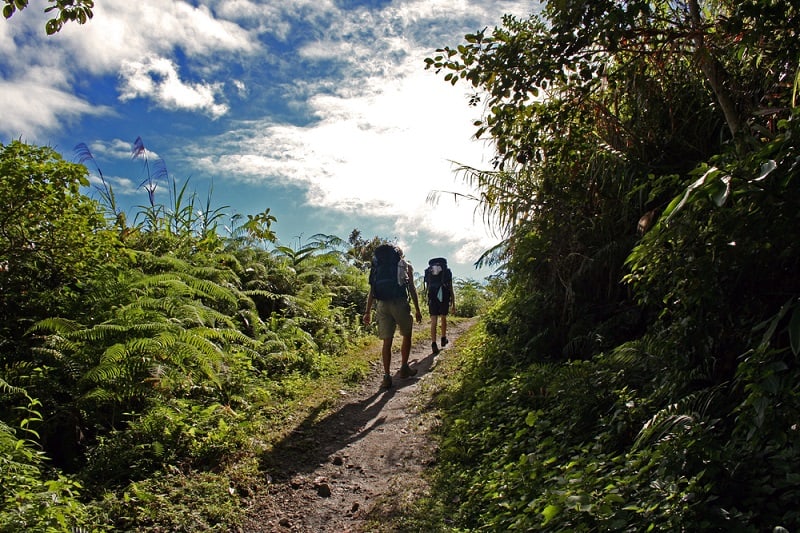
Sagada is one of the most beautiful and unique destinations in the Philippines. With its dramatic mountain scenery, fascinating Indigenous culture, caves, waterfalls and peaceful atmosphere, it’s well worth the long journey to get here.
If you only have one day in Sagada, I’d focus on Echo Valley and the Hanging Coffins. With two days, you can add the spectacular Marlboro Hills and Blue Soil trek. And if you have three days, you’ll have time for another adventure, such as hiking to Bomod-ok Falls or exploring Sumaguing Cave.
However long you stay, make sure you allow some time to simply enjoy Sagada itself. Sitting in a cafe with a cup of locally grown coffee and looking out over the mountains can be just as memorable as the bigger attractions.
We hope you enjoyed this Sagada itinerary and the complete list of places to visit in Sagada. You can find more information in our complete guide to Luzon here.